



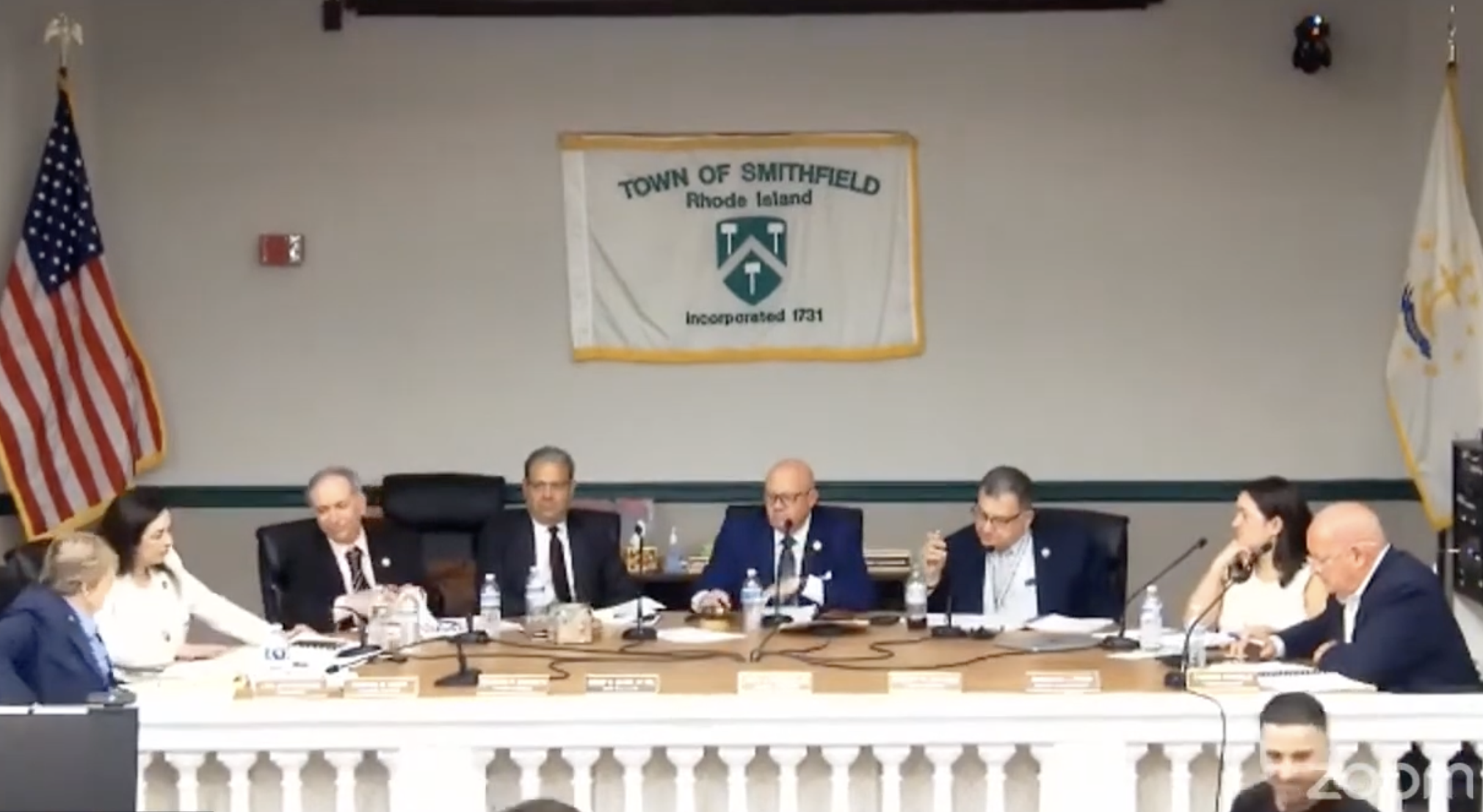
SMITHFIELD – Agreeing with the overwhelming sentiment in the room, the Town Council voted Tuesday to effectively ban development of data centers in town.
Council chambers were packed with residents opposed to creation of any future data center within Smithfield’s limits, citing environmental, health, and quality of life issues, among others.
The proposal amendment sponsored by Councilors Angelica Bovis, Rachel Toppi, and Michael Iannotti, and as explained by Town Planner Gregory Guertin, defines the use of data centers and lists it in the town’s use table as not permitted in any zoning district. That simple definition, which Guertin and the Planning Board recommended, drew cheers from those in attendance, who then proceeded to rise to the microphone to share their thoughts.
Such facilities would still be permitted by special use permit, but as Council President John Tassoni later said, that will be an uphill battle for anyone.
The issue of where to site data centers has taken center stage nationally of late, particularly on the large amounts of electricity and water they consume, as well as carbon emissions and noise pollution.
Toppi shared the genesis of this local proposal, saying she started researching such centers and the “escalating resistance” to them. She said she thought last year that it would be proactive to get ahead of such proposals, which is why she brought up the possibility of a town ban last fall. Earlier this year, her proposed draft amendment was put on hold as she was advised that the town was working with developers of a business park in the Hanton City (18th century farming colony) area that might include a data center. She said she was as surprised as anyone at the subsequent revelation of the proposed data center development.
This amendment, said Toppi, is proactive. There is a significant national wave of restrictions, she said, and the full effects of such centers are largely unknown. She said the regulatory framework is lacking, and officials can’t allow such proposals without knowing their impact. Expanding the tax base can’t be at the expense of residents, she said.
Responding to Iannotti, Guertin said the amendment is consistent with the town’s comprehensive plan in a number of areas, including balance of land uses and siting of potentially hazardous land uses.
Ryan Polumbo and John Branca had approached the council back in March to talk about their plans to build a data center on this land near Fidelity Investments off Route 7.
The two had shared their idea to develop the data center, a building where IT operations and equipment are housed, as part of a business park.
Guertin had previously emphasized that the lack of an ordinance on data centers is a good thing in terms of there being an assumption that such a use is not allowed. That prohibition is now in black and white.
Matthew Sala, of Rocky Hill Road, shared with the council and attendees Tuesday that it’s been remarkable over the last few weeks to see people paying attention, getting involved, and speaking up. That sentiment was later echoed by Bovis, who said it’s great to see the room packed on an issue.
Such a data center is not a good fit for Smithfield, said Sala, and the town needs to be thoughtful about what it allows. He said he’s not anti-growth, but such a development would be lasting and set a precedent, opening a door that would be difficult to walk back through. He urged the council not to dilute the proposal with “half-measures or temporary solutions,” such as sunset clauses or moratoriums, which only invite the conversation to come back up later. He said members should provide clarity for this proposal and the direction Smithfield wants to go in moving forward, which is a clear and permanent ban.
Kimberly St. Sauveur, of Coolridge Avenue, said data centers are simply a bad idea, emphasizing that Rhode Island has not statute governing them even as other states maintain guardrails. The state needs a law that ensures consumers don’t pay the bill, she said, and there needs to be transparency and accountability, which means disclosure and reporting obligations and yearly environmental impact statements.
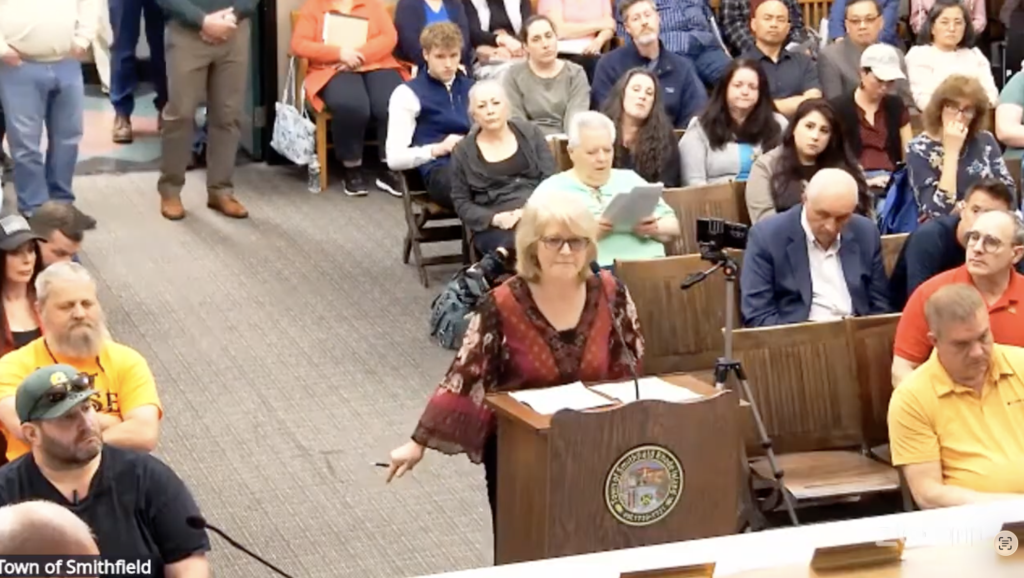
A proposed brief Senate bill is too vague, said St. Sauveur, and while it has some good concepts, its requirements on megawatts and other matters aren’t clear enough. She said there can be no meaningful discussions without knowing what the guardrails are going to be.
Other residents spoke about various feared negative impacts from data centers, including loss of history and unknown long-term health effects. Smithfield’s charm and character represented why they moved here, said several, and it would be a shame to see those qualities disappear.
Thanking residents for showing up, Bovis said she’s not anti-business or growth, she’s pro-information and protecting residents and the town’s future. She said the Planning Board went through its deliberations thoughtfully over months, and she agrees with its members that they should prioritize Smithfield’s needs above all.
Iannotti said this move keeps control with the council, where it belongs. He thanked Toppi for being so far ahead on this and other issues.
The council voted 4-1 for the measure, with Councilor Tom Winfield voting no because data centers are not currently a permitted use.