



WOONSOCKET – The City Council has again rejected the implementation of a speed camera program, with five of seven members saying no this week.
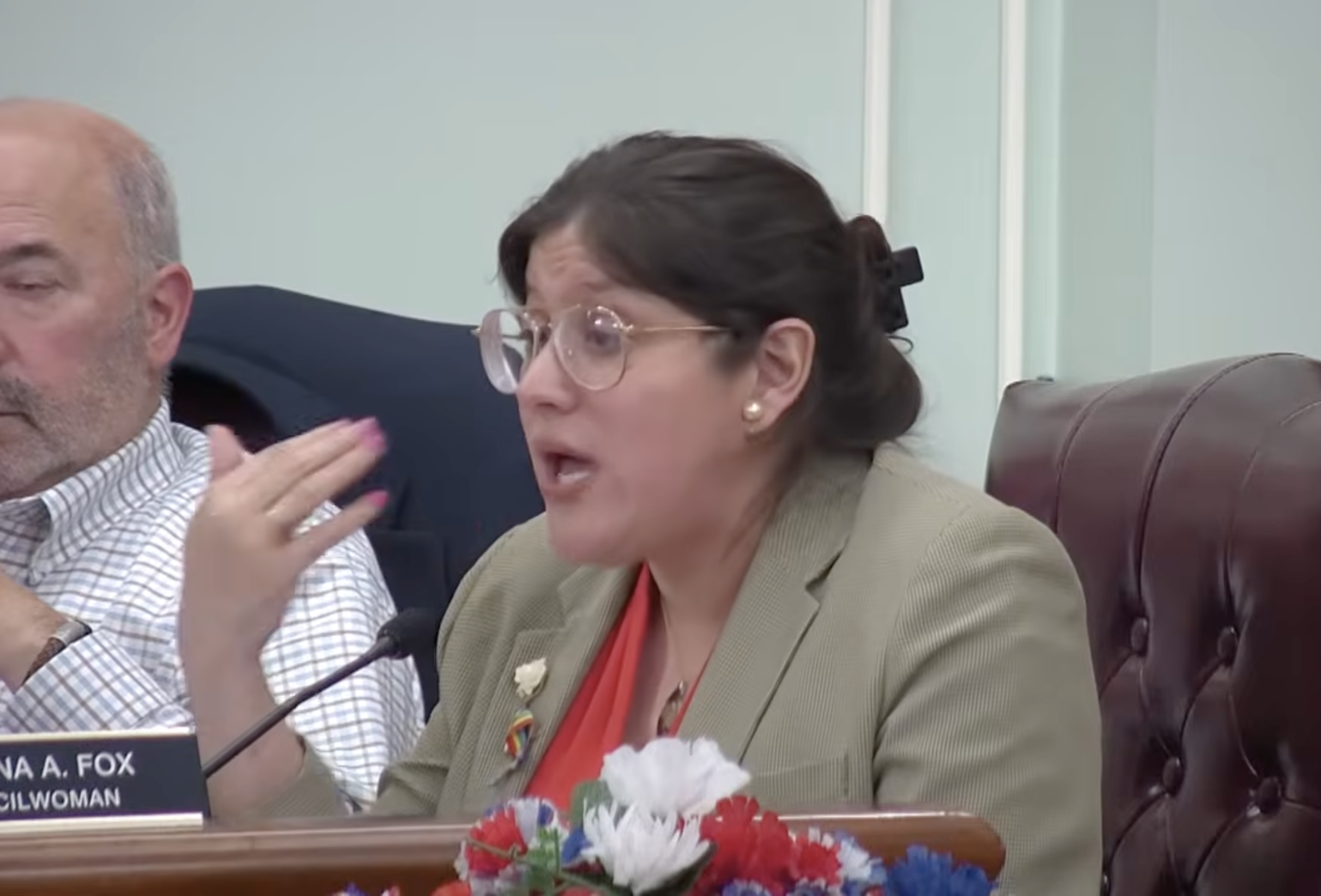
Councilor Kristina Fox had proposed the cameras as both a safety tool to slow drivers down and a revenue generator for a cash-strapped city. She and Councilor Valerie Gonzalez pleaded with fellow councilors to see the benefits of installing the automated ticketing system, but to no avail.
Council candidate Alana Gordon also advocated for the plan, as did Leo Savoie School Principal Donna Coderre and others, but it wasn’t enough to reverse a previous vote by the council against the cameras.
Gordon said this comes down to a question of how the city will make itself safer for children. She cited a 31 percent decrease in citations at Pawtucket’s older street camera locations as evidence that the program works to achieve compliance. It shouldn’t be about tickets or a “cash grab,” she said, but about about behavior and safety. She added that according to local police, 80 percent of those ticketed are from out of town, and this would act to slow down those people who don’t think local driving laws are worth obeying.
Others, including Gonzalez and Fox, were open about their desire for more revenue in a city that doesn’t have enough money. They said this could achieve two major wins for Woonsocket at once.
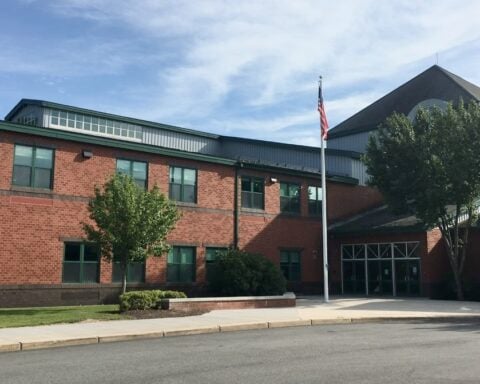
Coderre said this was her second time talking about speeding traffic before the council in six months, and though some measures have been put in place near the school on Mendon Road, the situation is not solved. She said numerous residents along Mendon Road have thanked her for speaking up, and that residents overall are very concerned after three different crashes involving pedestrians.
Coderre said she hoped the council would keep an open mind, saying the adults in the city have a responsibility to keep its children safe, and people should be able to cross the road without fearing being hit by a speeding driver.
When people know the cameras are there, they slow down, have more time to react, and the likelihood of crashes goes down and severity of crashes diminishes, Coderre said.
She spoke to Council President Dan Gendron directly, responding to his comments that a crossing guard should be employed, and also that he and his wife were able to walk to breakfast with no issues. They do have a crossing guard, she said, and also the severity of the issue is not as pronounced on weekends as it is on weekdays.
Children don’t always know to get out of the way, Coderre said, and a few miles per hour can make all of the difference between safe crossing and a tragedy.
Coderre said it’s important that the city shows drivers that it means business, and that she doesn’t feel safe anymore in the city she lives and works in by choice.
A Savoie teacher testified how she saw her best friend hit while at another city school a few years ago. She said people speed through the city as if “it’s a raceway,” and she hopes the city will install the cameras.
Others who spoke also concurred.
John Flaherty, of Grow Smart RI working on transportation policy and advice and chairperson of the state’s transportation advisory committee, mentioned the pedestrian collisions that have shaken the community over the years, including two incidents in the past month, one involving a teen on Diamond Hill Road and another a teen on Park Avenue, and the young child killed last January.
A North Smithfield resident, Flaherty said he spends a lot of time in Woonsocket and
These incidents remind everyone that Woonsocket is not alone in the public safety challenge everyone is facing, he said. Roads are dangerous by design, and thousands of pedestrian deaths illustrate that. The trend is alarming, he added, but not inevitable, and can be mitigated with effective enforcement and safer design.
Woonsocket took an important step with its safety action plan and grant process through RIPTA in 2024, he said, an important tool now in the city’s arsenal, and speed cameras are one method of enforcement. Street design often shapes behavior more than signs and warnings, Flaherty said.
He urged the city to follow through on Complete Streets and Rhode Island Safe Streets for All standards. There is no need to rebuild every road, he said, but the initiative codifies that hone a local road is to repaved, repaired, or reconstructed, the city should consider elements of Safe Streets design. Officials already did this with the roundabout on Truman Drive, he said, where drivers now naturally slow down to go around and there is less risk overall. There is no cost to implement this plan, he said.
Gendron asked where they can find the action plan study from RIPTA, and said officials should confirm where that roadmap stands. Flaherty said he and his team are here as a partner and resource.
Fox thanked the “broad cross-section” of Woonsocket people who spoke up on the issue, saying it’s imperative that the council listens. Cameras are a time-tested safety solution in communities, and as Pawtucket has shown with $20.5 million taken in over four years, it’s also a beneficial revenue source. This is a means for a city with few options to control its narrative again on multiple fronts, she said.
Alarm bells are being sounded, Fox stated, and the moment of decision has clearly arrived. The people are saying that they want their leaders to act now, not listen to a few people on Facebook who are against cameras. She said she’s not asking that they vote yes with enthusiasm, but to say yes to safer roadways and more revenue to accomplish the city’s goals.
Councilor Michael Dubois said he agrees that the city needs to do more to make streets safer, but he wants to hear from a traffic engineer on best solutions for all residents around the clock and all year, not just for students during school hours, or for the allowable 7 a.m. to 6 p.m.
If an engineer “with no skin in the game” says cameras ar the solution, Dubois said, then he would consider it. He pointed out the traffic cone that is put out at Kay’s Restaurant near Savoie as an example of how lane narrowing changes driver behavior, saying permanent reconfiguration in areas could cut speeding dramatically.
Dubois said he doesn’t see never-ending speeding and ticketing in Pawtucket as progress, saying the city needs to consider truly effective changes for its future.
Gonzalez said the city needs to send a clear message that safety is a priority by adding cameras, just as officials did for drunk driving or seatbelts until they became the norm. She said the city could implement this on a temporary basis to see how it goes, and she would rather get the money from those violating the laws than keep going back to taxpayers for another increase.
Gonzalez said violations don’t kick in until drivers are 11 mph over the 20 mph speed limit in school zones, and tickets are civil violations. She said the community is asking for this, and officials need to act to protect Woonsocket’s citizens.
Councilor Jim Cournoyer countered that Pawtucket didn’t “generate” $20.5 million in revenue, it “sucked” it out of its citizens. As for most tickets going to out-of-towners, he said that’s the wrong motivation for a city that’s trying to attract people to its businesses, and doesn’t necessarily have the demographics to support those businesses on its own.
Cournoyer said the idea is shortsighted, and if it was so effective in Pawtucket, it wouldn’t be generating so much money still. He said the cameras simply push drivers onto other roads and the problem elsewhere.
The councilman said he commiserates with Coderre and those at Savoie and said their concerns are valid, but said other steps should be taken. If the cameras were all about safety, he said he’d be for them, but speed is clearly subjective if tickets aren’t given at lower speeds.
Plain and simple, this is a money grab, said Cournoery, and it shouldn’t be used to compensate for the mismanaged finances of the past. He said he also doesn’t believe the cameras would have made a difference in the recent incidents of pedestrians being struck.
Councilor Sharon Harmon agreed that she doesn’t believe the cameras will make the city safer, and that the city needs to find ways to make faster improvements.
Fox and Gonzalez then made last-ditch efforts to convince their colleagues, but to no avail. Gonzalez repeated that this is something they can try and then cancel it later if it doesn’t work. This would come at no cost to the city and slow traffic by changing habits for increased safety, just as has been done in other communities.
Fox said it’s disingenuous for anyone to suggest that Woonsocket doesn’t need this money. She questioned paying a traffic engineer many thousands of dollars to tell officials what they already know about people driving too fast.
Why are some officials more concerned about the feelings of speeders than they are about the people who come before them again and again to plead for change, said Fox. They were elected to make the hard decisions, and now’s the time. If someone else has a solution to offer, she said, they should put legislation forward.
It doesn’t have to be “my thing,” said Fox, bu tit has to be something, and it has to be now. This is as sure a shot as they have of resolving some of Woonsocket’s biggest issues, she said.
Gendron cited the roundabout as an example of “guaranteed safety” the the city should implement more of, as advocated for by Flaherty. If speed cameras were truly effective, she said, tickets would eventually drop to zero, Gendron added.
The council president also questioned a $50 ticket that would instantly be a quarter of the entire 4 percent, $200 tax increase being implemented by the city this year.
The council then voted 5-2 against the camera initiative also advocated by Mayor Chris Beauchamp, with only Gonzalez and Fox in favor.