



As supermarket chains relocate their stores, owners add restrictions to keep new grocers from setting up shop on their former locations
Note: This story originally is original reporting by ecoRI.org, and is shared here with permission.
WOONSOCKET, R.I. — Pedro DeSouza had two options when he got hungry in 2015: walk 45 minutes to PriceRite or 10 minutes to a local convenience store.
Some days he had to choose the latter, which, the 31-year-old said, resulted in higher prices than shopping at a grocery store.
DeSouza currently has a car, but, like 18% of Woonsocket residents, he didn’t have one at the time.
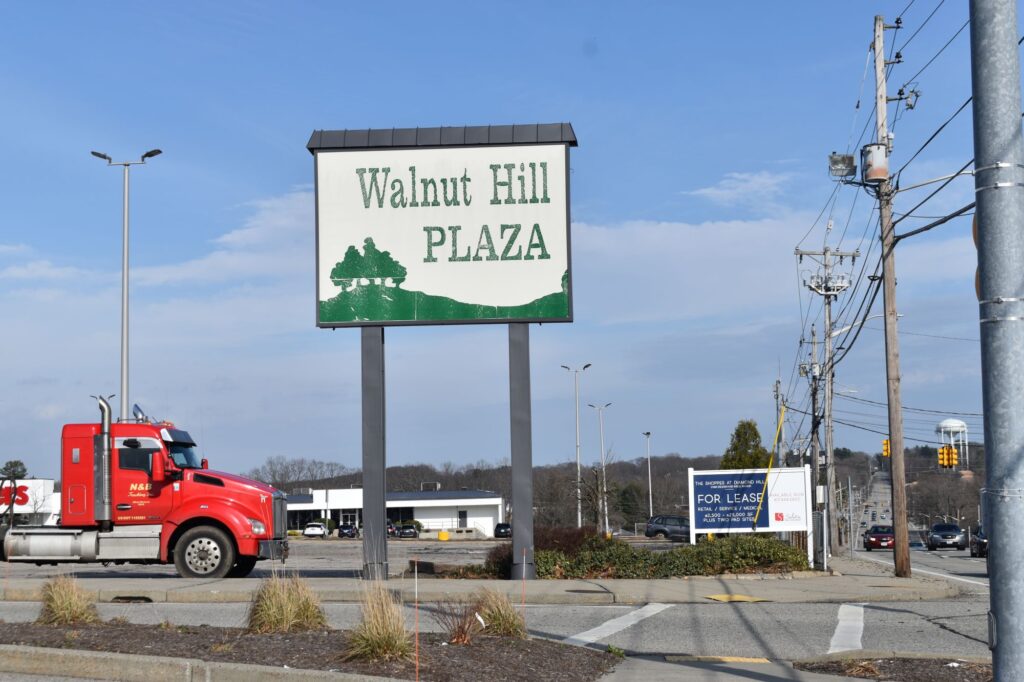
Diamond Hill Road, on the city’s east side near the Massachusetts border, was designed to attract big-box stores, but when some arrived, they imposed restrictions on property deeds that would influence the road’s makeup for decades and contribute to the city’s limited access to fresh food.
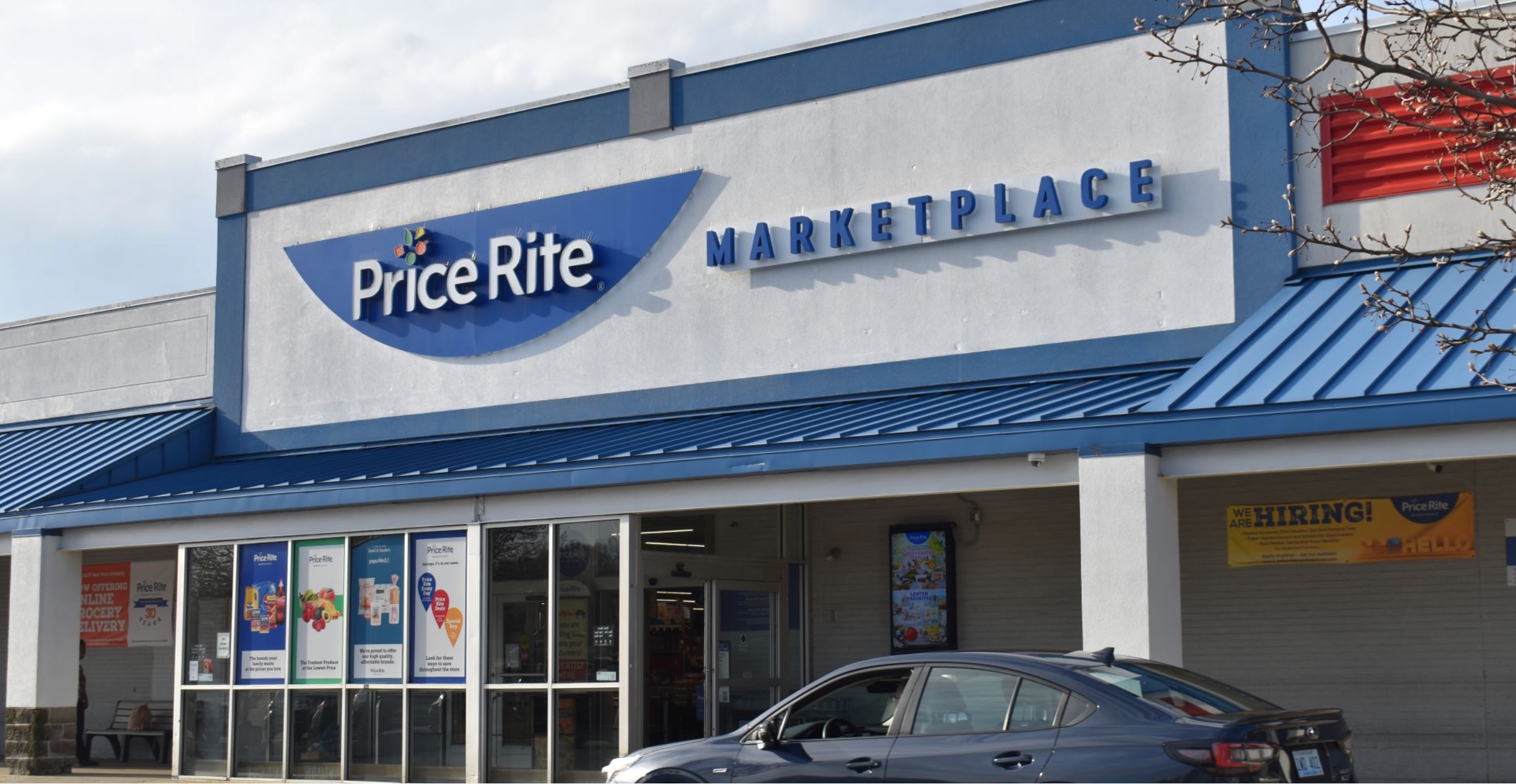
A slew of grocery store closures throughout Woonsocket and restrictive covenants left nearly 45,000 people with one full-scale food store: a PriceRite on Diamond Hill Road.
Landowners have used restrictive covenants to shape their neighborhoods since the 1900s.
Grocery store owners adopted the practice by buying nearby property and reselling or leasing it with deed clauses prohibiting the sale of produce, dairy, and meat to reduce competition. As supermarket chains relocate their stores, owners add restrictions to keep new grocers from setting up shop on their former sites. The move often leaves buildings vacant for years.
Judges have permitted the restrictions, known as “scorched-earth” covenants, despite them leaving consumers with few or no healthy food options. Research shows that neighborhoods with limited choices can lead to a lower quality of life.
Experts say the covenants violate U.S. antitrust law and have called on the Federal Trade Commission (FTC) to take on the issue. Without federal enforcement, a growing number of states and municipalities are stepping in, including Rhode Island, where the lieutenant governor has pushed to ban restrictions on grocery store properties.
But municipal and state leaders’ efforts have a limitation: they can’t void existing covenants.
“In Rhode Island, for example, they’d love to be able to wave a magic wand and say there are no more restrictive covenants and grocery stores can open here, but that’s not going to happen until the existing covenants expire,” said Kennedy Smith, a senior researcher for the Institute for Local Self-Reliance, a national research and advocacy organization.
Researchers and lawmakers nationwide found it difficult to determine how many covenants exist. Grocery chains often operate through multiple subsidiaries, and some agreements with restrictions aren’t accessible at the property assessor’s office.
Lt. Gov. Sabina Matos said her staff has found seven restrictive covenants in Rhode Island — from Woonsocket to Westerly — with restrictions up to 75 years.
Matos said no city has been more affected by the covenants than Woonsocket, which is home to one of the state’s largest food deserts.
“A monopoly has been created right in front of our eyes without us realizing,” Matos said. “We have to stop this practice of adding restrictive covenants.”
Limited competition
Woonsocket leaders have spent more than a decade trying to bring a supermarket to East Woonsocket and elsewhere, with little progress. One reason: retailers.
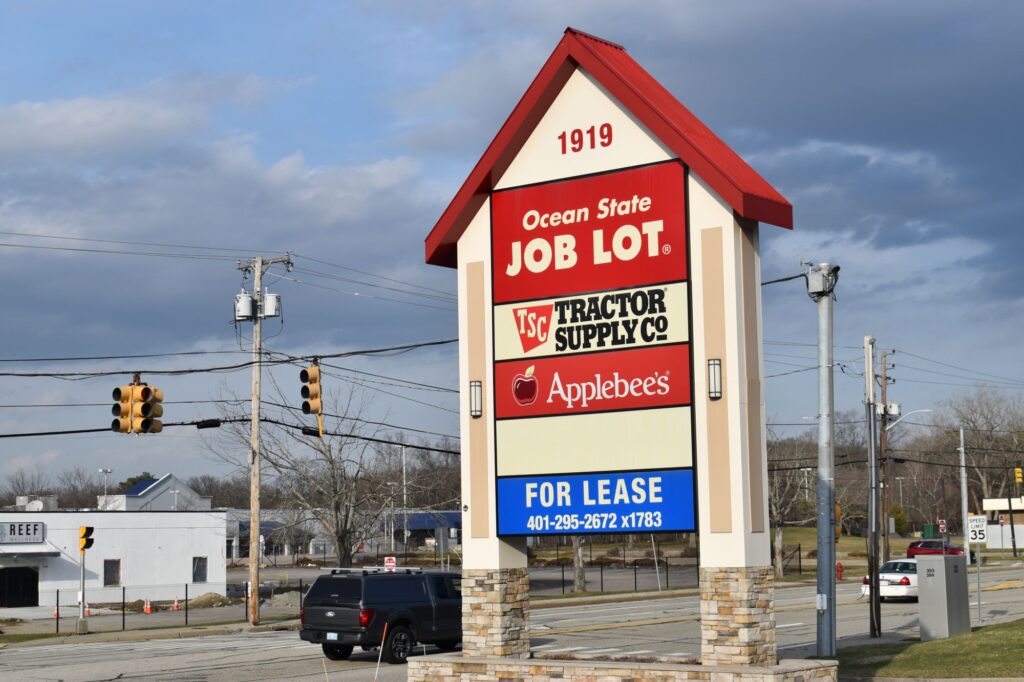
When Walmart moved its Diamond Hill Road store to North Smithfield in 2011, the company placed a 25-year deed restriction barring the property from becoming a grocery store, pharmacy, adult book or video store, bar or nightclub, or marijuana dispensary.
Walmart’s North Smithfield location is 6 miles away from its previous store.
When grocery stores impose deed restrictions, they push customers to their other locations rather than to a competitor on its former premises, according to Christopher Leslie, a professor at the University of California, Irvine School of Law, who wrote “Food Deserts, Racism and Antitrust Law” in the California Law Review.
Leslie added that the supermarkets retain some of its customers, but “the abandoned neighborhood bears the harsh burden of the scorched-earth covenant.”
The Walmart site sat vacant for six years before it was sold to Ocean State Job Lot, a discount store that once worried Walmart would hurt its sales. Ocean State Job Lot, headquartered in Rhode Island, has set up shop in other former Walmart locations in New Jersey, Maine, and New Hampshire.
Stop & Shop also placed a covenant in a deed on Diamond Hill Road through its subsidiary, Calvi Realty Co. Inc., a real estate company. Secretary of state records list Roger Wheeler as the company’s president; his LinkedIn profile shows he’s the president of Stop & Shop.
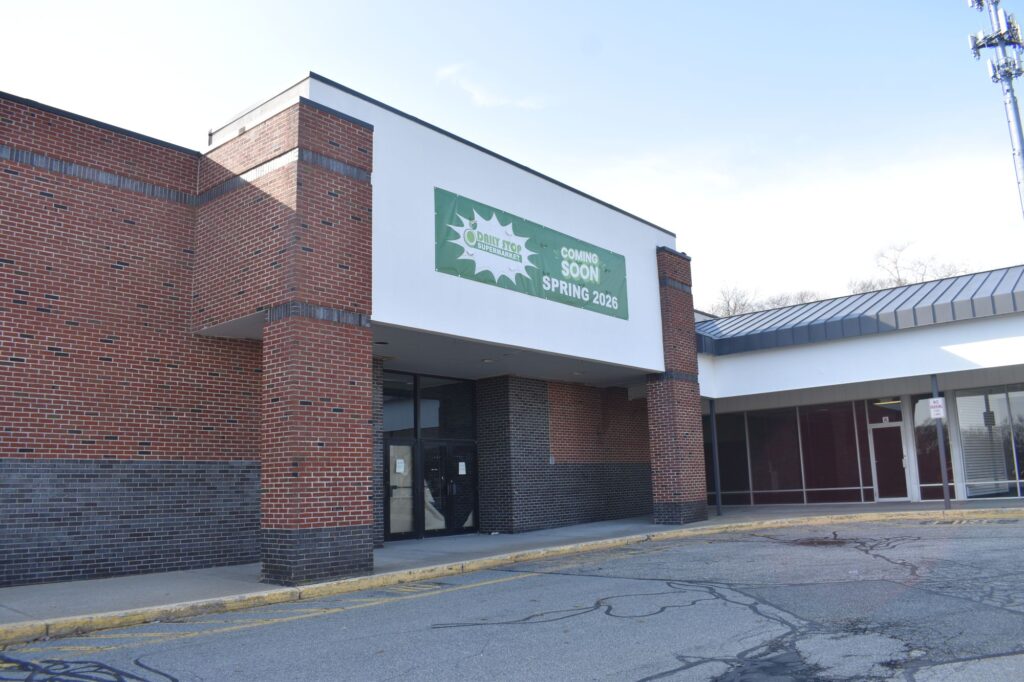
When Calvi Realty sold its property at 1517-1551 Diamond Hill Road in 2004, the deed stated that no portion of the premises shall be used for any business that sells groceries, meats, seafood, fresh fruits, vegetables, refrigerated dairy products, and frozen foods for 30 years.
The site, about 2 miles from Stop & Shop’s store in Bellingham, Mass., is now home to Popeyes, a U.S. Army recruitment office, and a Bank of America ATM.
Matthew Wojcik, a former Woonsocket economic development director, said he tried to negotiate a tax incentive with a plaza owner on the corner of Park Avenue and Smithfield Road, but Stop & Shop owned the development rights.
Property records and secretary of state records show another Wheeler-led real estate company, Floyd Realty Co. Inc., absorbed the Park Avenue location once owned by Almac Supermarkets. The plaza, less than a mile from a Stop & Shop store in North Smithfield, now includes Ocean State Job Lot, Bank of America, and Dollar Tree.
“It’s just greed.”
— Lt. Gov. Sabina Matos
Wojcik encountered restrictions around the city, and from his view, it wasn’t “supermarket versus supermarket” but “supermarket versus any business selling competing products.”
“It got to the point where, if you took the map of the city and used a crayon to mark who controlled that corner and all the approaches to that corner, it was a very different landscape from what a layperson would get driving around in their vehicle,” he said.
Limited land
Many cities have limited parcels large enough to house a supermarket, according to Leslie.
That’s the case in Woonsocket, where undeveloped land is scarce and limits space for new commercial developments, according to the city’s comprehensive plan. The city has focused commercial growth on its busiest streets: Diamond Hill Road, Mendon Road, Cumberland Hill Road, Social Street, and Park Avenue.
Wojcik said there were limited redevelopment opportunities due to the restrictions.
“I couldn’t do squat because the control was in a company that had no interest in having any kind of competition across the street,” he said.
Wojcik would ask these questions when he worked for the city: Is there a price the companies would be willing to pay to remove the restrictions, or at what point would businesses stop caring about a competitor moving next door?
He said his questions didn’t receive any answers, adding that “they wanted to have that exclusivity.”
One mayor in Washington, D.C., found grocery chain Safeway’s price to remove a restrictive covenant —$3.6 million.
Wojick said that even if the business received state and tax incentives like CVS, which is headquartered in Woonsocket, the city lacked the leverage to force the business to remove those restrictions.
CVS acquired land stretching from Dana Street to Cass Avenue, which includes a restrictive covenant, according to property records. The parcels of land are next to its store, at the intersection of Cass Avenue and Mendon Road.
“That whole corner is basically stuck where it is until somebody can find a way to completely redevelop the property in a way that is compliant with the restrictive covenant,” Wojcik said.
Matos found covenants were limiting development when she worked with the National Supermarket Association, which represents independent grocers throughout the East Coast, to open a grocery store on Social Street in 2023.
The deal fell through, and Dollar General moved in. It didn’t take long for the Tennessee-based company to claim its turf.
The landlord of the building can’t allow any nearby property that they own or are affiliated with within a mile radius of the premises to be used for a Family Dollar Store, Bill’s Dollar Store, Fred’s, Dollar Tree, Ninety-Nine Cents Only, Deals, Big Lots, Odd Lots, CVS, Walgreens, Rite Aid or Walmart, a memorandum of lease shows.
Limited court cases
One of the earliest court rulings on grocery store owners’ use of restrictive covenants dates back to the 1950s, when the Virginia Supreme Court ruled in favor of a store owner who included a covenant in the deeds of nearby lots prohibiting the sale of groceries or bottled drinks.
An analysis of 27 court cases involving the use of grocery store restrictions found the courts upheld the covenants in 22 cases, according to Jordan Jackson, a judicial law clerk for the U.S. District Court Southern District of New York, who wrote “Running (Away) with the Land: A (Super) Market Problem” in the Georgetown Law Journal.
It has been difficult for the courts to determine the impact of the restrictions, and judges have argued that retailers might avoid opening in certain areas if they can’t use restrictions to “safeguard their investments,” Pat Garofalo, the director of state and local policy at the American Economic Liberties Project, wrote in a 2024 Substack article.
Walmart and CVS declined ecoRI News’ request for comment. Stop & Shop and Ocean State Job Lot didn’t respond to ecoRI News’ request for comment.
A Walmart representative told The Sheboygan Press in 2010 that “we welcome competition in the marketplace, but what we can’t be doing is providing infrastructure for our competitors in the same market.”
Smith, the researcher, expects more court challenges over the next few years.
“I don’t know that people have come around yet to realize, oh, monopoly behavior on the part of corporations is really bad, but I’m beginning to see things percolating up that make me think that the tide might be turning there,” she said.
Limited food deserts
A New Jersey court sought to prevent a food desert from forming when it refused to enforce a restrictive covenant blocking a new supermarket in 1994, Jackson noted in the Georgetown Law Journal.
A grocery store owner sued a rug merchant and a housing authority after the authority acquired a property with a covenant barring supermarkets and leased it to a grocer.
The court noted that 37% of households in the area lacked access to a vehicle and that the absence of a grocery store would harm the community, according to Jackson.
The U.S. Department of Agriculture defines food deserts as low-income areas where one-third of residents live more than 1 mile from the nearest supermarket.
Many Woonsocket neighborhoods fall into this category and are forced to rely on convenience stores with limited selections of healthy options.
Woonsocket neighborhoods saturated with fast-food restaurants and other conveniences result in high obesity rates and other negative health impacts, according to a document related to downtown Woonsocket’s food market strategy.
A 2016 Woonsocket Health Equity Zone report found that nearly 37% of children who visited Thundermist at the time were obese compared to the U.S. average of 17%.
Restrictive covenants on high-traffic streets aren’t the only contributor to Woonsocket’s food desert.
The planning department once found that only one out of its 50 zone categories allowed supermarkets, the Health Equity Zone report showed. The report also noted that the city had a higher commercial tax rate than those of nearby towns and cities.
“I used to say this before City Council all the time — it’s not any one issue,” Wojcik said. “There is no silver bullet where if we just pull this lever, the whole thing will work. It’s the combination of everything.”
In the city’s downtown — once a thriving textile hub — more than 200 commercial properties sat vacant in 2020, according to the Environmental Protection Agency Community Action Plan for Woonsocket.
Wojcik thought redeveloping historic mill buildings would lead to more supermarkets in the city. But he said the trouble was the development cost.
“Even with brownfield grants and other incentives, it would just be cost-prohibitive to dig out all that contamination, backfill it, put an asphalt parking lot over the top of it in a slab, and then build a building on top,” he said.
Then there’s determining store volume.
Most supermarkets are aiming for middle-class customers, Wojcik said.
A 2023 comprehensive plan shows that the median household income in Woonsocket is less than two-thirds of the state median, and more than 40% of households earn less than $35,000 annually.
Limited solutions
Stop & Shop dominates the retail market in New England and has deep real estate roots with restrictive covenants.
The company’s strategy of purchasing large properties and leaving them undeveloped drew scrutiny from one Connecticut attorney general, who opened an investigation into its land-acquisition practices in 2003.
Investigators found that Stop & Shop’s actions didn’t violate the state’s antitrust laws.
The attorney general told a municipal leader in 2010 that his hands were tied because the law didn’t require Stop & Shop to sublease a property to a competitor after receiving a letter describing how the company’s actions harmed the town, according to Karissa Kang, an attorney who wrote “How to Stop Stop & Shop’s Anti-Competitive Land Acquisition Tactic” in the Yale Law & Policy Review.
Five years prior, in 2005, Chicago municipal leaders had found a solution to the issue — ban restrictive covenants on grocery store properties.
The city became the first to create an ordinance outlawing the practice. Washington, D.C., followed suit in 2018 and saw 20 new grocery stores open in five years.
Matos was surprised to learn that restrictive covenants exist and can delay a business from moving into an area for 30 years under state law.
Following municipal leaders, she pushed for legislation in 2025 to outlaw the practice on properties where fresh food is sold. Rhode Island would have been the first state to enact such a law if the bill had passed.
She’s trying again this year with the help of three Woonsocket lawmakers. If passed, the state will become the second to ban the restrictions.
Some experts have called on the FTC to address grocery restrictive covenants rather than having states and municipalities enact piecemeal legislation.
Some saw a possibility under Democratic Commissioner Lina Khan. The former FTC chair revived the Robinson-Patman Act, a federal antitrust law that prohibits anti-competitive price discrimination and was abandoned in the 1980s.
The FTC, under her leadership, filed a lawsuit against Pepsi for charging small retailers higher prices than Walmart.
Khan told the U.S. House Judiciary Committee in 2023 that grocery chains’ use of restrictive covenants to lock out competition was on the FTC’s radar.
Smith, the researcher, suspects time wasn’t on Khan’s side.
Khan resigned from the commission following President Donald Trump’s inauguration. Trump fired the remaining two Democratic commissioners from the independent agency.
“It is really a failure of federal policy that for so much of the past 50 years, antitrust laws haven’t been rigorously enforced,” Smith said. “So, cross our fingers and hope that after this administration, we go back to sort of Lina Khan’s philosophy.”
Back in Woonsocket, DeSouza said he would like to see more full-scale grocery stores open to create a competitive environment and offer better-quality meat and produce than PriceRite.