



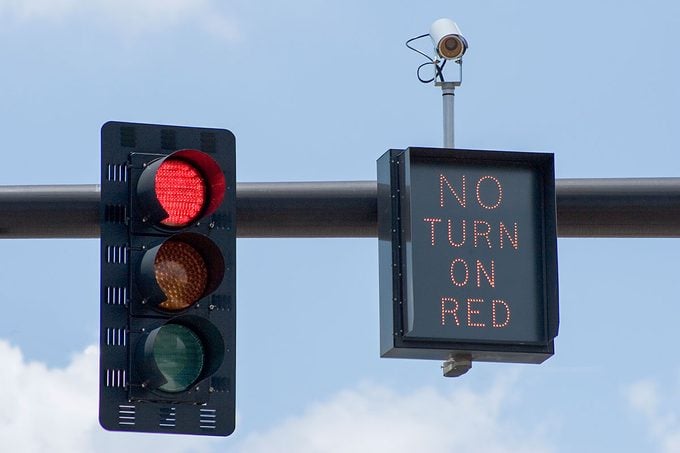
WOONSOCKET – The City Council again declined to approve a speed camera program for Woonsocket, instead supporting a resolution for red light cameras with revenues that go toward speed enforcement and mitigation citywide.
Several frustrated residents called again for speed cameras during the June 15 council meeting. They and Councilors Kristina Fox and Valerie Gonzalez said there are many others in the city who agree with them that this major change needs to be implemented before more people are struck by drivers.
But a majority of the council said they hear often from people who are opposed to the cameras, and they maintain that such programs are not effective for lowering speeds citywide.
Despite a previous 5-2 vote against speed cameras, Fox proposed an ordinance authorizing use of such cameras on a pilot basis, but the council again voted 5-2 against it.
The council voted unanimously for a resolution by the five councilors in the majority on speed cameras, Council President Dan Gendron and Councilors Jim Cournoyer, Michael Dubois, Denise Sierra, and Sharon Harmon, for the red light cameras.
Fifth Avenue resident Dennis Kotal shared how the ongoing excuses against speed cameras make him angry. He said the idea of hope requires anger at how things are and courage to stand up for change. There are no attempts to be proactive in this city, he said.
Kotal shared that if during his military days, he, as the person in charge of traffic safety at his base, had allowed even one child to be hit when 250,000 people were there for air shows, he and others would have been hauled in and not allowed to leave until there was an action plan to prevent it from happening again.
Councilor Michael Dubois, who proposed moving forward with exploring red light cameras, said he sees those cameras as more of a black and white (or red and green) issue, than speed cameras in certain zones that don’t ticket someone until they’re 11 mph over the limit, and aren’t as effective in forcing compliance.
Dubois said he imagines that most tickets will be given for going right on red when it’s not allowed, and he may get some of those tickets as well, but no one will be able to argue with it. Traffic light cameras are a solution around the clock throughout the city, he added.
With their successful resolution, said Dubois, he wants to see Mayor Chris Beauchamp go get vendor proposals on red light cameras and come back with something for them to consider. What he would like to see is a restricted fund established where all money collected from violations are controlled by the council and used to implement traffic-calming recommendations.
These funds would go toward construction and implementation of various options to limit speeding, including paying for police officers to do traffic patrols with radar, said Dubois. Money from any tickets would go back to the fund to make it sustainable.
Also at the June 15 meeting, the council approved ordinance amendment reinstating a prohibition on the use of battery-powered and motorized bicycles on sidewalks, another topic of complaint in Woonsocket.
In the resolution on red light cameras, the council seeks a properly sourced vendor to provide the enforcement technology, including a recommended fine amount, to be put before the council for review and approval. The Law Department will also provide any necessary amendments to the city’s code of ordinances to accommodate the implementation of the technology in accordance with state law.
Dubois said it was insulting to be told that they don’t care about children. Unlike speed cameras for just one segment of the city, red light cameras and the fund they supply will be for everyone, with a high priority placed on enforcement in school zones, near high-rises, and in general problem areas, he said.
Dubois said he has received tickets for going right on red without coming to a complete stop numerous times in Long Island, and he expects significant revenue from that infraction here. These cameras will be on around the clock, driving revenue not to the general fund but a restricted account to enhance pedestrian and cycling safety throughout the city, once and for all coming up with a plan for permanent traffic calming everywhere in Woonsocket.
Councilor Jim Cournoyer also didn’t take kindly to having his integrity called into question. He said a resolution before them eight months ago was not this, but instead a request for proposals for both speed cameras and red light cameras. He said he spoke with the police chief at the time and said that if officials came forward with a proposal just on red light cameras, he would get behind it.
Cournoyer said plenty of people other than the few who stand up at the council meeting to call them out on this are against speed cameras.
Fox then questioned the wording of the resolution, saying most of what they’ll be allowed to do is governed by state statute, including an $85 fine.
Fox later grew frustrated as Gendron and others suggested that the fine might be “up to $85.” She jokingly asked God for patience as she explained that the fine amount is set in stone and can’t be changed. Cournoyer and others later noted that the resolution asks that the Law Department draft something that complies with all laws.
Councilor Denise Sierra said she was feeling the same way as colleagues on the criticism directed at the council. She said they came up with a compromise, but were still criticized, and the proposal eight months ago looked nothing like this one. She said it bothers her that councilors are being painted as untrustworthy as they come up with a compromise they believe is right for the community.
Councilor Valerie Gonzalez said she would be a yes vote on red light cameras, as it’s an important traffic issue, but said speeding in school zones and people going through lights are two separate issues. She said she still supports speed cameras, and can’t reconcile the idea that others are describing $50 fines in speed zones as a “money grab” while being in favor of $85 fines for violations at red lights.
“That doesn’t compute,” she said, adding that the city needs both types of enforcement programs. That said, if they can agree on red light cameras, let’s move at least that portion forward, said Gonzalez.
Councilor Sharon Harmon said she’s trying to listen to all of her constituents, and despite the suggestion that the few people speaking at the council meeting represent the majority opinion of the city, she’s heard from numerous people who are opposed to speed zone cameras.
Mayor Chris Beauchamp said the bid they previously received wouldn’t still be viable, and they’ll need a new one just for red light cameras. He said he’s all for a restricted fund for safety enhancements, suggesting the the council invest some of the money in connecting the city’s bikeway.
Gendron said he would like to see all resources directed toward traffic safety and calming, at least at the outset. He said he told the chief months ago that he could support this idea if it was just about red light cameras, saying he sees that side of the coin as more objective than subjective. No one is able to debate whether the light is red or green, he said, but they can question why they don’t get a speeding ticket until they hit 11 mph over the limit.
Gendron mentioned a picture he saw of a speed camera taking a picture of a child being hit, conceding that while it may have been AI generated, the idea still stands. What good will it do to have cameras that capture infractions if it doesn’t actually keep children safe, he said, and is only in effect for 11 hours per day, 180 days per year.
Gendron asserted that this isn’t a compromise “it’s a perfection,” as they’re not giving up anything, but they are getting more. Red light violations are the hardest infraction to ticket, almost impossible, he said, where speed enforcement from “a human being enforcing the law” is effective and common.
The council then unanimously passed the resolution.
On the powered bikes on sidewalks debate, Sierra noted the insurance mess that people who are hit by someone in this situation are in, generally being “flat out of luck.”
Gonzalez said she believes these types of bikes have a place in this city, and there may be places in the city where there isn’t much of an option, so she would be a no vote. She later switched that vote after Public Safety Director Eugene Jalette mentioned that it’s already state law that such vehicles aren’t allowed on the sidewalk.
Sierra said the bikes have a spot, it’s just not on city sidewalks. This isn’t meant to ban other forms of motorized transport, she said, but it forces people onto the road where they belong and they have to follow the road rules.
The council voted 6-1 on this measure, with Fox a no vote.
When the speed camera vote came up, Gonzalez said she respects that some will never support this move, and they have valid worries. Everyone wants safer streets, and she’s listening to the families who walk, bike and drive in the city, as well as the police chief and safety director, in believing that this will make a difference.
Fox ripped colleagues for not taking what she sees as a very reasonable step in response to the tragedies that continue to happen. She said it’s not fun to be called out with insults, but the criticisms are fair and councilors should have thick skin.
She said there is no subjectivity with speed cameras, and they reason the limit isn’t lower than 31 mph in a 20 mph area is so people don’t get hit with a ticket every time they go a little over the limit. Speeding at 31 in a 20 is behavior the city has an obligation to change, she said, and it’s one other cities are undertaking.
The city is not taking real steps for safety, said Fox, and it shouldn’t leave a “great piece on the shelf.” This would be a pilot initiative, she said, and could be nixed.
Fox urged speed camera advocates in the room to make this an election issue, because it may be the only thing that politicians listen to. She criticized the idea of jokes about people having a “lead foot” in a city where multiple children have died after being hit by a driver. Something has to give, she said, and the solution could start that night with both types of cameras moving forward.
Cournoyer said he wouldn’t be changing his no vote of two weeks before. He said he grows tired of the emotional arguments on this topic, as the fact remains that the tragedies the city has seen of late had nothing to do with speeding in school zones. These cameras can only be on from 7 a.m. to 6 p.m. in school zones, he said, and a lot of people across the the city are being misled about the idea that they would solve all of Woonsocket’s speeding problems.
Harmon said it might not be a bad idea to put the initiative on the ballot. Fox keeps saying the community is asking for these, she said, but she was hearing from people even on the way to that meeting telling her please vote no.
“I am speaking for those reaching out to me,” she said.
Gendron said he agreed that he was hearing the same, and in a representative democracy, officials should be seeking to exercise the will of the people. He added that he had to tell some people who disagreed with him on traffic light cameras why he is supporting those, and he was generally able to convince them that there is a difference.
The council president said sometimes there’s a compromise to get to perfection, and that’s what they’re trying to do.
He said he doesn’t typically like to Google as Fox had done with the state law on $85 fines, but he did so during the meeting and found that studies across the country show automated speed cameras are often concentrated in low-income and minority neighborhoods to try to justify traffic safety near schools and parks.
Meanwhile, Gendron said, the data shows that ticketing disproportionately impacts those who can least afford it. No one sees Barrington installing these types of cameras, he said, describing it as an attack on a city such as Woonsocket.
Fox then smiled as she responded that Barrington recently approved cameras in school zones. She said that assertion by Gendron is also an argument against red light cameras. Fines for unsheltered people sleeping outdoors also disproportionately impact minorities, she said, saying she’s so very happy that the city suddenly cares about “poor black and brown people in Woonsocket.”
In a repeat vote, the proposal for speed cameras was again defeated 5-2, with Fox and Gonzalez in the minority.