



CUMBERLAND – Reversing course after a 4-3 vote to turn a project down, the Planning Board approved an 18-unit condo project at 106 Bear Hill Road.
At the June 25 meeting, board member Chris Butler initially voted against the project, but after a lengthy delay where he conferred with Solicitor Kelley Morris Salvatore, he became the deciding vote the other way.
Several residents offered concerns mainly centered on out-of-control traffic and lack of safety on Bear Hill Road, environmental concerns tied to a nearby duck pond, and potential excess stormwater runoff as the site of what is currently a single-family home is disrupted.
Attorney Patrick Dougherty, representing The Homes at Waterman Pond, LLC and Irene Schmitt, repeatedly reminded the board that this is the conceptual master plan stage, and that more in-depth analysis on traffic, environmental impacts, and stormwater runoff happens at the preliminary plan stage. That said, he noted, none of this project is planned for environmentally sensitive areas of the site.
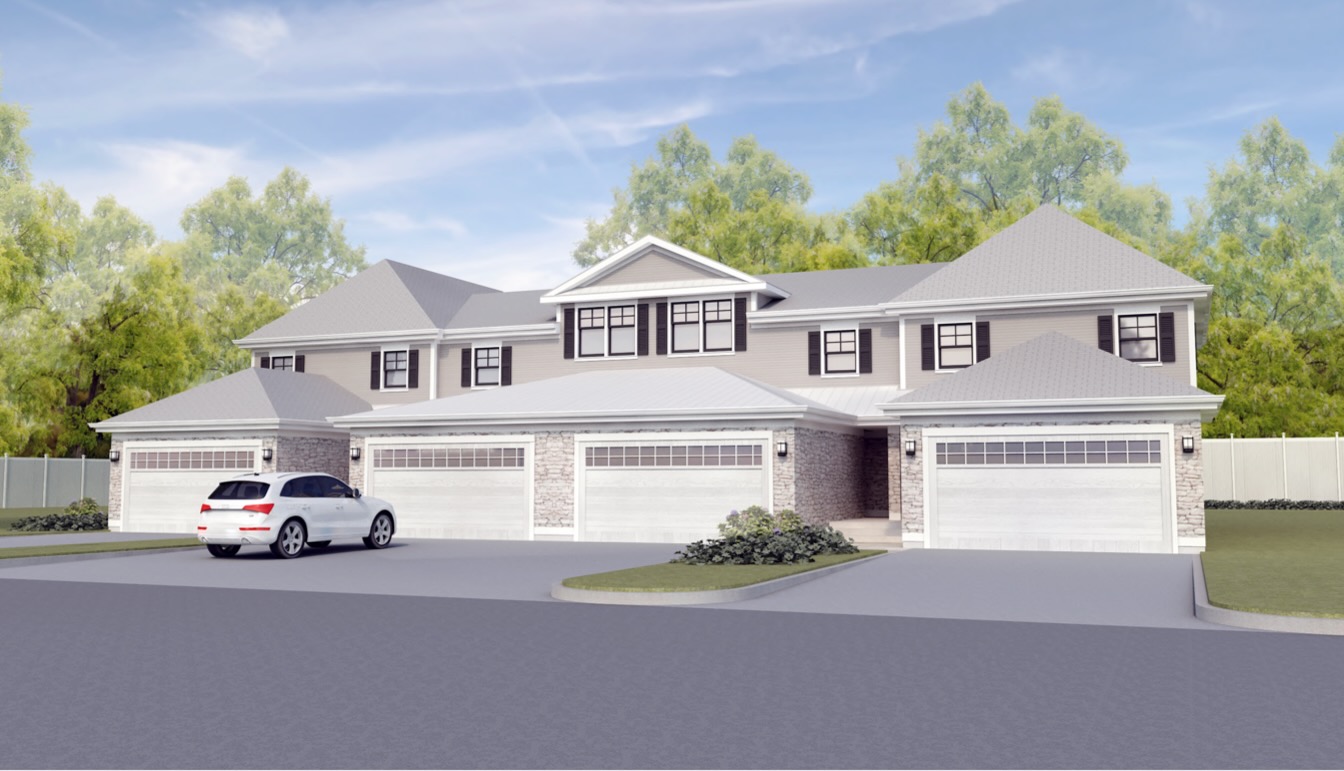
The plan calls for four multi-family residential buildings, including a pair of five-unit buildings and a pair of four-unit ones, for 18 total.
Dougherty also presented a traffic study showing no negative environmental impacts, a move prompting member Isabel Reis and others to respond that they’ve rarely if ever seen a traffic study showing adverse issues.
Dougherty said they’d already done quite a bit of work on the plans for the project, particularly around protecting the nearby pond and wetlands. He said the Rhode Island Department of Environmental Management verified the scope of wetlands.
The Planning Department recommended approval of the master plan, finding it consistent with the town’s comprehensive plan for preservation of open space, reducing impervious coverage, having flexible site design, and not adversely impacting traffic.
Dougherty said neighbors have legitimate concerns, noting an 11-page objection letter received from a nearby resident.
When an expert for the developer mentioned that a sidewalk will be added along the frontage for the property, which would come close to connecting to the sidewalk previously installed at the neighboring condos Schmitt previously developed, board member Steve D’Ambrosia joked that perhaps if they keep letting this developer keep going up Bear Hill Road, the town can get sidewalks the entire way along it.
Expert Edward Pimentel said he analyzed every development in the area and found that all others average 7,700 square feet per unit, while this one is 10,300 square feet, well under the density they would be allowed by right. Dougherty said they would be allowed to develop up to 33 units on the property if they pursued everything they’re entitled to.
Pimentel said they designed these units with only two bedrooms to lessen their overall impact.
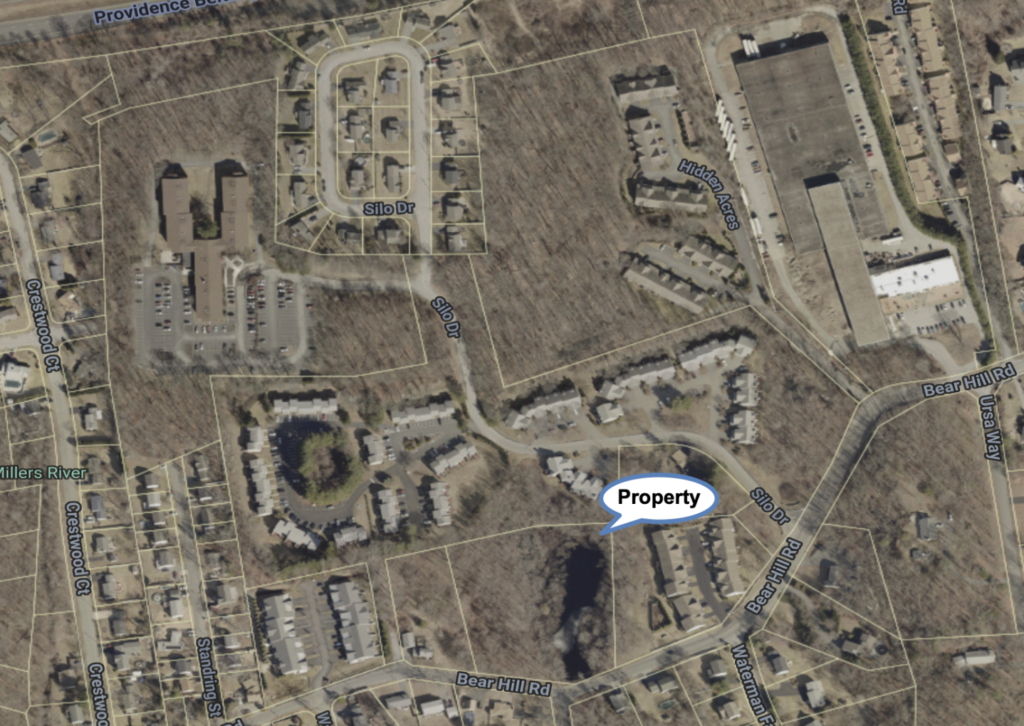
Butler said his major concern relates to the fact that Bear Hill Road narrows from an “immense” width of perhaps 40 feet just before this parcel to about 20 feet right near the property. He said there are no sidewalks or striping, and sight lines from drivers coming around the bend are terrible.
Dougherty said he agrees with the concern, but said while they’re happy to do what they can, they aren’t responsible for either driver behavior or the poor construction of the road.
Morris Salvatore said there will be an opportunity at the preliminary plan stage to address more of the engineering questions, a statement agreed to by Dougherty.
Member Josh O’Neill said he wasn’t surprised by the traffic analysis, saying the geometry of the roadway and the speeding issue on Bear Hill are not the responsibility of the developer. The Police Department is doing nightly enforcement in the area, he said, but it’s absolutely on the town to do better on solutions such as speed signs and letting the public know enforcement is happening.
Butler said speeding isn’t his point, it’s about he curve and significant narrowing of the road. Even 30 or 35 mph is an issue, he said, and the town can’t control the fact that this was originally a cow path that’s not designed for development of hundreds of condo units.
Reis said traffic studies are never accurate even though they look perfect on paper, and don’t help the board properly analyze plans for their impact. Dougherty said he agrees that they can do more, and they can make recommendations on how the town can handle this road.
Attorney Matthew Pimentel (no relation to the expert of the same last name), representing resident Joseph Rossignoli of 84 Crestwood Court, said Rossignoli objects to this project for a number of reasons, including the traffic conditions on Bear Hill Road. Rossignoli was the resident behind the 11-page objection.
Attorney Pimentel addressed page 28 of Cumberland’s comprehensive plan, which calls for housing development expansion in areas with infrastructure to support it. The lack of a center line, curbing, and sidewalks on Bear Hill Road are among the issues residents here deal with every day, he said, and nothing has been done about them except to increase development. Since 1980, 268 condo units have been added on this stretch, and residents are dealing with a roadway that’s now overburdened and can’t handle another condo development.
Pimentel also questioned the applicant’s assertion that this condo project fits in because of the one they already built next door.
Nearby resident Eric Briggs said he feels this is a done deal based on the previous project next door going through despite resident concerns. He said unless the town is going to do something about speeding, this is just another middle finger to residents, and he’s also saddened by the thought of losing more beautiful trees and the wildlife that comes with them.
Gary Roberson, of the Friars’ Green Condos at 154 Bear Hill Road, agreed with Butler’s assessment of the narrowing roadway near Hines Road, saying traffic heading toward CVS at Chapel Four Corners also gets backed up substantially. The telephone pole right near the subject property should probably be moved to increase sight distance coming around the bend, he said.
Other residents also agreed on the traffic situation here, saying drivers go flying by on a road that’s just not adequately designed for a lot of cars or high speeds.
Bryce Witner, of 9 Standring St., listed five reasons he’s opposed to the plan, including wetlands and stormwater runoff, traffic safety and road capacity, rat infestations, environmental impacts, and historical and cultural preservation.
Witner said he was assured when the nearby condos built behind his home were originally proposed that they wouldn’t impact water in the area, and that the retainer system would be able to withstand 100-year floods. He said his concerns were dismissed then and he was told everything would be fine, he said, but after the woods behind his home were removed, his house has been flooded twice. That was never an issue prior to the other condo development, he said.
Lisa Foster, of 101 Hines Road, said that when a kennel was previously proposed in this area, traffic was cited as a major issue. Stop signs have helped slightly, she said, but it’s still not a good situation, and she is concerned about public safety, especially when police and fire vehicles come through.
Other residents also discussed traffic safety and stormwater runoff concerns.
Rossignoli said the traffic situation on the road is “past the point of being acceptable,” and it’s not something the town can enforce its way out of. Traffic trajectory, volume, and the lack of pedestrian accommodations make it clear that new speed signs or other signage aren’t going to be the answer, he added.
Rossignoli added that he’s also very concerned about the impacts to wetlands in an area with pristine water quality. He said it’s “abhorrent” that there’s been no species survey or water quality study.
New town resident Gabriella Giangregorio, of 160 Shirley Drive, said she’s concerned about what she sees as a “feeling of lack of concern for overdevelopment in town.” She said people should feel as if Cumberland is a place they can comfortably grow their family, and she gets a pit in her stomach watching the traffic situation in this area. A stop sign isn’t going to solve anything, she said, nor are traffic cameras such as the ones suggested by the developer’s representatives.
That comment was also echoed by attorney Pimentel, who said cameras wouldn’t be allowed in this zone because there’s no school.
Dougherty told the board that they want to resolve all issues going forward, but this is the conceptual master plan stage. If they can’t prove safety aspects or that there will be no net increase in storm runoff during the next phase, he contended, the board can deny the plan.
Board member Roy Costa said proving to this board that the addition of this project is going to be safe for Bear Hill Road and deserves to be here will be a huge undertaking for the applicant.
O’Neill said there have been traffic concerns along Bear Hill Road for decades, and he remains concerned about suggestions that the applicant should be responsible for fixing them on what is a poorly designed roadway that expands from 20 feet to 40 feet wide in multiple spots. The town deserves to have a safe road, he said.
Butler agreed with Reis that he never sees traffic studies showing a detrimental effect from traffic. That’s because one development really doesn’t have a negative impact, he said, but the cumulative effect of many approvals over the years adding up to more than 200 new units does affect people living here. He said he doesn’t want to put all of the blame on the town for what is a very difficult situation with the configuration of an old and narrow road with no sidewalks.
Butler said the onus should also be on the applicant. He said it’s not legitimate to say that they could always deny this at the preliminary plan stage, as that simply never happens.
The board member said his issues with the previous development next door was related to aesthetics, where this is more about environmental and stormwater concerns and the configuration of the road right at the property line.
Experts can show all they want that stormwater will stay on a property, he said, but ripping out trees and rocks and adding foundations causes water to behave differently and is never accounted for during deliberations. He said he might typically overlook this, but he’s very concerned about the effect on the nearby pond, brook, and swamp area.
O’Neill made a subsequent motion to approve the master plan, but it was defeated 4-3, with Butler, Costa, Reis, and Bill Zuck voting no.
Morris Salvatore then said they need to make clear findings of fact in another vote to officially deny, adding that it wasn’t clear to her why the denial was being made.
The board then called a break, and when members came back from it, Butler explained that he would be changing his vote to a yes. He said he had hoped that they could postpone a vote for a month to get more information on traffic and environmental concerns, but in what is sometimes a difficult and high-pressure situation when someone makes a motion, he’d to deny. During the hiatus, he added, he’d sought out Morris Salvatore for her advice, and based on her analysis, he was changing his vote, despite his concerns remaining the same.
The Planning Board is a “quasi-judicial” body making decisions that can be appealed, said Butler, and Morris Salvatore wasn’t comfortable that she could adequately defend this decision.
Butler pledged a more thorough in-depth analysis on traffic and environmental issues during the preliminary plan stage, another opportunity for abutters and experts to weigh in. He said he should have known better than his first vote and apologized to those in the audience for giving the impression of any sort of “shady” dealings. This wasn’t that, he said, but simply trying to make the right decision.
The board then voted to approve the conceptual plans with conditions.