




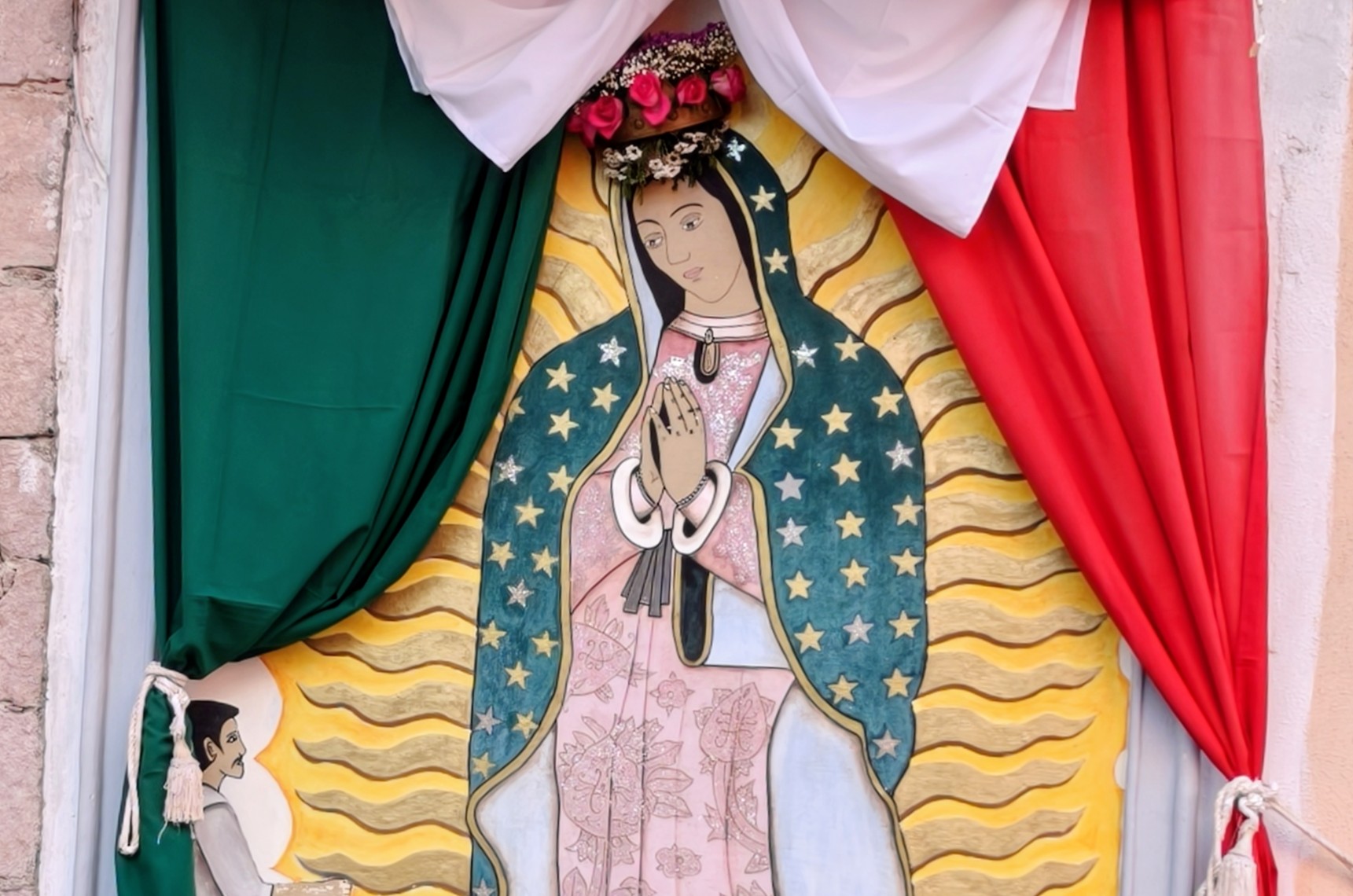
Every time I left my mother’s house, she made the sign of the cross over me. Que Dios te bendiga, even if I was just walking to the neighbor’s house. If you grew up like me, you know the gesture. Quick, practiced, non-negotiable. You do not leave the house without la bendición, because the house cannot follow you where you’re going, and where we were going was a country that had not decided if it wanted us.
Mexico lost to England last night, 3-2 at the Azteca. Bellingham twice, Kane from the spot. El Tri hadn’t conceded a goal all tournament and then conceded three at home, in a World Cup this country is hosting, and the run died in the round of 16 the way it has for 40 years. By midnight, canta y no llores was everywhere online. Sing, don’t cry.
Fine. But that phrase gets pulled out for tourists and trophy losses. The ones that actually raised us are harder and quieter. Échale ganas. Ponte las pilas. Pa’lante. No te rajes. Nobody embroiders those on a pillow. People like my father live them instead. Twelve hours of landscaping in a sun that doesn’t care what their papers say, then home, then up again before light. They never framed any of it as sacrifice. It was Tuesday, and then it was Wednesday.
Those phrases live in the kid in Providence or Phoenix who got the call that ICE took his father from the parking lot of his job, and who still showed up to school Monday because his mother said the family did not cross a desert for him to quit algebra. They live in the Salvadoran roofer in Texas, the Dominican home health aide in Boston, the Guatemalan line cook working the Sunday double. Each of them making the same weekly phone call home and holding the phone away from their face for a second when a mother’s voice cracks, because she cannot know how much it costs to be the one who left. Twenty years, some of them. Twenty years of birthdays as a voice on speakerphone. They keep sending the money anyway.
I grew up undocumented in the U.S., so I learned the rules early. One traffic stop and everything ends. You learn to be excellent and invisible at the same time, which is its own exhausting sport, and you learn it from parents who worked doubles and still asked about your grades.
This country took the labor and questioned the presence. That deal hasn’t changed much, and it was never only a Mexican deal. The same hands that framed the houses, picked the strawberries, cleaned the hospitals, and staffed the kitchens get called an invasion every election cycle, and every election cycle those same hands go back to work, because rent is due, the kids need shoes, and no te rajes was never a suggestion.

Every immigrant family has its own version of the phrase. The language changes. The instruction doesn’t.
Four years ago I moved back to Mexico, the first time I’d lived here as an adult, and I found the same stubbornness running in the other direction. The food stand that reopened three weeks after a fire. The family rebuilding a house for the second time in a decade because the ground here moves and so do they. Nobody claps for any of it. Nobody was supposed to. I used to think the border put that grit in us. Living here taught me we brought it with us.
So when the whistle went last night and 70,000 people stayed to sing, I heard the same reflex as la bendición at the door. We know exactly what’s out there, and we’re going anyway. It hurts. Let it hurt. Losing a soccer match sits nowhere near the hardest things we have carried, and everyone in that stadium knows it, which is exactly why they could sing.
My mother still blesses me every time I leave for the airport. I’m a grown man with kids of my own and she does it anyway, and I’ve stopped pretending I don’t need it. That’s the inheritance, and it belongs to everyone who has ever had to keep going without an audience. A refusal, older than any of us, to let the loss decide who you are.
Mexico plays again in four years. Everyone was back at work this morning.