



WOONSOCKET – In a finding involving some of the more egregious Access to Public Records Act violations in recent history, Attorney Gen. Peter Neronha has found that city officials willfully and knowingly acted in ignoring numerous requests for information.
In a Nov. 16 letter, Neronha said he gave Solicitors Michael Lepizzera Jr. and Allan Fung chances to provide supplemental submissions addressing whether the violations were willful, knowing or reckless, but his office received responses in only two instances.
The ruling finds 27 violations where the city didn’t provide the documents requested under the Access to Public Records Act, which requires government entities to respond within specified time frames and according to requirements established by state law and case law.
Lepizzera did not immediately respond to a request for comment.
“We now issue this finding determining that the city willfully and knowingly (or in the alternative, recklessly) violated the APRA in connection with each of these complaints, and pursuant to our statutory authority, this office will file suit and pursue civil penalties and any other appropriate relief,” stated the letter.
“See R.I. Gen. Laws § 38-2-8(b): “The attorney general shall investigate the complaint and if the attorney general shall determine that the allegations of the complaint are meritorious, he or she may institute proceedings for injunctive or declaratory relief on behalf of the complainant in the superior court of the county where the record is maintained.”
It adds, “After seeking supplemental submissions in connection with several findings, this Office has received several additional APRA complaints asserting similar violations.”
“Given the systemic nature of the city’s violations and to avoid delay in seeking relief regarding all similar pending complaints, we address them briefly here rather than in separate findings. We find violations as to each complaint,” states the letter.
In two instances, one with former City Council President John Ward and one with developer Greg Rice, Lepizzera and Fung provided supplemental submissions conceding that they committed an error, but claiming the violation was not willful and knowing or reckless, and more a staffing issue due to severe financial constraints.
They explained that in previous budgets, the city retained outside counsel specifically to handle APRA requests. However “(w)ith the financial crisis, significant cuts were made in every department, including in the Law Department.” They asserted that as a result of those cuts “the Law Department lost both outside attorneys who handled APRA requests” and “Solicitor Lepizzera and Assistant Solicitor Fung are now the sole attorneys handling all ongoing law department obligations, from representing the Administration and City Council in all matters to even specialized litigation, to now having to assume responsibility for answering APRA requests as well as providing counsel on all matters pending before the Planning and Zoning Boards and in the respective departments.”
They said “these staffing issues are mitigating circumstances that do not rise to the level of a willful or knowing violation,” further representing that the “Law Department is also attempting to make permanent, through negotiations with one of its bargaining units, an interim paralegal into a permanent unionized position to solidify an individual to assist in handling APRA requests.”
The city partially complied with the findings and provided responses to APRA requests from Gayle Gifford, Ted Isabella, Doug Wilson and Corey Johnson, as directed responses to Gayle Gifford, Ted Isabella, Doug Wilson, and Corey Johnson’s APRA requests as directed, but the AG has not been presented with evidence that the city complied with their directive to substantively respond to Johnson and Katrina Lapierre’s APRA requests.
In both the Ward and Rice cases, as well as others, solicitors failed to respond. In both cases, the city ended up providing responsive records after the requesters filed complaints.
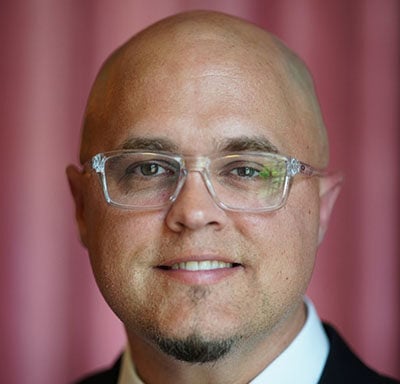
“Twenty-seven public records violations. Years of warnings. And Woonsocket City Hall is still rolling out the same excuse: ‘We’re short-staffed,’” posted Rice. “OK. Who at City Hall was supposed to fix that? And what did they do about it after the first lawsuit?”
Woonsocket already agreed to pay a civil fine after the state sued in 2009 over the same problem, he added, and 17 years later, the Rhode Island Attorney General found 27 more violations and concluded the city acted knowingly and willfully, or at least recklessly. Now his office says it’s taking Woonsocket back to Superior Court.
In many cases, people had to file a complaint with the state just to get City Hall to start processing a records request, he said.
“Think about how ridiculous that is. You ask the city for a public record, the deadline passes, and now it’s your job to get the Attorney General involved just to get an answer.”
Four of those complaints were his, said Rice.
“On my September request, the City gave the AG no indication that it had turned over the records or even planned to. The AG says his office will ask a judge to intervene,” he said.
City Hall had years to fix this. It had a lawsuit, a fine, and repeated warnings. That’s a failure of leadership. Who was responsible for fixing it, and why is the state still doing their job for them?
Ward also offered a statement Tuesday.
“I have long been frustrated by the lack of response from the city for some very simple requests that could have been answered in mere minutes, but took far beyond the ten day statutory limit,” he said. “There is no excuse for such a lack of transparency by the city administration. I must assume that the mayor was made aware, or certainly should have been made aware, of the warnings coming from the Attorney General and his failure to address the problem is disturbing. I am hopeful that our next mayor will fix this terrible administrative failure immediately.”