



CUMBERLAND – There haven’t been any historic rainstorms since it was finished, say officials, but the early signs from the Industrial Road Drainage Project are encouraging.
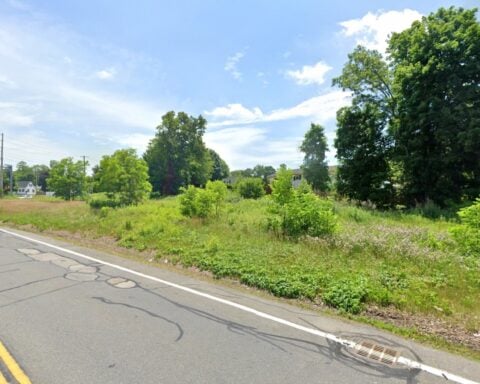
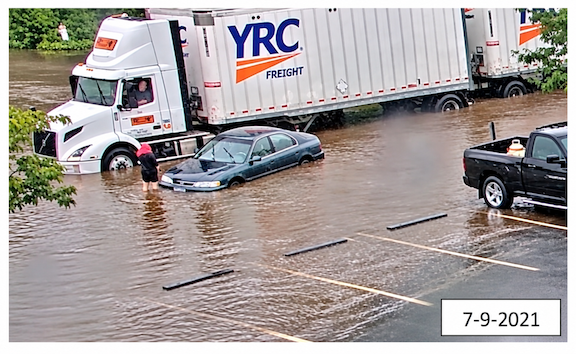
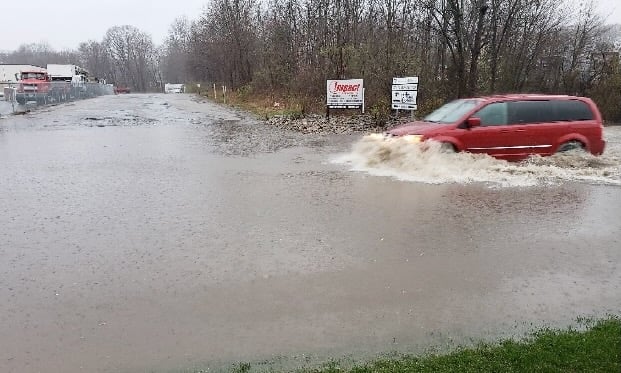
Okonite and other companies in Cumberland’s most significant commercial/industrial area had suffered for years from chronic flooding that would shut operations down and keep employees from getting there.
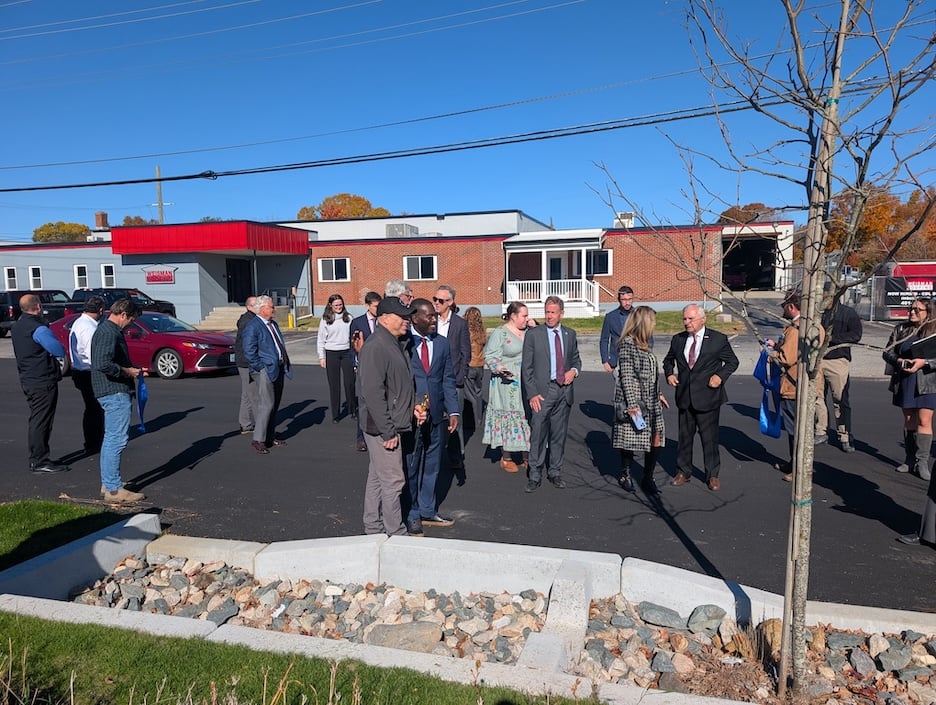
On Tuesday, Oct. 27, officials hosted a ribbon-cutting ceremony celebrating the culmination of years of efforts to address the flooding, improve stormwater management, and strengthen infrastructure supporting local businesses and economic development.
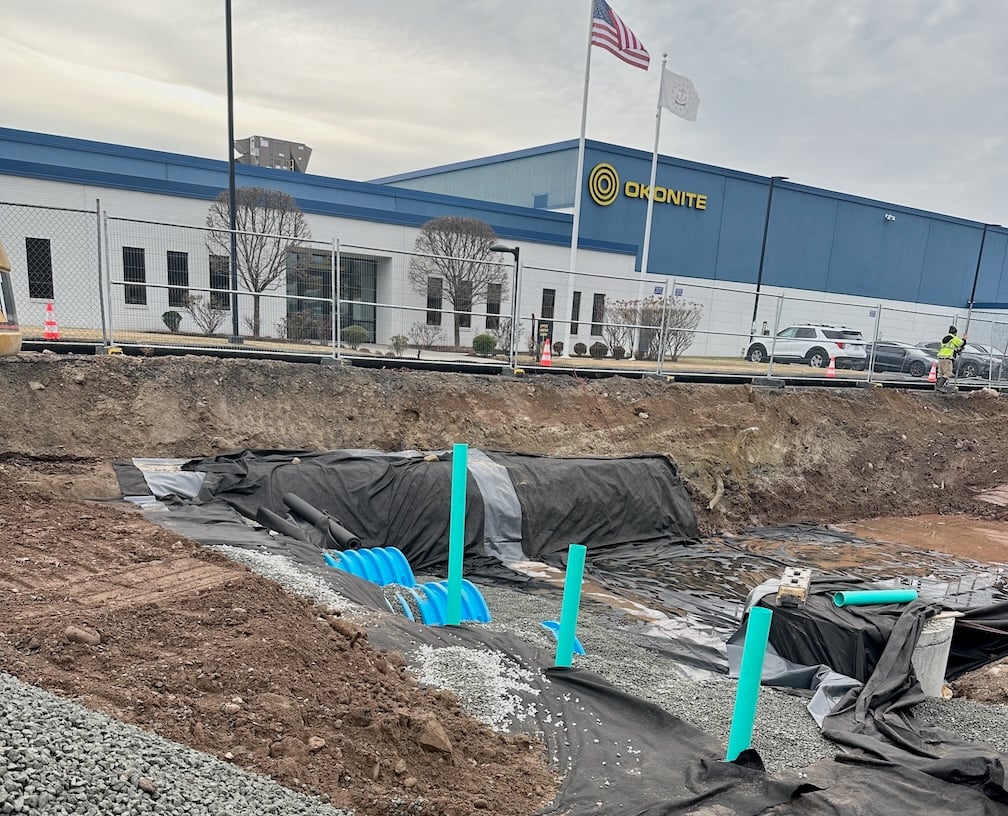
Repeated flooding had impacted more than 30 businesses, creating concerns during periods of heavy rain. Through this project, the town upgraded obsolete infrastructure and implemented an improved stormwater drainage system designed to manage, reduce, treat, and recapture stormwater more effectively.
The project was separate from the state’s efforts on the other side of Okonite, on the exit ramp and along I-295, to install new stormwater management systems, causing officials to be optimistic that the combined work will completely change the game and road functionality for the area.
On Tuesday, Mayor Jeff Mutter thanked Okonite representatives for their patience and apologized for the inconvenience they’ve faced over the years. He also thanked grant writer Lisa Andoscia for her work securing the funding.
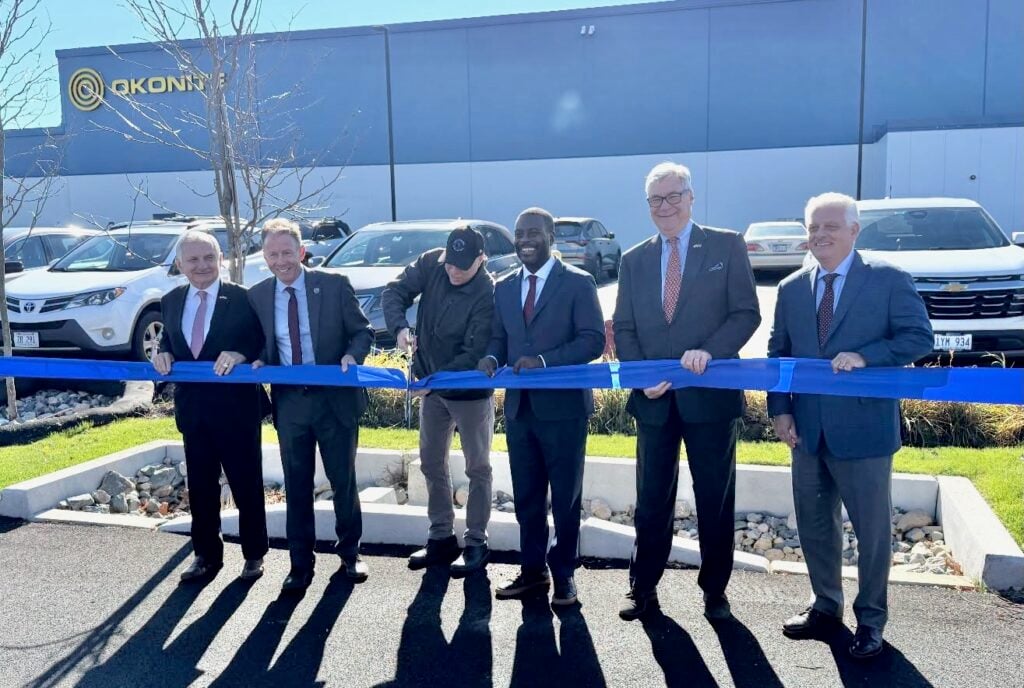
Speaking during the ceremony were Mutter, U.S. Sens. Jack Reed and Sheldon Whitehouse, U.S. Rep. Gabe Amo, RI Infrastructure Bank CEO William Fazioli, and Public Works Director Romeo Mendes, the project representative for the town.
“Today marks an important milestone for Cumberland as we celebrate the completion of the Industrial Road Drainage Project, the result of years of collaboration to address chronic flooding and modernize critical infrastructure,” said Mutter. “I am grateful for everyone who helped bring this project to fruition. Together, we are protecting local businesses, strengthening our stormwater management systems, and building a more resilient Cumberland for years to come.”
Fazioli emphasized how this is a great example of climate shifts impacting businesses and property values, and how the R.I. Infrastructure Bank has funded numerous projects in town over the years. He encouraged people to vote yes on Question 5 on Nov. 3, which will help fund more projects across the state.
Much of the completed work was invisible on Tuesday, happening underneath the roadway.
The project was made possible through critical funding support from Rhode Island’s congressional delegation, including Reed, Whitehouse, Amo, and former Congressman David Cicilline, who was there on Tuesday, as well as the Rhode Island Infrastructure Bank.
The project was funded through a $1.2 million federal earmark secured by the state’s congressional delegation as part of a 2023 funding package.
“I’m grateful that as a team, we’ve been able to complete this important community project,” said Mutter.
“The town also recognizes the dedicated professionals and partners whose expertise and commitment helped bring this project to completion. Pare Corporation provided invaluable engineering and permitting support throughout the life of the project, helping guide the effort from planning through implementation. R.T. Nunes, the project contractor, completed the work efficiently and with a strong commitment to quality,” added a release.
“The town also extends its sincere appreciation to Public Works Director Romeo Mendes for his leadership and stewardship in guiding the project to the finish line.”
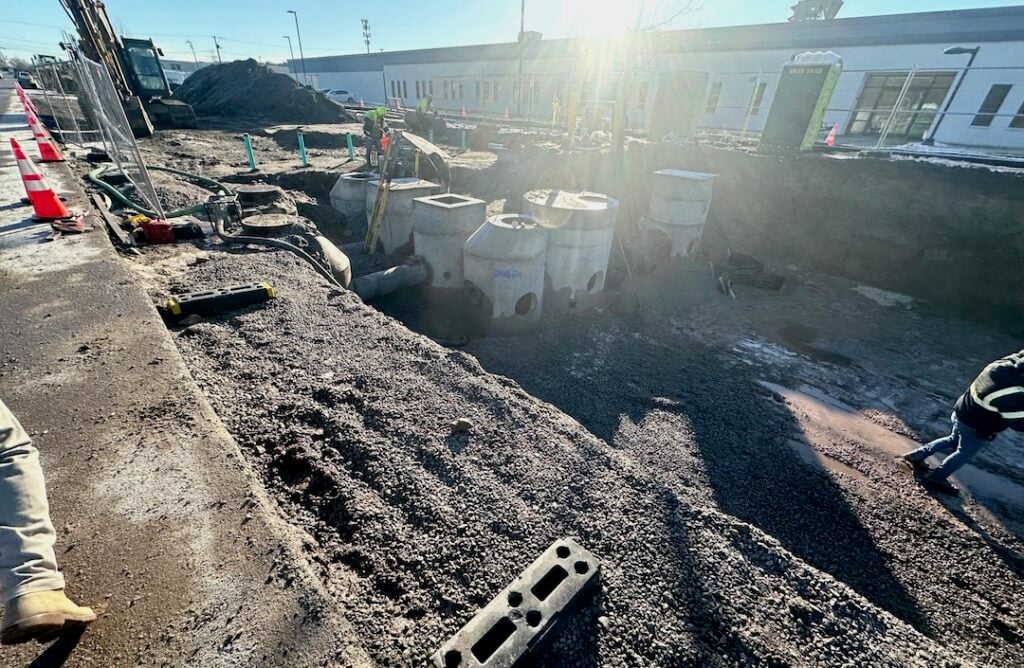
Mendes said there was so much work done behind the scenes, requiring tremendous coordination and attention to detail. He pointed to a marker up the road showing just how deep the water would get here before, saying this is all about accessibility and public safety for some of Cumberland’s largest commercial properties.
Whitehouse said the focus on climate impacts is often on sea level rise, but the increase of heavy downpours and the lack of infrastructure to deal with them is one of the greatest challenges facing states and communities.
Amo said stormwater infrastructure isn’t going to grab the headlines, but it matters deeply. He said companies such as Okonite feel that deeply, and this is the definition of a win-win.
Reed spoke of working together to combat the effects of climate change, saying he and others won’t tolerate infrastructure conditions that hurt local economies.
The completion of the Industrial Road Drainage Project reflects Cumberland’s ongoing commitment to investing in essential infrastructure, addressing longstanding community challenges, and creating conditions that support local businesses and future economic development, said Mutter.