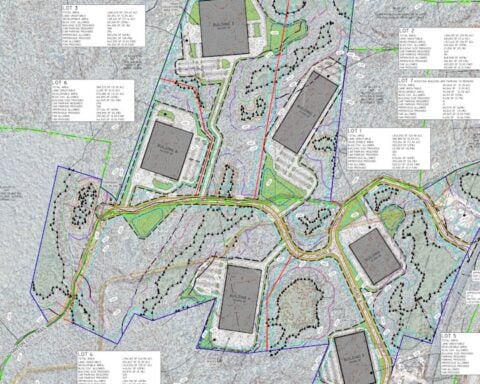




LINCOLN – Seminole Development’s plan to build 49 affordable housing units and an adjoining solar array off Cobble Hill Road has been withdrawn and will be replaced with a new all-residential plan.
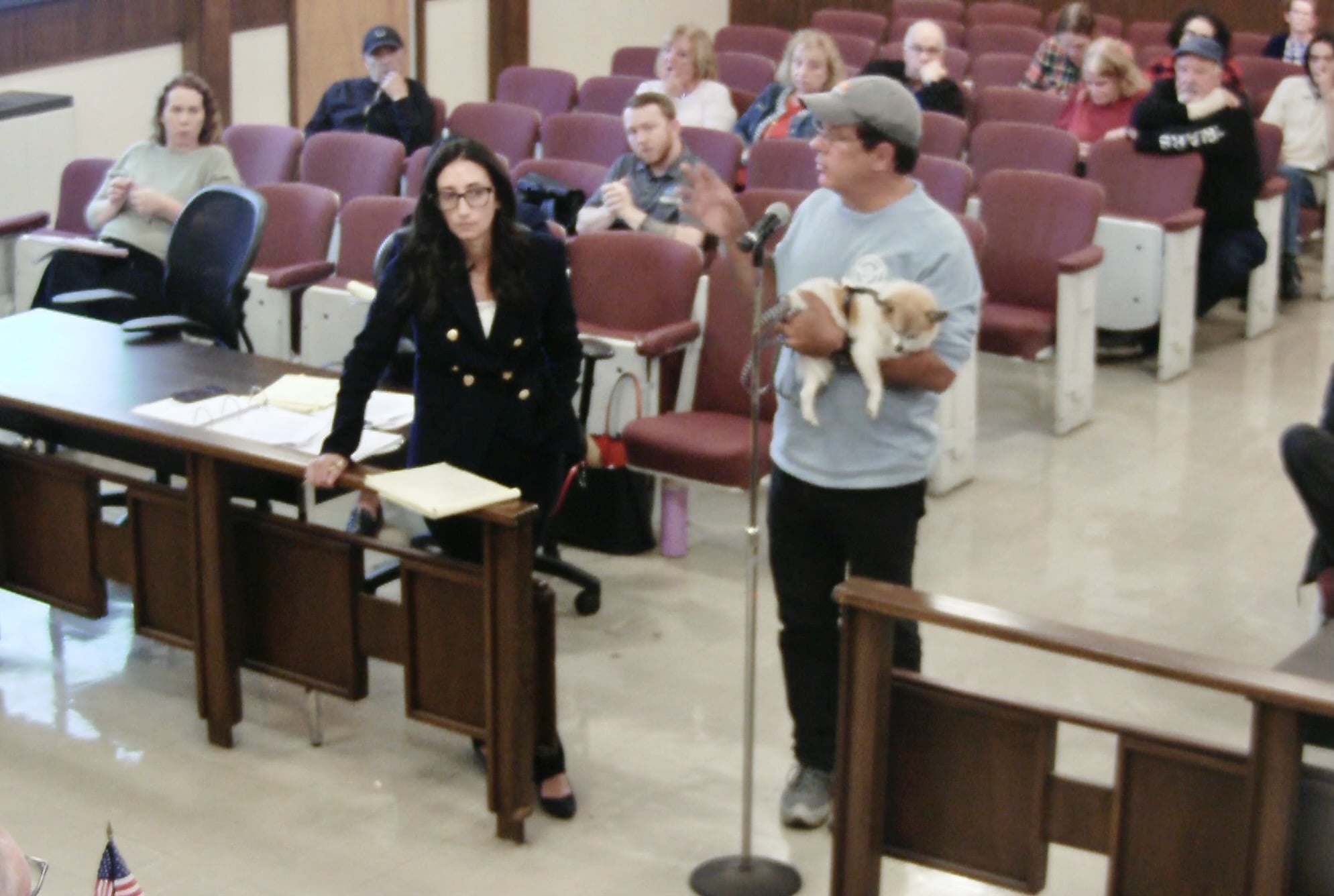
On Sept. 23, faced with opposition and the prospect of likely defeat after hours more of expected discussion, John Somyk, of Seminole Development, said he would come back with a new proposal.
Somyk said he had included the solar component as a way to make the project work financially while keeping the housing totals lower, but would have no problem changing course after hearing from residents.
The comprehensive permit master plan had called for 49 units and 98 parking spaces, or two per unit, and Somyk said the new plan will need to have significantly more units to make it work. He pledged not to come back with an excessive number.
Somyk said they’re really not solar developers to begin with, but were trying to create a plan that would be palatable to people.
His attorney, Joelle Rocha, said her clients are housing developers by trade and they’ve developed a great reputation in doing so. She said the 49 units would be a net gain of that same amount toward the state threshold of 10 percent affordable housing in town, and not move the town further away from it.
Planning Board member John D’Aloisio said he wouldn’t be able to vote yes on the project unless someone could explain to him how they can insert a commercial manufacturing facility (solar) into a single-family zone. He and others said the intent of allowing commercial with such comprehensive permit projects is for retail, not this type of facility.
He was told that the board simply has to make a finding on whether local concerns outweigh state and local needs for more low-to-moderate-income housing.
D’Aloisio called this a very gray issue, saying he believes the town needs to say whether it wants the board to even put such a facility in this location.
Member James Seymore asked how many more units are needed to get from the current 8.35 percent to 10 percent affordable housing in Lincoln, and was told by Town Planner Stephanie Davies that there are still 270 homes to go.
Seymore said they were almost being put in a position of having to say yes to the combined solar/housing project or risk seeing 105 housing units proposed. He said he doesn’t see how it’s on the board to help the developer make the money he wants to make.
He was then told that this was seen as the preferred option to more units.
Somyk said he’s been doing this work for nearly 40 years, and is doing another project on Old Louisquisset Pike. Of the 16 units sold as part of that project, nearly all have been to young professionals with no children or to elderly buyers, he said. Many units also won’t have basements, he said, meaning that residents will use their third bedroom as an office or storage.
He repeated that he’s not married to the idea of solar, and they were only trying to make the project work financially. He said it’s not a threat, but the government allows 30 percent tax credits for solar, and they only have one opportunity in the bidding process as President Trump has taken that credit away. Time is up, he said, and he’ll have to go another route without the approved solar.
D’Aloisio said it’s refreshing to hear a developer say their motivation for a component of a project is for profit. He said Somyk has followed all the rules and submitted a valid application, and he also knows he has a great reputation.
Somyk said he knows this area well, having grown up in Lincoln. He said a move away from the solar won’t mean maximizing the number of units he could apply for, and that he’ll likely have to go with the typical 25 percent affordable units instead of 100 percent. Total units will likely be in the arena of 90, said Somyk, who added that he’s not trying to threaten anything, just give the facts.
Numerous residents offered their concerns on the project, including on traffic and student safety, environmental and wildlife impacts, and the town becoming overdeveloped.
Deidre Carreno, of 2 Tara Way, said the developer would make his money, but residents would be “stuck holding the bag again.” She said there would be significant negative impacts for current and future residents.
When making their required findings, said Carreno, members should consider that local schools are at capacity and there are almost no seats available. She shredded the idea of 49 three-bedroom units not being filled with families, or that they’ll attract downsizing seniors, saying even young professionals such as she was often eventually have children.
She said officials need to do their due diligence to prevent traffic and school impacts, and she can’t see how the board wouldn’t find significant negative impacts. She cited a Town Council resolution seeking caution on approvals for projects until local planning authority is clarified, and said this is just the type of project that was contemplated in that resolution.
Mitchell Clough, one of several Mark Drive residents to attend the meeting out of concern for potential access through their street and impacts to their homes, said there is zero precedent for a major commercial or solar farm component in the comprehensive permitting process. He cited the need for operations plans, maintenance plans, and decommissioning plans for the solar farm, saying such conditions would be “extremely relevant” given how the project is within 75 feet of a home. Clough also said a 6-foot fence won’t do much to hide a 10-foot solar array, among other comments.
Resident Ken Martone, also of Mark Drive, said he’s lived there nearly 40 years and maintains a deep interest in the town. He said safety concerns on solar are plentiful, and he’s not comfortable having it in his back yard. When he moved to Lincoln, said Martone, he never contemplated anything like this happening, questioning the benefit of the project and the legality of it.
John Lamothe, of Mark Drive, said the “humongous” solar array doesn’t make sense. He said they recently purchased their home from his father-in-law after the death of both his wife’s mom and his mom, and they and their neighbors enjoy living in a quiet neighborhood. The project doesn’t make sense for the area, he said, including for its impacts on wetlands and wildlife.
Resident John Barr, also a candidate for State Senate, said he sees the same type of issues with this project as with one on Wilbur Road. He said the developer does have a good reputation, but you can’t compare this project with the other one he mentioned. This one is all ledge, he said, and will require blasting. He said the $250,000 purchase price shows that the property didn’t have a tremendous amount of worth, and the return on investment wouldn’t be there if the developer had to adhere to the comprehensive plan instead of going with a cluster zone.
Barr said the proposal would ultimately lead to an element that the town is trying to stay away from to maintain its rural character, saying it has a “high probability of becoming a project,” and if he were the developer in this instance, he would go for Section 8 housing in a heartbeat.
Barr said it’s not fair to put the 10 percent affordable housing goal on the backs of these neighbors. He said there are no easy answers, but this is a bad deal all around.
“It’s not our job to give up our quality of life so the developer can make money,” he said.
Other residents also offered strong opposition for a variety of reasons.
When Seymore asked Somyk if the $250,000 was accurate for the purchase price, Rocha said she doesn’t understand how that is relevant. Seymore responded, “because I want to know, that’s why it’s relevant.”
Rocha said they would be willing to comply with various conditions on phasing related to the project to ensure that both the solar and housing happen. It would be expected to take up to about a year to get the solar panels in, said Somyk.
When Chairperson Kenneth Bostic made a comment that he’d like to ask Somyk directly to come back with a new plan next month, and that Rocha would likely try to force their hand to approve the solar, Rocha shot back, telling Bostic not to talk to her like that. Responding to Bostic saying that the project could go through lengthy testimony and then be voted down that night and end up in court, she and Somyk said they would be willing to agree to the extension to next month.
Somyk assured the board that he won’t be coming back with 150 units, but there will be “quite a few more than 49.” He said he’ll get rid of the solar element and they’ll also try to avoid having to go through Mark Drive if possible. Solar isn’t what they normally do, he said, and they can come back with the new plan for more units.
Rocha and Somyk said they were withdrawing their proposal without prejudice, and they’ll come back with something reasonable.