



Huerta died Oct. 28, 2026, at 96. She never settled for one family getting through, and neither should we.
By Ray Nuñez
Dolores Huerta died this morning at her home. She was 96. Her family said it was cancer, and that they’ll share plans to honor her life later. For more than seventy years she organized people who had been told, over and over, that nothing in their lives was going to change.
She coined “Sí, se puede” and negotiated the first union contracts American farmworkers ever won. She was arrested more than twenty times and beaten by police, and she outlived most of the people who told her to wait her turn.
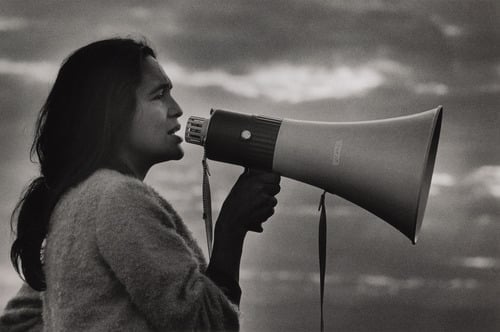
In August 1970, Huerta helped lead the Salad Bowl strike in California’s Salinas Valley, which grew most of the country’s lettuce. Thousands of farmworkers walked off the fields. It became the largest farmworker strike in U.S. history. When a judge shut down the picket lines, she and César Chávez called a national boycott of iceberg lettuce picked without a union contract. Families in New York and Chicago stood in grocery aisles and left the iceberg on the shelf. Most of them had never met a lettuce picker. They did it because organizers Huerta trained knocked on their doors, sat in their churches, and asked.
Farmworker families all over California felt that boycott, mine included. My mother picked iceberg lettuce in ice-filled bins, and my father has worked the land my whole life. What stays with me is that the people who changed that industry were mostly strangers who decided a picker’s paycheck was their business.
Where she came from
Huerta was born in 1930 in Dawson, New Mexico, and raised by a single mother in Stockton, in the San Joaquin Valley. She became a teacher in rural California in 1954 and quit within a year. She had seen enough of her students’ lives to know the classroom wasn’t where their problems would get fixed, so she went to organize their parents.
In 1962 she co-founded the National Farm Workers Association with Chávez and Gilbert Padilla. It became the United Farm Workers. During the Delano grape strike she ran the boycott in New York, and she sat across the table from growers and negotiated the first farmworker union contracts this country had ever seen. She was a woman with a lot of kids, a Mexican American woman in the 1960s, telling grape growers what they were going to pay. Think about the nerve that took.
In 1972, Arizona passed a law so harsh that a farmworker could be jailed for organizing a strike or a boycott. Huerta went to meet with local Latino leaders to ask for help fighting it. They told her, “No, aquí en Arizona, no se puede.” She told them it could. That night at Santa Rita Hall in Phoenix, she repeated the exchange, and the room took up the chant. Barack Obama borrowed it in English for his 2008 campaign and admitted as much when he gave her the Presidential Medal of Freedom in 2012.
She paid for all of it. She was jailed 22 times. She was standing near Robert Kennedy the night he was shot. In 1988 a San Francisco police officer beat her with a baton at a peaceful protest, and the injuries kept her in the hospital and weak for months. She kept going.
What she carried
This March, at 95, Huerta said publicly that Chávez had sexually assaulted her in the 1960s. She said she had kept it secret for sixty years because she believed the truth would damage the movement she had given her life to. She also said the movement’s wins belonged to the thousands of workers and organizers who earned them.
I’ve thought about that statement more than anything else she said this year. She put the movement ahead of her own pain for six decades, which is a kind of strength I don’t fully understand and wouldn’t ask of anyone. Then, near the end, she decided farmworkers and survivors deserved the truth more than any one man deserved his statue. Murals of Chávez came down this spring. In Watts, painters replaced his face with hers.
The grit we inherited
I’m Mexican, raised in the United States, and I came back to Mexico as an adult. I carry what a lot of children of farmworkers carry: you show up, you don’t complain, and you finish the job even when your back hurts. That grit got our families fed and got many of us into rooms our parents never saw from the inside.
Still, the grit I grew up with was mostly private. It was one family getting through. Huerta took the same toughness and made it public and organized, and she aimed it at the wage for every worker in the valley, then the law for every worker in the state. Private grit keeps a household afloat. Organized grit is how the household next door gets a raise too.
My generation of Mexican Americans has gotten good at being the first. First to finish college, first in the corner office, first to own the company, first to lead cities. Those wins are real, and our parents paid for them in sweat. But Huerta was never satisfied with one person getting through a door. She wanted the door gone.
So here is what I’m asking of us, starting with me. If you’re the one in your family who made it into the boardroom, use the seat to push for the people still in the field. Run for the school board where your kids go, and ask your cousin to run too. Huerta spent her later decades on the road asking Latinas to run for office, and plenty of them said yes. Register the relatives who have never voted. Put real money behind organizers in the Central Valley and Salinas, the ones who rarely get invited to the galas. If you run a business, find out who cleans your building at night and what they take home.
Think bigger than a scholarship fund or a heritage-month panel. She thought in contracts and state laws, and she was right to.
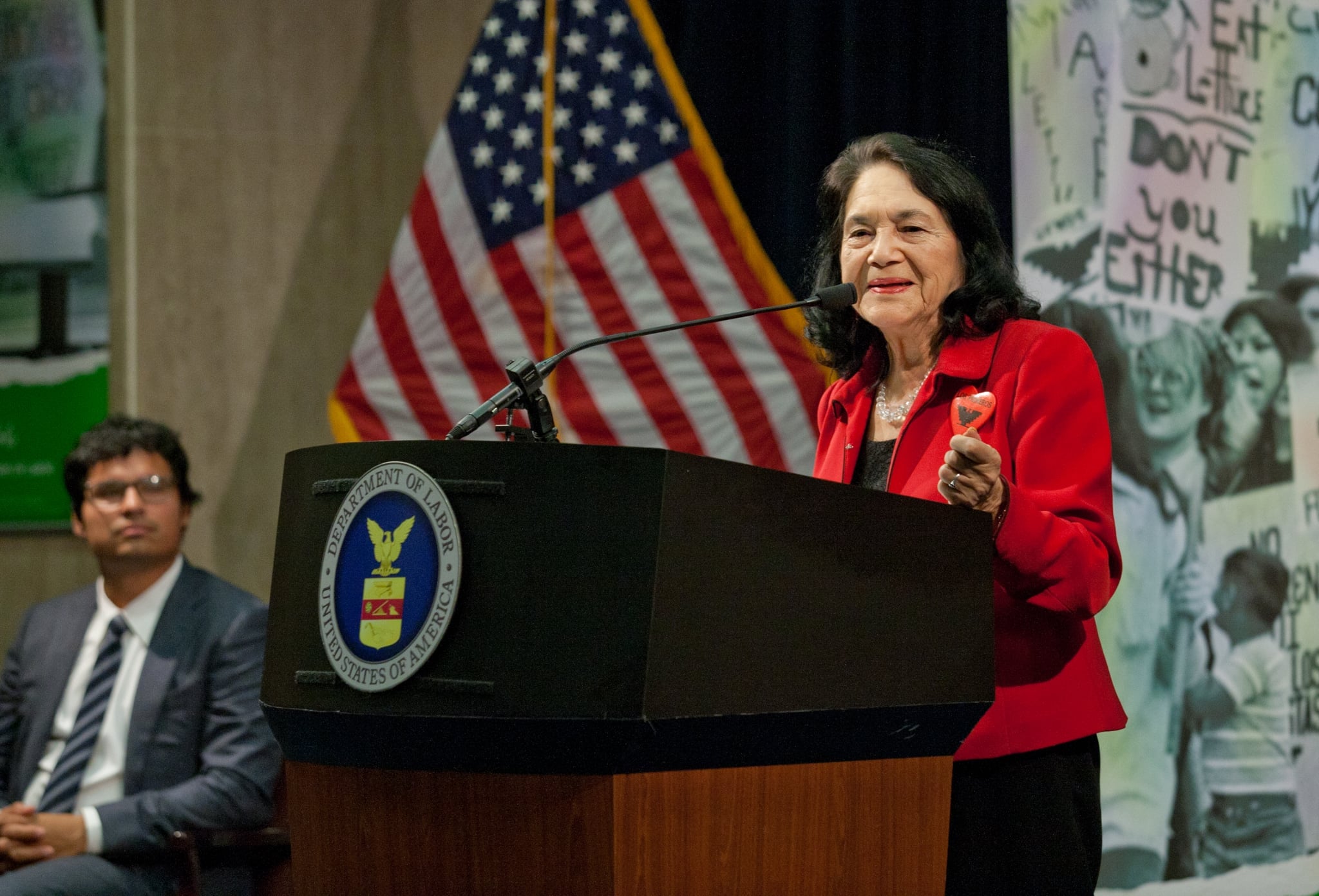
She marched and spoke into her mid-nineties. In April she was in New York accepting an award, still telling people to organize. The leaders who told her “no se puede” in 1972 weren’t villains. They were being realistic about what a group of poor workers could do against growers and a governor. She was more realistic than they were, because she knew how many people she could bring with her.
We have more people now than she had in Arizona, and more money, and more seats at more tables. What we’re short on is the nerve to ask for everything she would have asked for.