



By Ethan Shorey
Stop signs are often seen as an inconvenience for drivers who need to get somewhere in a hurry.
Sorry, but I have to side with the pedestrians.
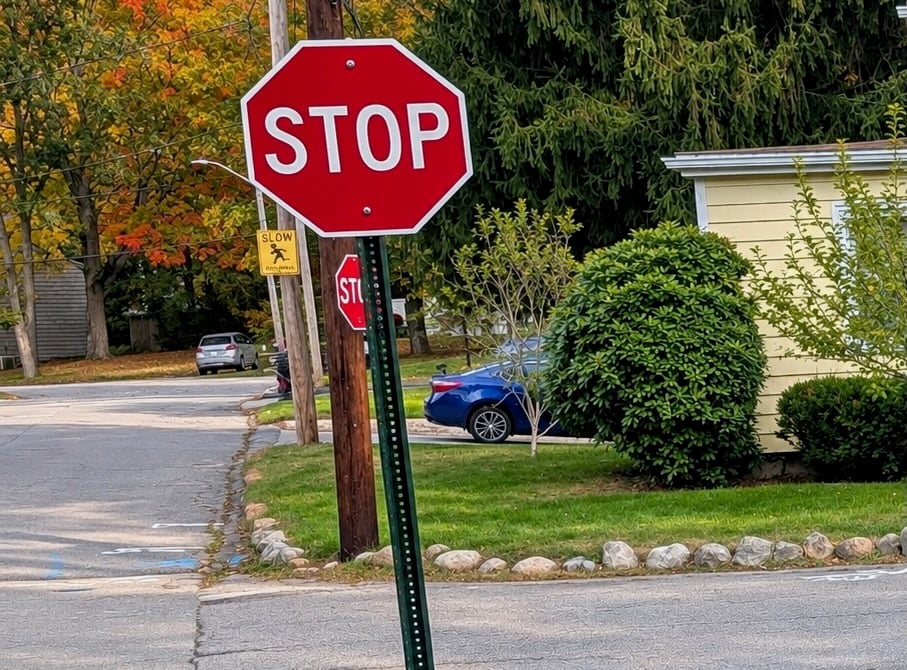
Last week, one of my neighbors, Manny, approached me to shake my hand and thank me for working with the town of Cumberland to get two new stop signs installed near our homes, added to the existing one here.
He grew emotional as he talked about now being able to walk his puppy without constantly looking over his shoulder. He feels safe now, said Manny, echoing a comment I’ve heard from other neighbors over the last 18 months since the signs were installed.
This area of our neighborhood, quite frankly, is pedestrian-friendly now.
I didn’t do anything special, I told Manny, just finally got fed up with the situation we were facing and petitioned my local government, as afforded to me under the Constitution, for something better.
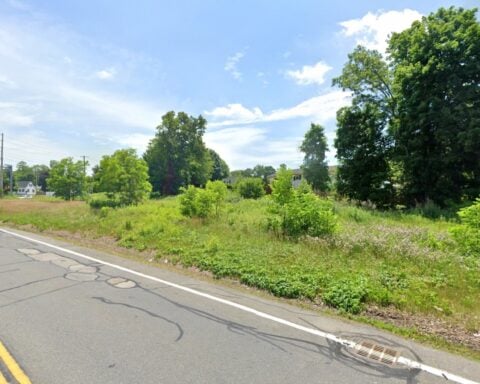
My house is the original one built on the street in 1920, and the road was constructed to bend around our corner lot, leaving very little space between the home and street. That leads to a unique visibility situation for those coming down the small hill and turning the corner, an especially dangerous situation that wouldn’t get picked up by a traffic study.
In fact, that’s the comment I made to the police chief when I originally asked for the signs. I said the speed limit on side streets is 25 mph, so even at 30 mph (an insane speed for many side roads), someone is still only 5 mph over the limit, so a speed study alone often isn’t going to find the need for new stop signs. Enforcement also isn’t going to lead to many tickets.
Police ended up doing the study, finding the situation as I said they would, and determining that signs weren’t needed. I then advocated with our district councilor, Lisa Beaulieu, explaining the situation and sharing how my children and their friends had almost been hit multiple times, despite looking both ways and doing their best to make sure no one was coming.
The council eventually voted 6-1 for the signs, and the change was immediate and dramatic. We still need to be careful, but what I like to call the culture of traffic on the street has changed. Every comment I’ve received has been positive.
There was a point in my life where I thought there were too many stop signs in communities such as Cranston and North Providence, but my thinking has changed. Stop signs slow traffic and prevent tragedies, and they also make people feel safe enough to enjoy where they live without the threat of daily close calls. In neighborhoods where there are no sidewalks, they are often left at the mercy of people with no regard for their life or safety.
Do a few people still speed through? Yes, but the situation is much calmer. To their immense credit, police have also done some recent enforcement and issued a couple of citations.
A few years ago, when I was writing stories about Cumberland changing its speed limit signs from 15 mph to 25 mph to comply with state law, I interviewed some folks who thought drivers were grossly surpassing 25 mph, but after asking me out to their house and setting up their Amazon-purchased radar kit, the screen showed very few people actually exceeding the speed limit.
I totally get that perception of a pedestrian doesn’t always meet reality, as it can feel like people are going much faster than they are. I’ve driven through one neighborhood many times where one resident constantly tells people to slow down, even whe they’re creeping by at 17 mph. I’ve also heard more comments than I can count about people driving 40-50 mph on a side street, only for police to find that they’re “only” driving 25-30.
The bottom line is that slower is better on side streets where people are walking and children are playing, and when you add in texting while driving, someone traveling 25 mph through a neighborhood is presenting a significant hazard.
I urge elected officials everywhere to think of stop signs not as an inconvenience, but as a boost to quality of life. When someone asks for one, don’t just dismiss their concerns or rely on a traffic study or some expert opinion somewhere, but seek to understand the reality they’re facing each day.