



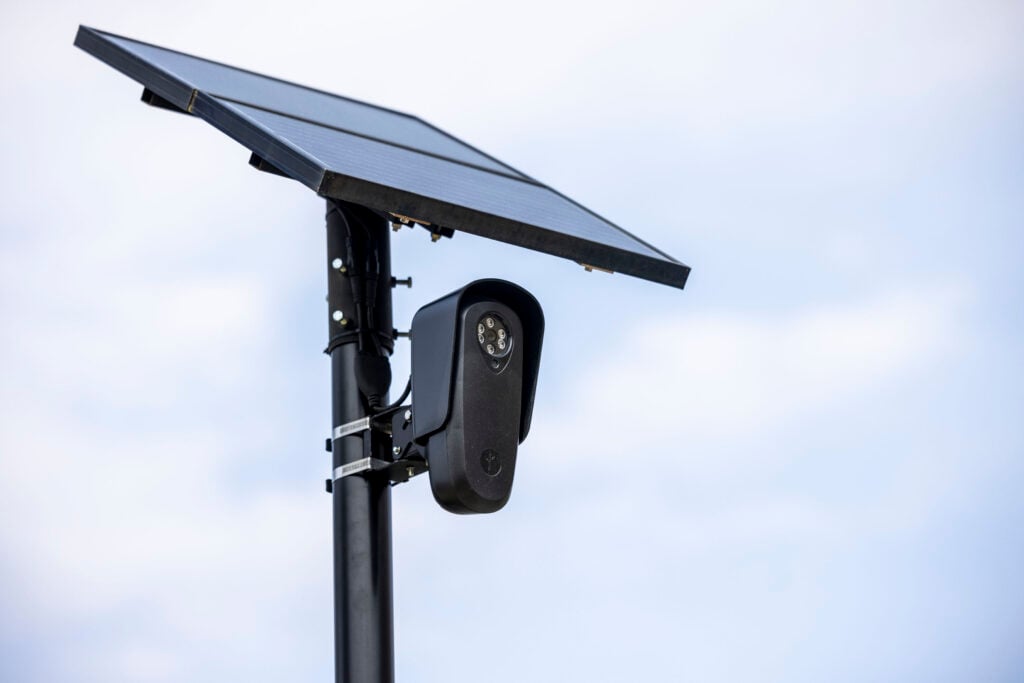
NORTH SMITHFIELD – Joining a growing number of communities putting the brakes on new license plate-reading cameras from Flock Safety, municipal leaders are saying no additional new cameras should be placed along roads here.
The Town Council didn’t take official action, but agreed with Town Administrator Scott Gibbs last week that no additional cameras should be added and that any requests for installation should be brought to them first.
Gibbs said he can’t argue with the effectiveness of the technology, but he simply doesn’t trust “the overseers of the technology,” and until he’s at that point, he won’t back them.
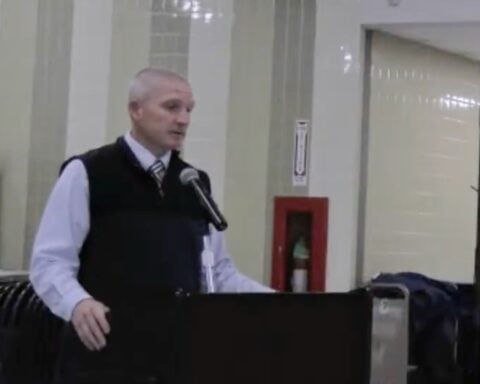
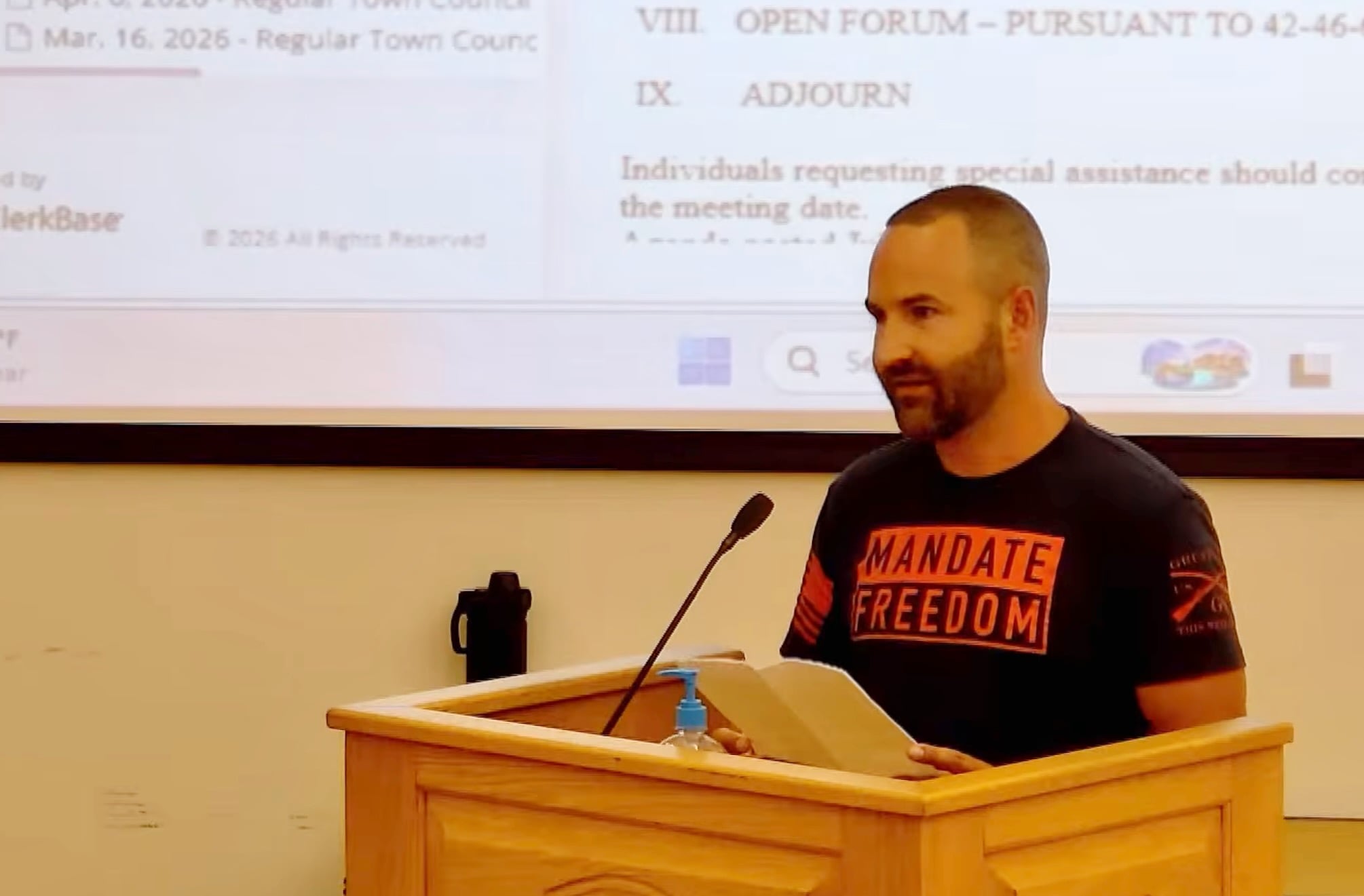
Resident Tony Soly had risen to question Gibbs on why he agreed to two Flock cameras on Route 146, one pointed north and one south. Soly said this “intrusive mass surveillance” is drawing scrutiny everywhere (see other recent stories here and here), and simply saying that those who are doing the right thing have nothing to fear isn’t enough.
Soly then listed off various instances over the years where North Smithfield police haven’t acted appropriately. Use of such cameras demands transparency and flawless integrity, he said, and this department has demonstrated repeatedly that that’s something it struggles with. When one combines misconduct and rights violations and secretive surveillance, it’s a recipe for massive liability, said Soly.
Soly countered the statement that one Amber Alert where a missing child is found should be enough motivation to have these cameras. If one person uses the same cameras to abuse or even kill someone, he said, is it worth bartering one victim for another. He said the town should not be engaged in any backdoor agreements, and the council should override this overreach with a resolution, have the cameras removed, and hold accountable the person who approved them.
Gibbs responded that the police chief reached out to him with a quick note last year and asked him if he had an issue with two cameras going up on Route 146, after being contacted by State Police’sand he responded at the time that he didn’t have an issue with them. That has changed, he said, adding that these two cameras will be the only ones deployed in town.
Asking that the existing cameras be removed likely won’t work, said Gibbs, as it’s been tried elsewhere and failed.
Responding to Soly saying the council should make these decisions, Gibbs said he’s the safety director tasked with such efforts. He said he’d thought the request was more of a general inquiry, and it should have been handled in a more formalized process.
Councilor John Beauregard, who listed a Flock cameras agenda item with Councilor Claire O’Hara, said he did so because there had been a lot of discussion on social media and he expected a crowd to show up, which didn’t happen, but he still wanted to give anyone the chance to speak.
Councilor Rebecca DeCristofaro said she felt the matter had to be discussed based on the recent Providence Journal article listing the towns that had given State Police permission for the cameras, including North Smithfield. She said she was glad to see it on the agenda, as she had a lot of questions about how the two cameras came to be and what the future of the cameras are in town, as it doesn’t seem the town has any interest in additional cameras.
Gibbs explained again that, knowing what he knows now, he wouldn’t have given his general agreement to the cameras. He said he doesn’t find them to be a suitable technology until officials feel that they’ll stay in the lane they’re designed for. Gibbs said he doesn’t see that being the case anywhere that the cameras are deployed, and that the genie is now out of the bottle. He added the the made clear to the chief the the doesn’t want the Flock cameras in town as it relates to police operations.
Soly later responded that Gibbs was the one who let the genie out of the bottle on the cameras, but Gibbs countered that he’s not sure State Police even need the town’s permission for cameras on state highways, and the request may have been made of communities simply because of the sensitivity of the issue.
Thirty-five year resident Jim Aubin, of the North Smithfield Freedom Club founded to fight tyranny in North Smithfield, told councilors to remember back to pre-Sept. 11, 2001, and said no one back then, when they were living private lives with smaller government and friendly neighbors, would believe where we are now. The terrorist attacks caused people to allow new levels of intrusion into their lives, he said, and based on how far things have come, those people back then would be outraged.
Aubin compared the situation to a frog boiling in water, asking how much people are willing to allow government to turn up the heat before we’re all cooked. Saying people have nothing to fear is what happens in Communist countries, he said.
Aubin then asked where society will be 25 years from now, painting a picture of a life fully monitored by government where someone overheard mildly criticizing their government can have benefits taken away and only some of them given back if they promise not to do it again. All it will take is one authoritarian leader to take over, he said, as most of the infrastructure is already here. Free Americans should ban any and all surveillance, he said, as backed by some 90 percent of residents informally polled. The town should support a full ban on Flock cameras, he said, including the three installed on private property at Lowe’s Home Improvement.
Responding to DeCristofaro asking that any further requests for Flock cameras be brought to the council, Gibbs said he was planning to communicate with the chief that no further expansion of Flock cameras in North Smithfield should happen without notifying officials in writing first.
Beauregard said he’s probably in the minority, but he sees the value of the cameras. He said without them, police never would have caught someone who killed the daughter of a friend in a case of road rage, as they had only a minor description of the car being driven.
Technology that can be abused has always existed, said Beauregard, and existing technologies can be abused as well. That’s why there are consequences for officers who do so..
“Technology can always be abused, what’s important is that we have laws that keep up with the technology, not deny the technology, but we keep up with the technology,” he said.
Beauregard added that it would be crazy to turn their backs on the technology. Gibbs then responded that he tends to agree with that, but until he gets to a point where he trusts the overseers of the technology, he’s not in favor of it being used.
Gibbs then illustrated the fine line everyone is walking on this topic. There was a lot of criticism after the Brown University shooting that there weren’t enough cameras in place, he said, and now people are villainizing cameras as the “evil empire.” There’s always a tradeoff between privacy and safety, he said.
Beauregard used the example of cell phones as technology that was feared at first, but where laws put in place set the standard for how they should be used to protect civil rights. It would be a shame to turn against such a valuable crime-fighting tool, he said.
DeCristofaro said it’s not necessarily about denying the technology, but the tech is moving faster than anyone can control it. Until they can trust that it’s won’t be misused or handed over to other agencies, she said, she’s against having more cameras.
Beauregard then responded that five years from now, the current Flock technology will be obsolete and something else will have replaced it. People need to learn to live with the technology and the laws related to it, he said.