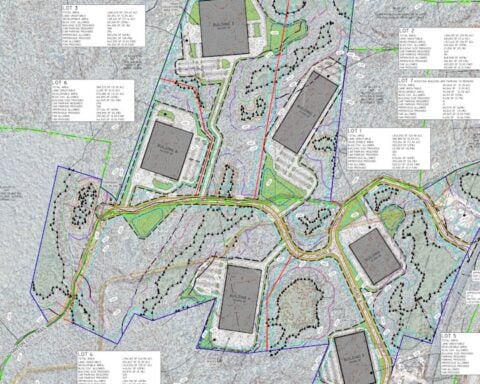




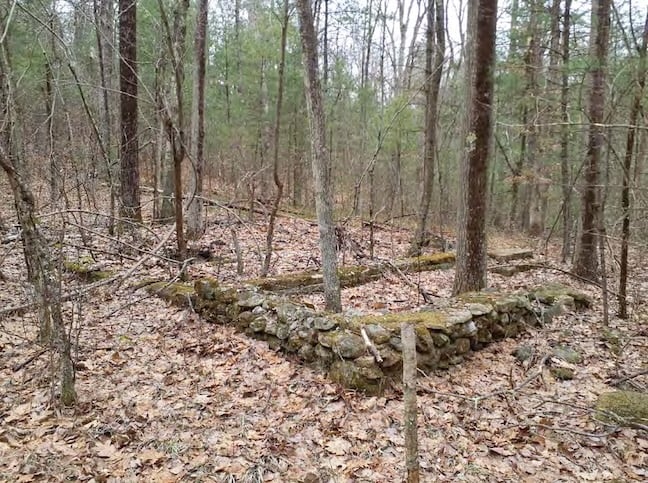
NORTH SMITHFIELD – The long planned and vigorously contested Rankin Estates housing development off Douglas Pike has taken its most significant step forward, despite intense opposition.
Planning Board members said during their Thursday, Aug. 27, meeting that they were left with no real choice in the matter, and that the were unable to vote no without risking a losing lawsuit where North Smithfield would be in jeopardy of having an old 260-plus-home plan mandated instead of the 126-home conservation development on 270 acres of rural agricultural land.
The board, after hearing extensive testimony and by a 4-0 unanimous vote, approved a preliminary plan for the major subdivision.
Attorney Michael Resnick, for applicant Narragansett Improvement, said they would be highly likely to win in court if the board imposed any type of illegal stipulations, as members considered Thursday.
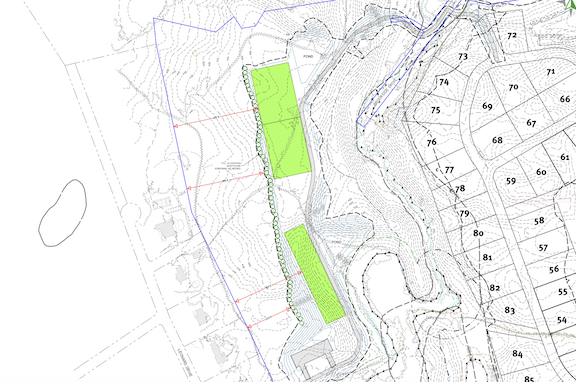
Chairperson Gary Palardy had stated his desire to move away from Narragansett Improvement’s plan to develop open fields on the outskirts of the property, a plan critics have long held is simply a ploy to extract and sell gravel. He said they should instead set a condition that smaller recreational spaces, such as playgrounds and pickleball courts, be created in the available spaces where residents of the development could actually use them.
Palardy said they felt an obligation to residents surrounding the property, who have offered a lot of pushback on the fields and their usefulness. Instead of “soccer field-sized expanses of grass,” he said, eight or 10 other recreational uses would take up a mere half-acre of land. He said the developer has the right to create recreational fields within a conservation development, but he would prefer this change and for it to be accepted that people will be coming in and out of the neighborhood to use such facilities.
Respectfully, Resnick responded, it is not within the Planning Board’s purview to unilaterally redesign his client’s project. He said they’ve taken the feedback, and he respects the requests from the board and residents, but his client ultimately controls how the property is designed.
Resnick said any illegal stipulations would likely be overturned in Superior Court, and there would be no conditions placed on the project. He added that all movement by his client to shrink the field space by some 67 percent, or 7.3 acres to 2.4 acres, was done conditionally based on them receiving preliminary plan approval, and if they’re denied this version of the fields, they would likely appeal the decision, and the result would be for the original plan to be mandated.
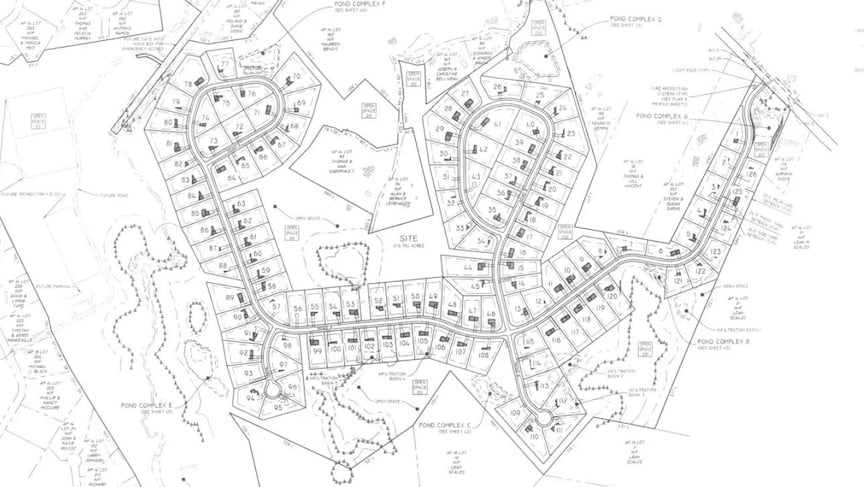
The attorney also offered updates on a “myriad of things” requested at a previous meeting that they were responding to, including traffic, plastic, topography and esker disturbance, recreational field disturbance, and parking, among others. He said they eliminated one field, and now had 105,930 square feet of field space still in plans, but there would be no further movement by his client on that matter.
Resnick offered to read detailed information on archeological issues related to native lands that they believe are now closed, and the board agreed that the didn’t have to rehash all of that.
Residents have spoken out many times in opposition to the project, citing numerous impacts.
Chief Red Spirit, of the Nipmuc Tribe was among several tribe members and other advocates who told the board Thursday that this property includes sacred lands. He said they haven’t been acknowledged or included in the process, despite that fact and the presence of various artifacts found on the land, and he would like it if they were invited to the land to do proper study and research.

He said he appreciates that some burial sites have been identified, but there are plenty of other artifacts deserving of care and study, including balanced stones and other items.
Others echoed Red Spirit, imploring the board to protect this land that is so important to native peoples.
Here’s more from ecoRI News on that background.
Palardy later asked for clarity on the issue, saying they’d discussed matters pertaining to the Narragansett Tribe at length, but not so much the Nipmuc Tribe’s case. Resnick responded that they went through all proper channels, and the state agency with authority on this agreed with their experts that there are no issues related to Native American tribes.
Planning Director Mark Carruolo later stated that if any burials are uncovered during excavation, all work must cease immediately as the proper authorities are called in and a plan is created to properly work around them.
Resident Michael Meo, of nearby Christina Way and the group North Smithfield Concerned Residents, said the plans for recreational fields don’t meet the town’s standards within its comprehensive plan or the goals of maintaining a rural community, protecting natural systems and features, avoiding sensitive areas, minimizing alterations, or protecting cultural resources. The fields are nowhere near homes, he said, but instead are close to abutters. He said they could easily be relocated to the interior of the project, where they could actually be used by residents of the homes. Meo urged the board to use its discretion to deny the fields, or at a minimum, require changes in size and location.
Solicitor David Igliozzi said the developer gained certain vested rights with his project after approval of a master plan.
Board member Jeff Porter cited the town’s subdivision regulations that he said give the board the right to approve or deny proposed fields due to the excavation and significant re-grading that will take place.
Resnick then responded that zoning code trumps planning rules, and zoning permits these fields. The question of reasonableness is settled by the reduction of 67 percent since this proposal was in its infancy, he said, which is more than reasonable.
Porter then asked Igliozzi if Resnick was right, and Igliozzi responded that in this case, zoning certainly has priority, explaining the intricacies of conservation developments. Based on that advice given, responded Porter, they would then not add a stipulation on moving recreation facilities.
Resnick emphasized that more than half of the property is preserved as open space in their plan, which is significantly more than regulations require.
The board discussed various stipulations at length, including bonding and phasing of the project to ensure that the town is protected should the project stall or an economic downturn send it into turmoil. They were told that they can’t simply call the bond if the developer pauses construction for 18 months, but they can have the developer come back for approvals at each phase.
Thursday’s approval was for phase one of the project.
Porter said he doesn’t want to see clear-cutting across the property ruining the town’s rural character or causing drainage or environmental problems. The developer’s representatives assured him that reconstruction surveys and meetings will be held prior to each new phase. That’s when Carruolo said that excavation must stop immediately if a burial is found.
Palardy gave those in the room a brief history of what’s transpired with this project, including a court-mandated master plan back in 2019 and the project coming back years later as a conservation development. This vote was for a preliminary plan on phase one, he said, and if they denied it, the project could go back to the other master plan that would be much more impactful on the area.
Porter called this an agonizing vote, saying he heard a lot of emotional testimony going back to 2019 and is with each person who’s spoken out on this project. This board must operate within the parameters of the law, he said, whether they like the development application or not, and they can’t vote based on how they’re feeling. If the project checks all the boxes within the town’s subdivision regulations, the board has the legal responsibility to approve it, he said.
Porter said he’s been clear all along that he doesn’t like this project, and it pains him that he has to vote yes. Responding to a groan from those in the room, he said a no vote would put the town at legal risk, as Palardy stated, and could mean a project of 260 homes or more.
If there are challenges on the land itself as some stated, they can go that route, said Porter, but the board can’t decide that for them. He apologized that he couldn’t vote the way they wanted him to
Palardy said all of them have a bad taste in their mouth on this project, and they explored every avenue on the field proposal. He said opponents may exercise their rights and pursue their own case, but the town would likely lose a lawsuit. He thanked everyone for their civility and thoughtful comments, and he wishes them the best as they potentially pursue further action.
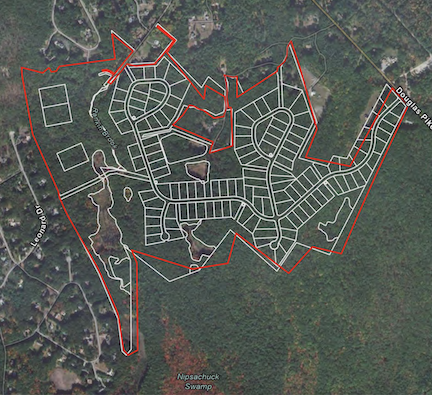
Resident Jason Richer posted after Thursday’s meeting that this land at Nipsachuck Hill had been left alone previously not because no one thought of houses, but because of the vast amount of stone and ledge in it. Narragansett Improvement is not just a homebuilder, it’s an asphalt and aggregate company, he said, selling crushed stone and processed gravel.
“For years, residents said the danger was using a subdivision as the excuse to mine the ledge,” he said. “In 2011, the Town even got caught working with this developer’s lawyer on gravel-extraction language.”
In May, Narragansett Improvement’s representatives described 750,000 cubic yards cut and about 400,000 cubic yards leaving the site, said Richer.
“Treat that as the floor, not the truth. These estimates run low,” he said.
The Board kept one line, he added, that all earth removal on the site must comply with Chapter 156. Then they stopped.
“A citation without a yardage limit is not a limit. It looks more like a blank check,” he said. “Chapter 156 is not vague. Mining is not a permitted use in any zone. Cuts for an approved subdivision are allowed only if the material leaving the site does not exceed what the finished streets and houses actually displace. Anything above that is earth removal. Earth removal needs a license. It is not a plat note.”
Just look at the Pound Hill Realty, LLC and Material Sand & Stone Corp. settlement where the Town Council is letting a commercial earth removal operation keep going, said Richer.
“Earth removal is still not a permitted use. Chapter 156 still says a sale ends the nonconforming claim,” he said. “The signed paper is still not public. They bargained the use instead of ending it.”
That is the open door, he added.
“The quarry deal does not rezone Rankin. It does not have to. Once the town treats commercial earth removal as something you negotiate when the applicant can sue, the next operator with trucks, a pit, and a granite hill only has to say: you just allowed that. We want the same room under the construction exemption.