



CUMBERLAND – Working in the broadcasting industry, Chris Ratcliffe would dream about one day being a farmer. In the 1960s, his family had purchased 80 acres of land in Burrillville, including a 5-acre hayfield, and he’d remembered the magical feeling that came with those experiences.
Historic Metcalf-Franklin Farm, as it’s known today, traces its beginnings as a community garden and resource for organizations that feed people to the fall of 2005, with its first planting the following spring. But efforts to establish the modern use for the farm go back even further.
At a recent meeting of the farm’s board to celebrate 20 years of the farm, Ratcliffe shared about those early days, including some key details some members might never have heard.
Ratcliffe had read about and been blown away by the fact that one acre of land produces enough food to feed 40 people for a year. He’d imagined what multiple acres could do.
In 2001, he’d read articles in The Providence Journal about Steve Connors conceiving the idea and launching the volunteer-staffed Rhode Island Community Farm, growing vegetables for the Rhode Island Community Food Bank and local food pantries. He called Connors to get a tour of the Warwick farm, and then invited Connors to Cumberland to help the fledgling effort.
The farm had been operational until William “Rhodey” Franklin died in 2005, and when Franklin was alive, Craig Adams had leased some of the land to grow vegetables for restaurants.
After conferring with Connors and knowing they needed permission from the town, they set up a meeting with former Mayor Dan McKee. They pitched their idea for community-supported agriculture, said Ratcliffe.
McKee, he said, expressed some concerns about possibly being sued by a dog trainer if they allowed farming, saying to give him some time to investigate. Three weeks later, an ordinance was coming forward to permanently prohibit farming.
“To me it was unbelievable,” said Ratcliffe.
It was suggested that they might use Vadenais Farm for their venture, he said, but they had no access to a barn, no irrigation, and no electricity. He said he didn’t really want to be building the effort from scratch, so they gave up the idea because it just wasn’t working out.
But a chance encounter would change everything.
Dave Iwuc had defeated McKee for mayor, and Iwuc’s son was a Boy Scout and Iwuc was a scout leader. Ratcliffe saw Iwuc at St. John Vianney Church, and Iwuc suggested the idea of resurrecting the farm idea. Iwuc knew Rhodey Franklin had died, and was exploring ways to maintain Franklin Farm as a resource.
Ratcliffe told Iwuc he’d think about it. They got district councilperson Lorraine Hynes involved, and the ball was rolling.
“This story is about connections,” said Ratcliffe, explaining each point where things just worked out, including connecting with Joe Hollenbeck, who worked for Sysco and was willing to partner. Hollenbeck came to that meeting with him, Iwuc, and Hynes, he said.
Public hearings on the town’s bid to purchase and get permission to farm the property were held at the library, and Ratcliffe recalled how members of the Cumberland Garden Club spoke against the plan, citing potential damage by volunteers tearing up the fields or growing tired of the effort and then leaving the property a mess.
“We won,” said Ratcliffe.
They weren’t farmers, he said, but he and Hollenbeck had management experience. Frank Geary told him to talk to Chip Underwood, and they subsequently met at the farm with Underwood and Tubby Cargill, who had forgotten more about farming than he’d ever know.
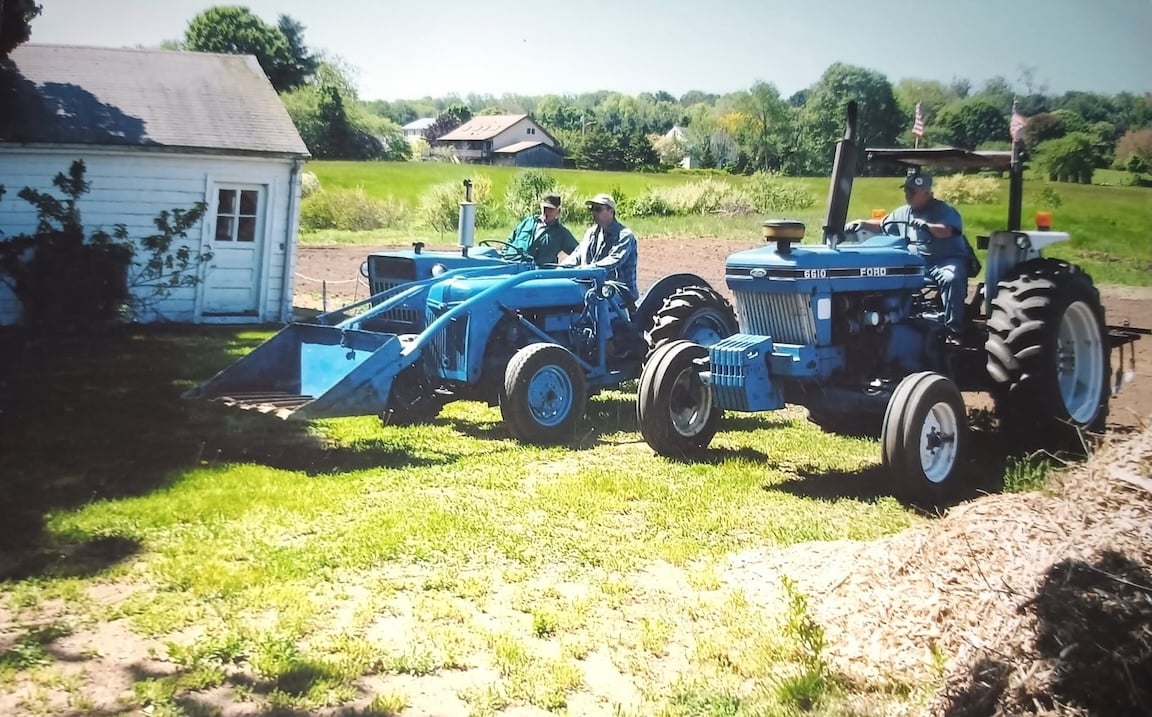
He laughed as he recalled how Cargill grabbed a handful of dirt and declared how they needed to sweeten the soil with loam. They were able to get a quantity of lime donated by Conklin Limestone. Tubby said they’d need volunteers to pick rocks out, and they used 5-gallon buckets to pile the rocks found in the area behind the garage off to the side. Cargill’s tractor work was like poetry, he said, as he harrowed everything beautifully, and the garden was ready for that first planting.
“Without Dave Iwuc, there would be no farm,” said Ratcliffe, saying Iwuc was only mayor for a short while, but in that “moment in time,” he believed in it and made it happen. He and Hynes brought renewed interest, he said, and without help from the Conservation Commission and Hollenbeck, they never would have moved forward.
So many people took a step of faith to help, he said, including Ray Aubin of Attleboro Farms, who told them they could use their greenhouse space to grow seedlings. Aubin then went further, telling them the farm was right in line with what they were trying to do and donating thousands of seedlings.
“We created the first-ever Silver Trowel Award and gave it to him,” he said.
After Aubin sold Attleboro Farms and became general manager at Confreda Farms, he suggested raised-bed gardening. He proved an amazing resource, said Ratcliffe, helping them increase production through the raised-bed strategy by planting earlier and keeping the gardens from becoming overrun with weeds.
Getting a community garden running successfully is about connections between like-minded people who see the value of feeding hungry people, said Ratcliffe, and who also like to volunteer and get their hands dirty.
Getting the land was one thing, he said, but getting the organization to run was quite another. Volunteers including local students would end up helping with the planting that next spring.
Ratcliffe and Hollenbeck wrote the strategic plan, he shared, but they needed a volunteer coordinator, and he just happened to know Denise Mudge from volunteering at Community School. He said he knew her as such a positive person and ambassador of good will (Mudge and her husband Rob still lead efforts at the farm today).
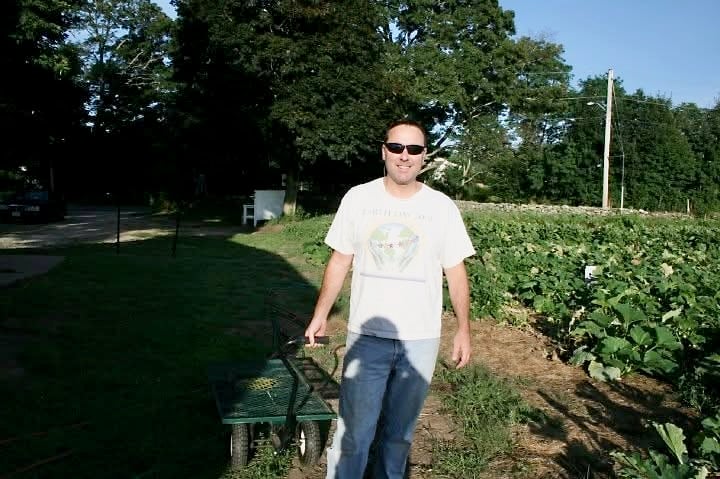
Speaking of connections, Ratcliffe said he was at Dave’s Market when he saw former Valley Breeze Publisher Tom Ward, who had worked at Almacs with Ratcliffe’s brother. Ward took a picture of them near the farmstead at Franklin Farm and published the photo on the front page, sparking numerous volunteers to sign up.
Ratcliffe fondly recalls the end of that first planting day in 2006, when everyone had left, and he and Hollenbeck were sitting behind the garage drinking an ice cold Sam Adams beer.
They knew they needed to set the farm up for long-term success, Ratcliffe said, so unlike many other community farms run by one person with a bunch of volunteers, they needed to make it sustainable beyond his and Hollenbeck’s involvement. That meant giving power away and agreeing that mistakes were OK. Ratcliffe would leave in 2012, Hollenbeck in 2013, and they were able to do so because they made the mission independent of them.
He said he’d always remember the people involved more than the equipment or the vegetables produced. Each person brought something, whether it was energy, time, or a willingness to help. Leadership should thrive without its founders, he said, and an organization isn’t just about what it accomplishes when its founders are in place, but also what it accomplishes after they’ve moved on.