




By Omar Reyes
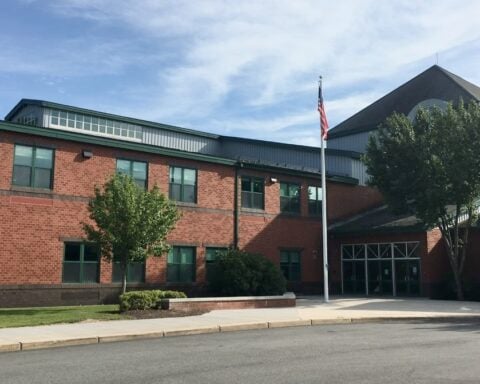
A few months ago, I attended a moving-up ceremony at Cunningham Elementary School.
One of my favorite things to do as a School Committee member is attend graduations and moving-up ceremonies. They showcase the hope and promise of our students, and they are a good reminder of what education is really about.
At Cunningham, a staff member said something during her speech that stuck with me:
“This was supposed to be the last graduating class.”
What she was referencing was the fact that Cunningham Elementary School had been discussed for closure, along with Curtis Elementary School.
There were reasons these closures were being considered. One of the biggest was money.
As I have mentioned in the past, Pawtucket does not meet its expected core instructional expenditures. According to a Rhode Island Department of Education fiscal accountability report, Pawtucket spent approximately $17.2 million less than the amount expected for core instructional expenditures in 2023-24, covering only 86 percent of the expected investment.
That is not a small number.
Years of not properly funding the operating needs of our district have consequences, and we are feeling those consequences today.
We have spent years rationing education in Pawtucket.
We ration teachers. We ration teacher assistants. We ration social workers. We ration classroom space. We pack more kids into classrooms.
And now we are discussing rationing schools themselves.
That is why I believe closing neighborhood schools, especially the schools being discussed in Pawtucket, can represent a short-term gain but a long-term loss.
Yes, closing a school can save money. I don’t think we should pretend otherwise. But the question shouldn’t simply be how much money we can save by closing a building.
We should be asking what happens to the children afterward.
Where do those students go? What happens to classroom sizes in the schools receiving them? What happens to the teachers and support staff? How much farther will children have to travel? What happens to families who have built relationships with teachers, principals and other parents in that school? And, most importantly, are we actually sending those children somewhere that will provide them with a better education?
National research gives us reason to be cautious.
Research on school closures has found that the academic effects are mixed. When students whose schools close are transferred to substantially better-performing schools, they can benefit. But too often, students are transferred to schools performing at roughly the same level, and in those circumstances closures can harm academic outcomes.
There is another uncomfortable reality in the national data: school closures have not fallen equally across communities. Research suggests that low-income communities have been disproportionately affected by school closures. Schools do not exist separately from their neighborhoods. When you remove a neighborhood institution, the consequences affect your neighborhood.
That should matter to us in Pawtucket.
It is no secret that our schools are incredibly underfunded. As a district, we have been forced to ration teachers, teacher assistants, social workers and other resources while putting more students into larger classrooms. This has been happening for over a decade.
The city will correctly point out that Pawtucket has spent a tremendous amount of money on school construction. I support investing in our school buildings. Our children deserve safe, modern and beautiful schools.
But buldings are not teachers.
Construction funding and operating funding are not the same thing. Rhode Island’s generous reimbursement for Pawtucket’s school construction projects makes rebuilding our schools an important investment, but a new building does not put another teacher, social worker or teacher assistant in a classroom.
We cannot point to beautiful new buildings while asking fewer adults to serve more children inside them.
And Pawtucket cannot afford to ignore what is happening academically.
Our students continue to perform well below statewide averages in reading and mathematics. Too many of our children are attending schools struggling academically, and too many are entering classrooms without the level of support they deserve.
Test scores are not everything. I have said that many times.
But they are something.
And when our children are struggling academically, when our classrooms are getting larger, when teachers and support staff are stretched thin, closing neighborhood schools cannot become a substitute for addressing the underlying problem.
I have fought to keep our schools open.
I fought to keep Cunningham and Curtis open. I fought for additional resources from the city of Pawtucket, and I will continue doing that.
We have to decide what kind of school system we want Pawtucket to have.
I believe in a school system that doesn’t discard students when they struggle. I believe the best way to judge a school district is by how it serves its lowest-achieving students. And I believe that before we close a neighborhood school, we should be able to look every parent in the eye and explain how that decision will make their child’s education better—not simply how it makes next year’s budget easier.
When that staff member at Cunningham said, “This was supposed to be the last graduating class,” it stayed with me.
A school is a community.
It is teachers who know generations of families. It is parents walking their children to school. It is friendships, basketball games, assemblies, field days and moving-up ceremonies. It is one of the institutions around which a neighborhood builds itself.
Sometimes closing a school may ultimately be necessary.
But we should never confuse closing a building with solving the problem.
Pawtucket’s problem isn’t that we have too many schools.
It is that for too long, we have asked our schools to do too much with too little.
Reyes is a member of the Pawtucket School Committee.