


The Short Game: conversations with the people running Rhode Island’s smallest golf courses.
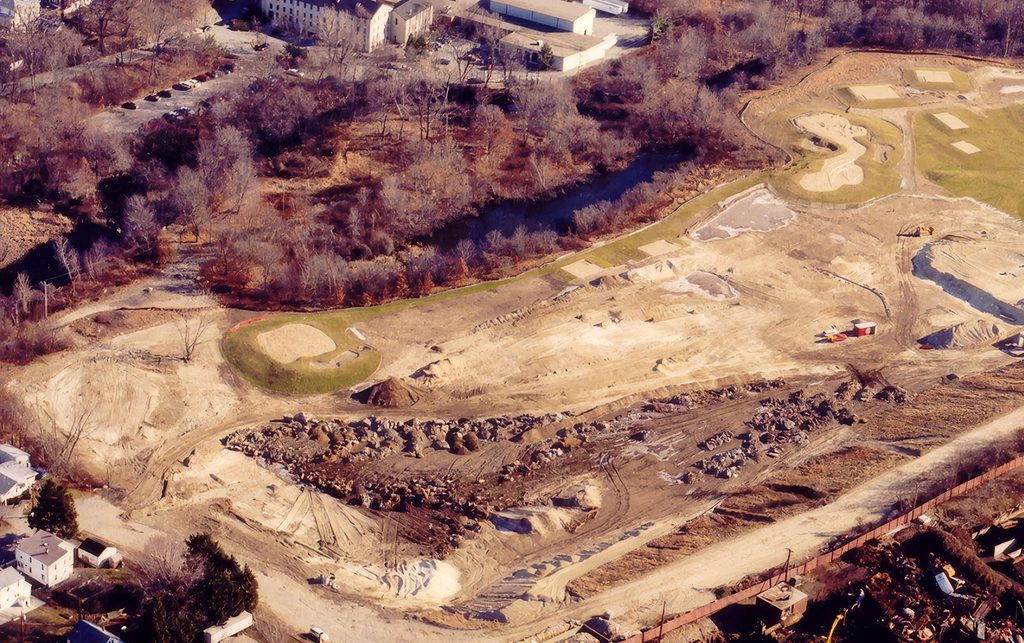
PROVIDENCE – Before there was a first tee, there were the tires. Hundreds of them, sitting on Rhode Island Department of Environmental Management land near the Woonasquatucket River.
And the mattresses.
And whatever else people wanted to dump when nobody was looking.
Don Wright, the executive director of Button Hole in Providence, is happy to share the photographs. The gap between the before and after is stunning.
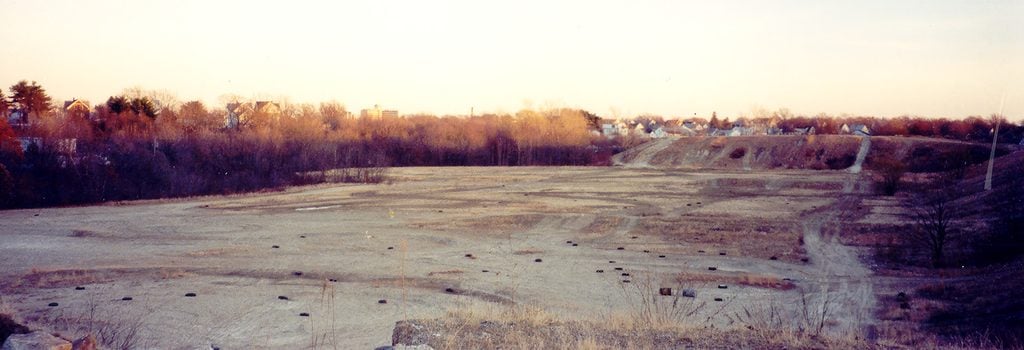
“If you had been here 30 years ago and saw what it is now…that’s the amazing thing,” he says. “When people drive in, they go, ‘wow.’”
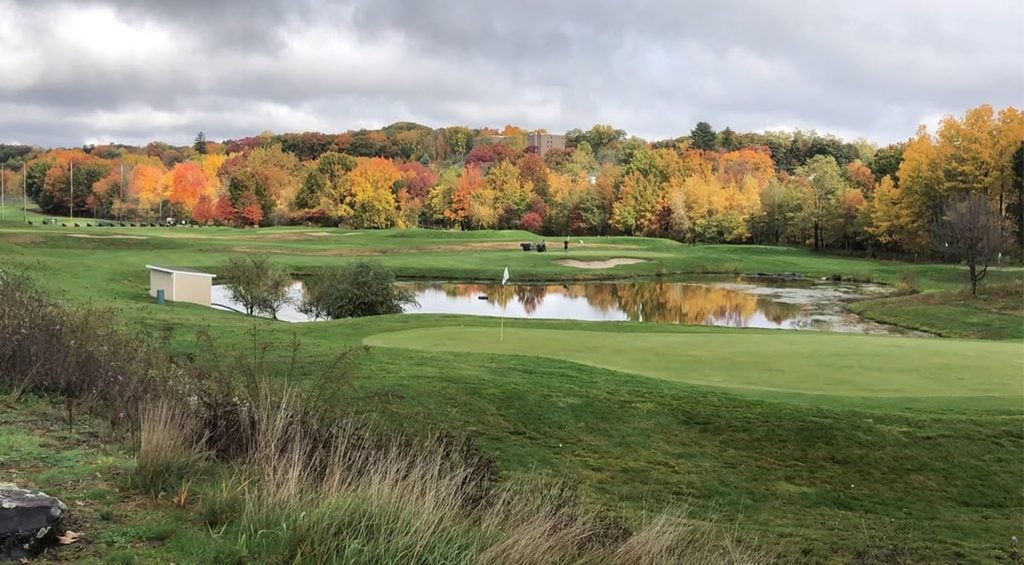
On Labor Day weekend, Wright is at the course taking care of paperwork and getting ready for an upcoming board meeting. Outside, the first tee of the golf course and the stalls on the driving range are in high demand. “Today,” he says, “we’re jamming.”
Why this short course matters
Button Hole is a 9 hole, par 3 golf course and teaching center on 26 acres in Providence, built on remediated land leased from the RIDEM.
This nonprofit organization operates as “an oasis of recreation where within the game of golf, differences in age, gender, and ethnicity disappear and provide an extraordinary mentoring opportunity. Young people from all backgrounds learn life’s lessons of honesty, humility, and perseverance while gaining respect for the environment and their community.”
In other words, this short course puts golf clubs in the hands of kids who might otherwise never touch one.
Button Hole also serves a special role as one of the larger green spaces in Providence.
The history
The Button Hole location has a storied history. In former days, there was a natural swimming hole where local kids would often find buttons that were swept down the Woonasquatucket River from a shoe factory upstream (hence the name Button Hole).
Some longtime city residents grew up playing ball on the fields that were constructed here. Over time, those fields deteriorated.
Eventually, the blighted area became a dangerous illegal dumping ground.
The idea to do something with the land came from a successful Rhode Island businessman, golfer, and philanthropist, Ed Mauro, who scouted multiple locations throughout the state for a youth golf facility before talking to RIDEM about this one. “He looked at a lot of different sites,” Wright says. “This one made a lot of sense.”
Through what Wright describes mostly as persistence, Mauro negotiated a long-term lease.
Then came the fundraising and the shovels. Roughly $3 million was raised to remediate the property and build out the par 3 course, a full two-sided driving range, and a clubhouse.
Button Hole opened in June 2001, and Mauro and several other key contributors were interviewed as part of the 25th anniversary celebration.
Who plays here
Button Hole hosts more youth golfers than a typical golf course.
In greater Providence and beyond, one is bound to meet a Button Hole kid. Young people who complete the beginner lesson series at the facility become Button Hole kids, and then get the right to play the course for just $1 until they turn 18. That deal makes the course accessible to all.
Roughly 1,000 young people come through the lesson programs annually, 300 to 400 of those brand new to golf; the rest are moving into intermediate and advanced classes.
The beginner course costs $100, which Wright calls “incredibly low to start with,” and 40-50 percent of children receive scholarships that cover the cost.
“We have never turned away a kid if they can’t pay,” he says. “That’s not happening. As long as I’m here, as long as anybody’s here, I should say.”

More than 25,000 youth have taken a lesson at Button Hole over the years.
Manny Tutu, a former Button Hole kid who started playing at the course when he was 11, had the following to say about Button Hole’s impact on his life: “It has given me opportunities to bring people in my community together.” Tutu was a talented high school football player, but he now sees himself as a golfer more than anything else. He currently works as an educator at The Learning Community in Central Falls.
Tyler Piekarski is the Head Golf Professional at Button Hole, and he’s a proud Button Hole kid as well. In his words, “…this game will break you down and it will build you up. It teaches you so much about life and adversity…being comfortable in uncomfortable situations. These are all things that translate perfectly into life.”
Today’s Button Hole kids often arrive through partners: the West End Community Center, branches of the Providence Recreation Department, the Providence After School Alliance, and the middle school around the corner, where Button Hole’s own van picks up eight or nine youth twice a week, year-round. The partnerships with community organizations are invaluable.
But it’s not just young people who play at Button Hole.
When school is in session, retirees and shift workers enjoy the course during the daytime hours, and in the summer, Wright says, everybody is there.
College students from Providence College, Brown, and Bryant often Uber in to play.
The women’s Wednesday evening league has grown to as many as 70+ players, roughly tripling in four or five years, run by a part-time staffer who loves the game.
There are veterans’ clinics twice a month and a disabled-veterans clinic each year with the nearby VA medical center.
Button Hole isn’t just a golf course, it’s a community asset that serves residents from every walk of life.
The course layout
There are two “signature” holes on the course.
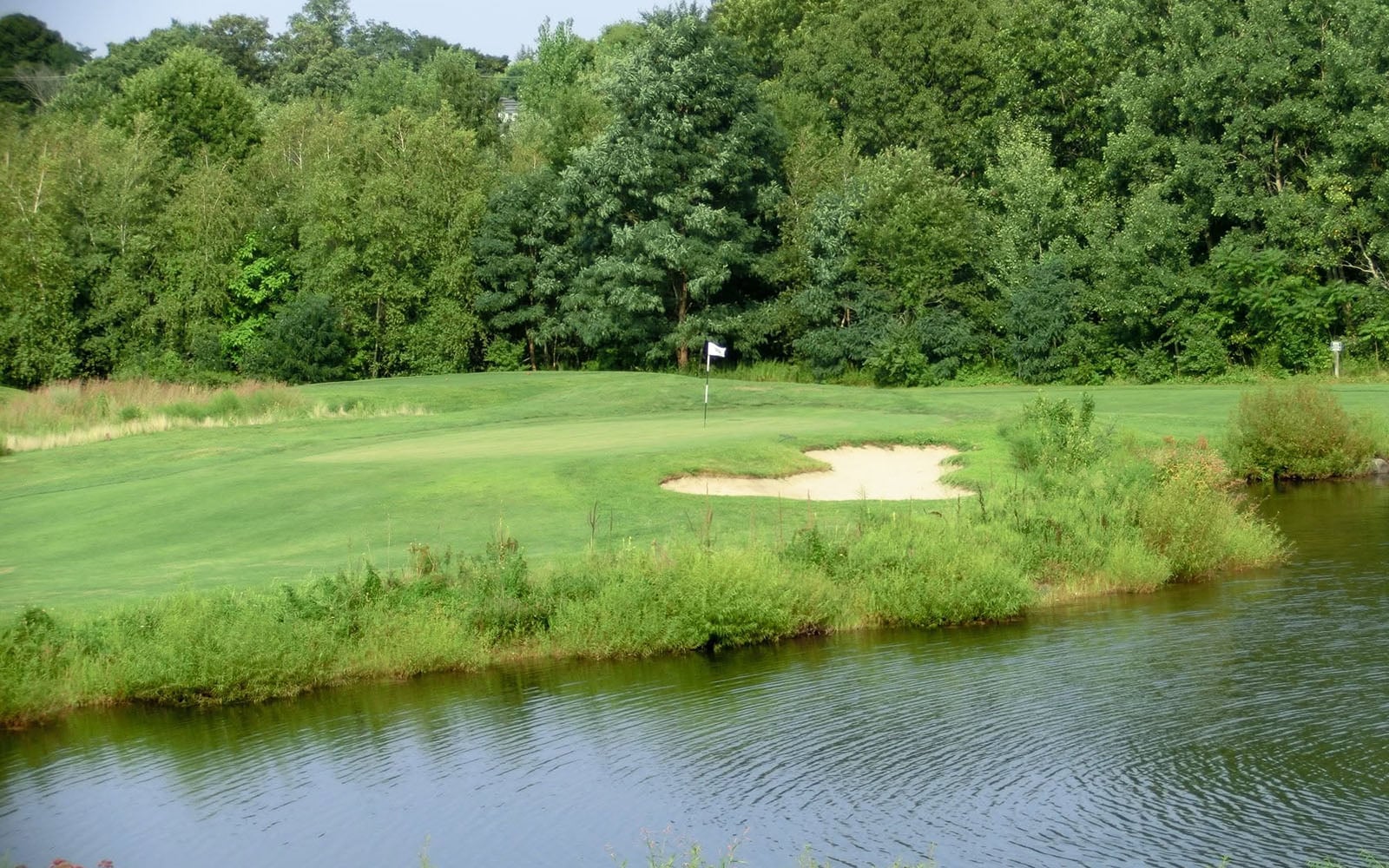
Hole 8 is the longest on the property at 142 yards from the back tee, and it plays over a large pond with a fountain.
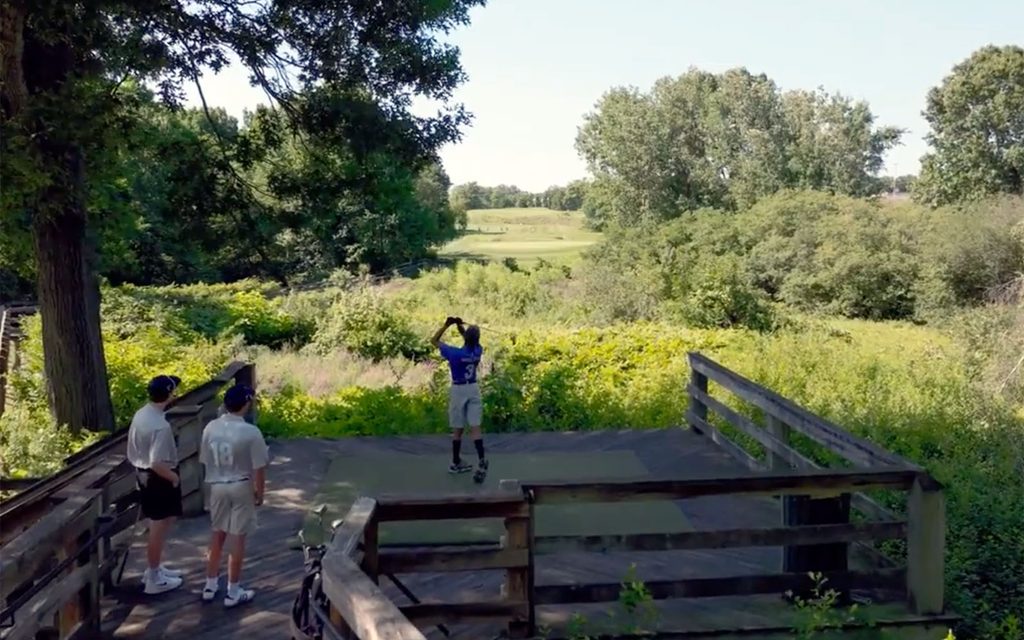
Hole 3 is quite unique. Golfers tee off from a wooden platform and they must clear a wetlands area to area to land on the fairway. This hole borders the Woonasquatucket River.
As is the case with most short courses, Button Hole appears to be a relatively easy layout at first glance, but there are some real challenges even for more experienced golfers.
The business and sustainability
Wright is very open about the business model: “We derive about 50 percent of our needed revenue through our commercial operations (which include) the driving range, the course,” plus what little they charge for lessons, he said. The other half is donations from foundations, corporations, and individuals. Course and range revenue have more than doubled since 2020.
That commercial engine is what makes Button Hole different from most youth nonprofits. “What’s unique compared to a lot of other charities and groups that we work with…we have a financial resource in the driving range and the golf course,” Wright says. “That revenue really helps offset what we do with the kids.”
The biggest yearly expense is staffing. Two full-time lead instructors, Tyler Piekarski and Arys Batista, supplemented by a talented part-time roster. Course maintenance runs on a full-time superintendent plus seasonal crew. Add the business manager and a director of development and you get six full-time employees, ballooning to about 30 employees in the height of the golf season. Staffing was hard to fill 11 years ago; it isn’t now. “I think we have a good reputation,” Wright says. “People like working here.”
The course has a water supply readily available, drawing from on-site wells that pump into the pond on Hole 8. From there, water is pulled into the recently upgraded irrigation system. “So our water costs are zero,” Wright says, “outside of the electricity for the pumps.”
Equipment is typically a big line item for golf courses, but Button Hole has greatly benefitted from the generosity of Textron, the parent company of E-Z-GO, Jacobsen, and Cushman, which is headquartered in Providence. In September 2024, Button Hole took delivery of about 10 vehicles: four E-Z-GO lithium carts, a shuttle-style people mover, a Truckster, a pair of Cushmans for the grounds crew, all donated, plus a new Jacobsen GP400 mower (roughly a $50,000 machine) which was sold to them for $15,000.
Board members and other folks in the community have donated needed equipment.
Even the range balls are a donation story. Golfers around Rhode Island give the course their old clubs and their golf balls, which means Button Hole runs its range on real balls rather than the hard range balls that most facilities use. Wright thinks it’s the only range around doing it.
The par 3 course averages about 21,000 rounds per season, and that doesn’t count kids playing as part of classes. That figure is up roughly 40 percent since Wright returned 11 years ago.
In fact, the most common complaint he hears is that the place is too busy.
The future
Button Hole doesn’t own its land, which sounds like a vulnerability until you read the lease. It was structured as four consecutive 25-year terms. “So we’re good for another basically 75 years,” Wright says.
There’s also no sign the landlord wants out. DEM, by Wright’s account, treats the project as a showcase for public-private partnership. Who wouldn’t be excited about contaminated state land being cleaned up and turned into one of the city’s largest green spaces, at no cost to taxpayers?
That being said, the 26 acres is used to its fullest extent, and doesn’t allow for a ton of room to grow. The most practical improvement Wright would like to see would be covers over the 26 driving range bays. Shade in July, shelter in the rain, and more practice days for local golfers, both young and old.
A story from the course
Ask Wright for a Button Hole story and he doesn’t talk about the 25th anniversary celebration or the 22 somebody once shot for the course record.
Instead, he highlights a group of kids from the West End Community Center, none of whom had ever been on a golf course. They’d had a couple of lessons. Maybe three sessions on the range. Then it was finally the day to play the course. They walked to the first tee and a kid no older than 10 took the first swing of his life on a golf course and made a hole-in-one.
The staff started jumping around. The other kids swarmed him. Somebody tried to explain that people go entire lifetimes without doing that.
“And his response was,” Wright says, “I thought that’s what you’re supposed to do.”
What you need to know
- Year opened: 2001
- Holes: 9
- Par: 27
- Longest hole: 142 yards
- Owner: Nonprofit 501(c)(3)
- Green fees: $16/adults, $8-$14/youth, military, and seniors, $1/Button Hole kids
- Walking and carts: Walking course
- Other amenities: Driving range and golf simulators
- Food and drink: Small clubhouse; soda, water, Powerade, packaged snacks. No grill.
- Address: 1 Button Hole Dr., Ste. 1, Providence, RI 02909
- Phone: 401-421-1664
- Website: www.buttonhole.com