



WOONSOCKET – This city has seen a dramatic drop-off in people living outside over the last four years, say officials.
Speaking as part of the Woonsocket Community Task Force on Housing and Homelessness report release on Oct. 6 were Mayor Christoper Beauchamp, Human Services Director Margaux Morisseau, Democratic gubernatorial nominee Helena Foulkes, Community Care Alliance President and CEO Ben Lessing, and Bruce Daigle, of the task force.
According to the numbers presented, 200 people were living outdoors in Woonsocket in 2023, according to police and representatives from local homeless shelters. That declined to 120 in 2024, 60 in 2025, and 30 this year, or 85 percent in four years.
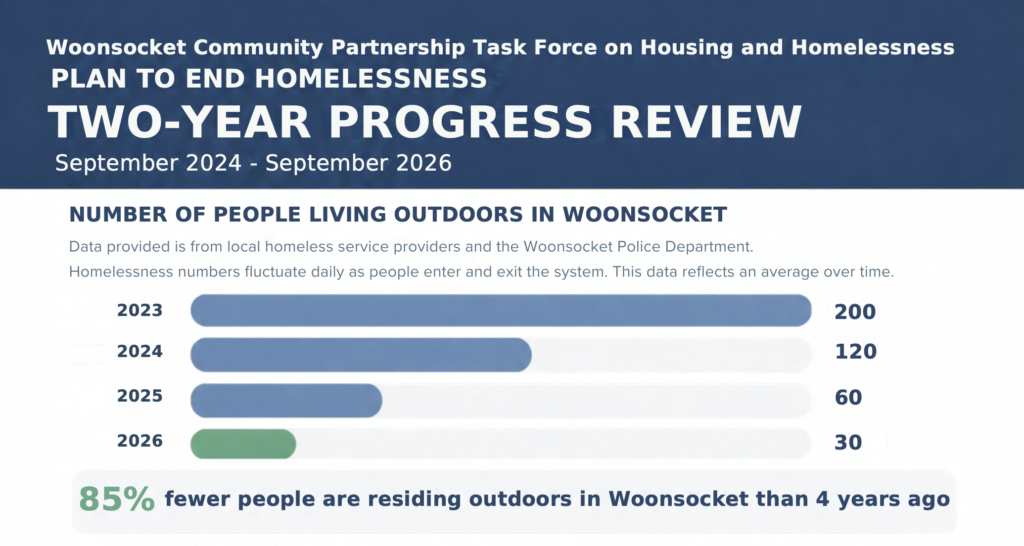
According to the task force, numerous planned action items have been carried out, while some work still needs to be done.
Among the accomplishments listed from 2024-2026 are:
• Constructing 55 new affordable housing units
• Reopening the Dignity Bus with its 20 shelter beds
• Partnering with Open Doors and the City Council to create 75 shelter beds with support programs
• Working with the Diocese of Providence to rehab Holy Family Rectory as an overnight shelter opening in December
• Expanding the human services director role to full time and establishing a central office for agency coordination (Margaux Morisseau)
• Founding the Situation Table and creating a directory of available services in the city
• Providing new education and job training programs
• And developing a legislative agenda to expand affordable housing, rental assistance, and services for vulnerable residents.
“The data is clear: homelessness in Woonsocket is down, even if it may not always look that way,” states the report.
It finds that more work needs to be done, including prioritizing homelessness in the housing authority resident section plan, advocating for state building and fire code changes to allow single-occupant shelters, and promoting state action on substance uses issues, especially the abuse and illegal sale of opioids, among others.
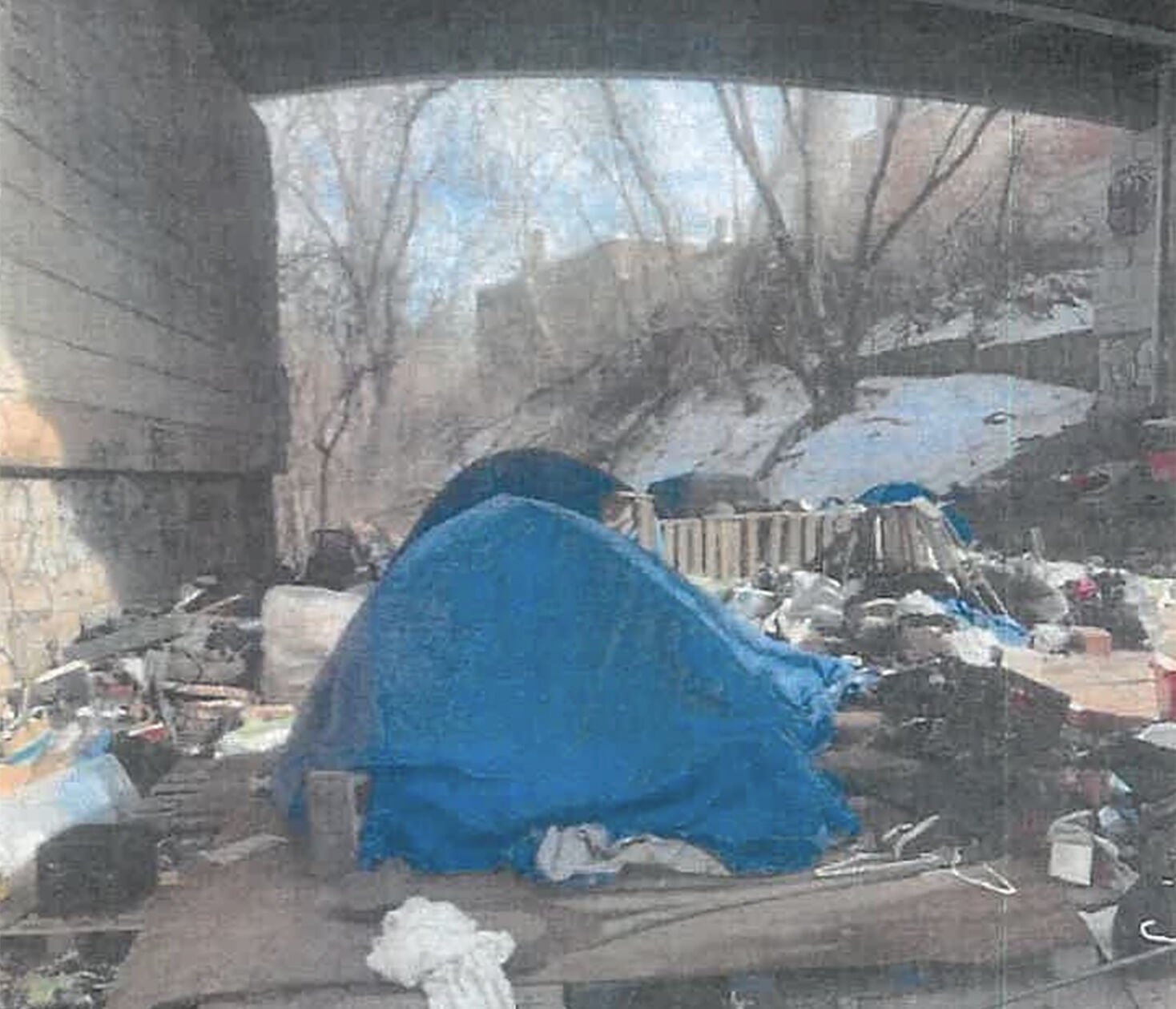
In September 2024, the task force, consisting of 22 city residents and experts in housing, homelessness, and related topics, issued a comprehensive 15-page report on homelessness in the city along with an 8-point Action Plan. The report showed that there were 160 people in short- and long-term shelters, and “at least 60” unsheltered homeless individuals, many living in about a dozen encampments throughout the city.
The report estimated that with a median income of about $49,000, and far less for renters, the lack of housing stock and the spiking costs of rent and home ownership left more than half the city’s population struggling to make ends meet. Many of these people, unable to pay their rent, were evicted, while others suffered from various mental disorders and/or substance use issues and a shortage of treatment options.
Mayor Chris Beauchamp has been working with the task force and City Council since the start of his tenure to address an issue that has long perplexed communities nationwide, stated a release. Foulkes met with Task Force leaders twice and has released her own plan to increase housing and rental assistance.
The City Council passed an ordinance in May 2025 making the city’s homeless encampments illegal but giving the mayor some latitude as to when and how to close the camps, which he eventually did.
“We worked with our social service agencies to move most of the encampment residents into housing or shelters before we closed them,” Beauchamp said in a statement. “Those few who remain unsheltered are more visible now because they have nowhere else to go. They also have more complex issues that make it harder to get them the help they need. But we are not giving up on them or the many others who are struggling to make ends meet in our city.”
Lessing added, “Conservatively, 20 percent or greater of the unhoused population struggle with major health concerns, serious mental illness and substance use addiction. Rhode Island needs a broader array of resources to include accessible assisted living, nursing homes, specialized behavioral health shelters, respite programs and group care. Rhode Island does not have a functioning State Hospital with rehabilitative services, nor the ability to develop the necessary supported housing. Until State government removes the obstacles and silos between its own state agencies and community providers to create viable solutions, we will not fully address the needs of the unhoused population.”
The number one issue facing Rhode Islanders is the cost of housing — there’s not a single city or town where a family earning $100,000 a year can afford to buy a home,” said Foulkes. “I applaud Woonsocket for its leadership and showing Rhode Island what’s possible when a community develops a plan, brings people together and gets to work. Addressing our state’s housing crisis and putting an end to homelessness is going to require all of us coming together, and I look forward to working with cities and towns across Rhode Island as governor to tackle the issues facing our communities.”
Morisseau said at the Oct. 6 event that the work has made a difference in documenting the problem, creating an action plan, and committing to do something about it. Woonsocket has built much stronger and more coordinated response, she said, and stakeholders are communicating and working together in ways that weren’t happening before. The numbers, she added, reflect that work, but the progress doesn’t mean the issue is solved. This isn’t a victory lap, she said, but a progress report.
Daigle said city leaders have worked with the task force and others on a “host of initiatives” to make a real difference. At the Situation Table, he said, they’ve strategized solutions. The city ranks third in the state for affordable housing, he said, but the focus now is on those who remain unsheltered, and the lack of affordable housing is at the top of the list nationally for why people are ending up in that predicament.
Beauchamp said they may not solve this problem overnight, but they’e achieved a dramatic decrease in people living outside. He said he’s gone to many encampments to clean up and talk to people to direct them where they can get help. The Situation Table, he said, is a great asset as they continue to pursue initiatives to make a difference. Part of that, he said, is working to make Woonsocket a place where people want to come, and realities such as high domestic violence cases and poverties levels bog the city down. If re-elected mayor, he said, he will work with the state to keep the forward momentum.
Foulkes said she’s very impressed with Woonsocket’s progress on homelessness, saying she hopes its strategies become a model for the state. She said she looks forward to learning from each one who’s been part of it to bring those best practices across the state, and she loves what she sees in terms of collaboration. She said she was going away from that event feeling inspired, calling Woonsocket a “spectacular example.”