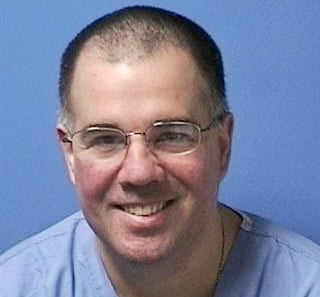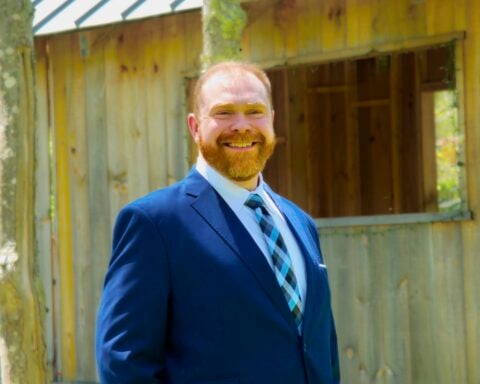




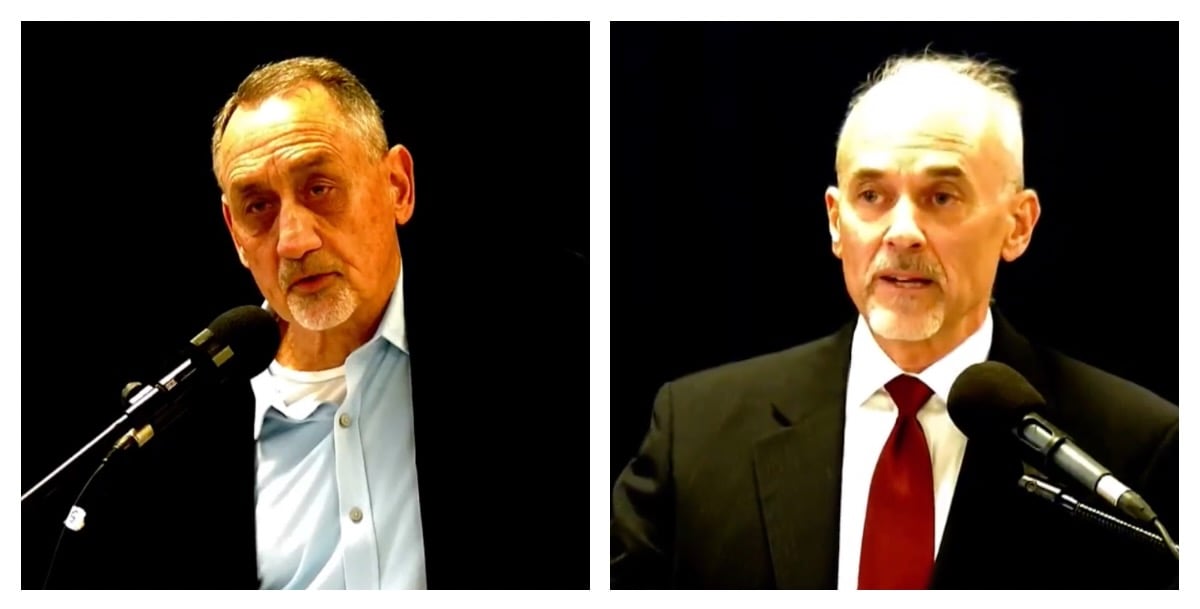
WOONSOCKET – The race for mayor features two visions for what the position should entail:
City Council President Dan Gendron says the mayor should be leading from the top, guiding the overall direction of the city by managing people and strategies.
Incumbent Mayor Chris Beauchamp says his penchant for getting his hands dirty is a good thing, and just because he’s out cleaning up furniture on a Saturday morning or visiting a homeless encampment in person doesn’t mean he’s not leading.
Beauchamp, during a recorded debate on Oct. 22, said he’s completely vested in Woonsocket, describing himself as a workhorse who gets involved and Gendron as a show horse. He said he’s not saying Gendron hasn’t gotten involved, but the learning curve of this position is a long one, comparing his three years on the job with Gendron’s previous nine weeks in the position.
Gendron agreed that he is the show horse, saying Woonsocket taxpayers pay their chief executive $120,000 to be the leader they need. He said they don’t expect the mayor to be shoveling dirt, but focusing on the big picture.
He said he’s watched Woonsocket change, and he’s not happy with what he sees. Too many people are struggling to pay their taxes, and the city overall is going in the wrong direction, said Gendron, and he entered the race because he believes he can do something about getting it out of that downward spiral and restoring pride. Leadership, he said, takes responsibility and measures success by results, not promises.
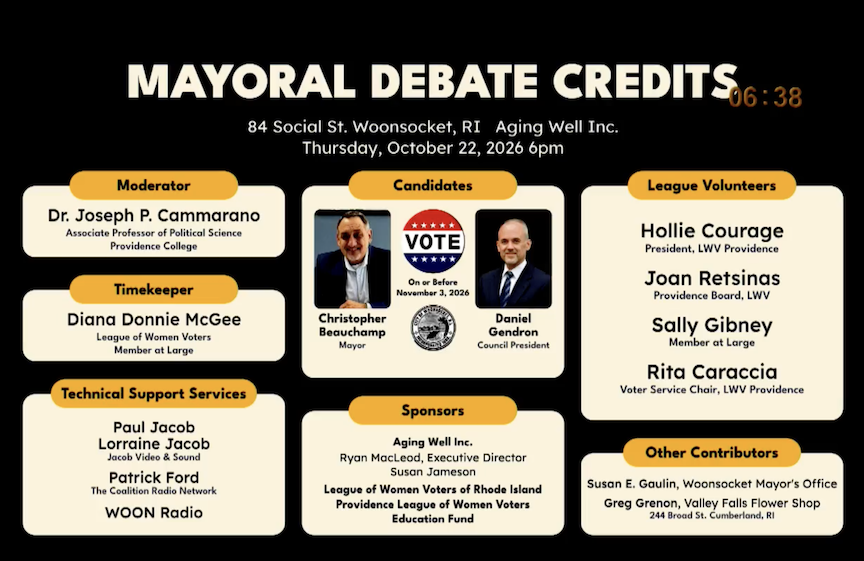
A forum held at the city’s senior center on Social Street was moderated by Joseph Cammarano, associate professor of political science at Providence College, and sponsored by the League of Women Voters. Beauchamp and Gendron faced off on many topics, but much of the debate centered on their difference in leadership styles.
Gendron came out on top in a four-way primary, with Beauchamp in second and both men winning spots on the Nov. 3 general election ballot. That margin of 45.48 percent for Gendron to 41.31 percent for Beauchamp was closer than the 2024 presidential election primary when John Ward earned 54.7 percent of the vote to Beauchamp’s 39.9 percent.
Beauchamp is again counting on getting a larger share of the votes that went to others in the primary, as well as new voters who didn’t vote in the primary. In 2024, Keith Harrison took only 173 total votes in the primary, while the two losing candidates in this year’s primary secured a combined 469 votes, or more than 13 percent of the total.
Both candidates are in agreement on a number of issues, including that former Mayor Lisa Baldelli-Hunt should get nowhere near the City Council seat she is running for. Gendron took over as mayor for the short time Baldelli-Hunt was out of office after the council removed her, and Beauchamp, a former ally, says they no longer have a friendship of any kind. He says a return for Baldelli-Hunt would, “not be good for the city of Woonsocket,” saying she started out well as mayor, but “in the end it was bad.”
Beauchamp, in his closing statement, took issue with Gendron distributing fliers telling people not to vote for a good guy who may have coached your children, saying the comments really hit home for him. He said he doesn’t think he’s better than anyone, and he sees coaching as mentoring young minds. He said he takes issue with Gendron suggesting things about his character or why he takes on tasks such as digging a ditch or picking up furniture on a Saturday morning. He said he still goes to work 10-12 hours per day to conduct city business.
Unlike Gendron with his “AI-generated 10-year plan” for the city, said Beauchamp, he has a 4-year plan to bring in more development and generate more tax revenue, among other accomplishments. To suggest that what he does outside of the mayor’s office is detrimental to the city is insulting, he said, adding that he doesn’t go to homeless encampments because he wants to, but to ask questions and figure out how the city can do better.
Gendron, in his closing statement, said the reason he’s presented a 10-year plan is because he wants it to expand beyond his potential 8-year tenure. The challenges the city faces aren’t going away, he said, and people want lower property taxes, a better downtown, safer neighborhoods, and to stay in their homes.
This election is important, he said, because voters will choose the direction for the next generation, moving away from reacting to problems and planning for Woonsocket’s long-term future. He said he’s served here for years and has the vision, plan, experience, and determination that can move the city forward, restore pride, rebuild its future, and help people rediscover everything that makes Woonsocket special.
Gendron said he never said people shouldn’t vote for Beauchamp because he coaches basketball, but said if that’s the only reason they’re doing it, they should go with the challenger as the better option.
Asked a question on the city’s ordinance prohibiting camping as a way to deal with homelessness, Gendron said the ordinance he sponsored toward that end was to be a tool in the toolbox in dealing with the issue. Beauchamp, he said, chose to delay taking those tools out to use them. This tool can be used to make things better, as the mayor learned, he said, but it’s not the only answer. Homelessness is a huge issue requiring much more than an ordinance, but needing compassion, leadership, and the ability to reach out to people, he said. It’s not just a shelter bed as a one-night response, he added, but about long-term results.
Beauchamp highlighted the task force formed to figure out the issue, saying there are 25-30 people who meet regularly and he has never seen Gendron there. A workhorse means you get involved, he said, rather than just sitting in an office “passing ordinances and not coming to meetings.”
The city can’t solve homelessness entirely, he said, but is minimizing it greatly. Success involves daily work, he said, including building relationships with various stakeholders and visiting encampments daily and approaching those living in them with compassion and respect as long as they’re respectful. Doing that every day is what a mayor and CEO who wants to be involved does, he said, using connections to address a difficult situation. Gendron is right that the shelter bed doesn’t solve it, he said, which is why they continue to come up with new solutions such as the situation table and an acute care center.
Gendron said Beauchamp claimed wintertime would bring a reduction in homelessness, and that wasn’t true. There may be a reduction in people on the streets, he said, but that doesn’t equal reducing homelessness.
He defended not being at the meetings, saying he’s a part-time legislator who works a full-time job during the day. He said he provides tools effectively because that’s his job, and he doesn’t go out as often as the mayor does because he doesn’t believe that’s the function of a $120,000 executive officer. It’s noble, he said, and he respects the fact that Beauchamp drives a backhoe, but that’s not what he’s paid for. He said he plans to create a part-time position of director of homelessness, response, and recovery.
Beauchamp said when he sees a problem, he addresses it, and many times he does so because he doesn’t want anyone to be able to say nothing was done.
On adding a new position, he said, existing Human Services Director Margaux Morisseau is doing a great job on this initiative.
On a question about property taxes and if they would support a partial senior citizen tax exemption of perhaps $1,000, Beauchamp said the city can’t forget its seniors. He said he was handed a mess when he got here in 2023, and the reasons the city can’t spend more money right now are clear, due to the abatements, lawsuits, and over assessments on properties under Baldelli-Hunt’s administration. Once that problem is resolved, he said, there will be money coming in to perhaps look at an exemption or other ideas.
Gendron said he was mayor for 10 weeks, and though he didn’t have as long as a learning curve, he got a lot done, including a $500 exemption for people earning $40,000 or less on adjusted gross income. He said he didn’t waste time trying to see what would happen, doing something immediately to save money for people who needed it each year.
On recruiting and retention of a skilled finance director, Gendron said he would use his management skills to make people want to come to work in City Hall and wanting to work there. He said he listens to learn from others, and doesn’t take the approach that he’s always right.
Beauchamp said they do have an outstanding finance director, and despite their previous due diligence on two previous hires, they didn’t work out and that set them back.
Beauchamp said when he has a staff meeting, he doesn’t talk for 20 minutes, but asks his directors what’s working, what’s not working, and what he can do better. He said he doesn’t micromanage, and similar to Gendron’s work experience of 45 years, he has 42 years of experience rising through the ranks of an asphalt paving company and managing people. There’s a difference between private business and public administration, he said, and he’s remained patient and cooperative with employees who weren’t giving the city its bang for the buck because the pay scale isn’t what it should be to attract quality people. He said he plans to change that pay situation to hire people with the right skillsets.
Gendron denied that he said the city didn’t have a finance director.
On plans for attracting new business, Beauchamp said he has a 16-month roadmap centered on building relationships. He said several developers have come knocking since he became mayor, and now they’re seeing the fruit of those conversations with various projects, from the pending redevelopment of the Longley Building to the transformation of the Walnut Hill Plaza into the Shoppes at Diamond Hill. He said retail won’t ever be what it once was for the city, but he’s focused on residential redevelopment, including multiple new projects in the downtown area.
Gendron said he agrees the city needs a plan, but how does it have one without a director of planning. His Vision 2037 Recovery Plan, he said, uses documentation to achieve measurable results, including cataloguing all available properties and people interested in developments. It shouldn’t take 16 months to create a plan, he said, and Woonsocket won’t be better without dedicated people in key positions. The mayor should absolutely be the cheerleader, he said, wining and dining with people, and who knows better what the city needs once you have that plan to follow?
The candidates also answered questions on late audits, with Beauchamp acknowledging that they’re behind, and that they expect to be caught up by next July. Part of the reason they’re in this situation is that people doing the work wouldn’t let the finance director intercede, he said, and once that was figured out, they amended and changed course. Complicating matters have been all the lawsuits and payouts caused by issues with the previous administration, he said.
Gendron said if he’s mayor and the audits aren’t done, it will be his fault. He said he doesn’t mean to sound critical, but having a mayor visit encampments (a noble step) instead of fully running a “$200 million business” and preventing the city from getting three years behind on audits is not what Woonsocket needs. The mayor is responsible to run finance appropriately, he said. He recounted Beauchamp coming to the council seeking $35,000 to bring in an outside firm to help reconcile the books, only to ask for another equal amount. When they asked for an accounting in August, he said, the total was up to $310,000, far beyond what was approved by the council. That was money, he said, that they could have used to hire people or achieve other meaningful benefits for taxpayers.
The two agreed on protecting the city’s water as an asset, with Gendron saying he doesn’t want to sell any large quantities to outside buyers and noting how they did that to achieve fire suppression at Dowling Village and Dowling Village ultimately gutted Diamond Hill Road of its stores. What many people don’t realize, he said, is that the Public Utilities Commission doesn’t just let you make a profit on water. Beauchamp committed to residents, businesses, and firefighters that he too will protect what is the city’s valuable commodity that many other surrounding communities don’t have.
Both men also said that the senior center isn’t closing, and they will prioritize it going forward. Gendron drew laughs when he mentioned following Beauchamp around on the campaign trail two years ago as Beauchamp handed out fliers about building a new senior center, and how he heard from so many people that they didn’t want that. He said he was determined to learn from Beauchamp’s mistake.
Both men said the new community center at Cass Park will be a completely different entity, though it will still have services available to senior citizens.
The two also shared their common thinking on shutting down the city’s waste incinerator and restoring fresh air for residents surrounding it.
Responding to a question around quality of paving efforts, Gendron said he’s not an asphalt guy, but the city has always allocated as much as possible to road repaving and will continue to keep a close eye on it under his administration. He said he’s grateful that Rhode Island Energy has done so much work on gas main replacements here, because the work means new paving on roads that the city doesn’t have to pay for.
Beauchamp said he is an asphalt guy, and he consistently checks paving efforts to make sure it’s up to snuff. He pointed back to when he initiated doing paving on smaller roads in-house through the Department of Public Works, saving significant money for taxpayers. The workmanship of the paving does need to be carefully watched, he said, which is why, when Rhode Island Energy didn’t do the right job readjusting manhole frames on Cumberland Hill Road and Mendon Road, he fought them on it and had them reset the covers.
Asked what two or three things will happen in their first days in office, Beauchamp said he’ll be heavily emphasizing new development in the downtown, particularly housing development. That will come through constant communication and building relationships with developers, he said, recounting the visits he’s been hosting from people who express amazement at the beauty of the buildings in the area and a desire to redevelop them. Woonsocket is strategically located between Worcester and Providence, he said, and there’s a lot of opportunity right now. He also noted the city’s efforts to replace vacant land with tax-paying entities.
Gendron said he’s glad developers are interested in Woonsocket, but his strategy out of the gate will be more fundamental about what he will do. The city needs new leadership driven by compassion, honesty, and integrity, he said, and that approach will absolutely change the tone in City Hall. Employees will be happier and have an easier time doing their jobs, he said, and the public will benefit. Businesses will come and go, he said, but City Hall should be a place where people enjoy working and have the resources they need to serve the city’s 43,000 residents.
“Nothing else really matters,” he said of the promised difference in leadership and management skills from day one.
Also asked which one property they would target for redevelopment right away, Gendron said it would the “horrible blight” of the Victorian Office Building on Hamlet Avenue, which tells everyone passing by that Woonsocket doesn’t care about its appearance. It may not be the biggest property, and there are some issues to wrestle through, he said, but addressing that building will make the whole neighborhood look better.
Beauchamp brought up the project for 101 market-rate apartments at the old Woonsocket Middle School, where a ribbon-cutting event was held on Sunday, Oct. 25, using it as a chance to call out Gendron for a previous tax stabilization agreement that saw nothing happen with the property
When Gendron then responded that he and the council had restricted $1 million in funds to be used for capital improvements only for the mayor to remove those restrictions, putting the money back into the general fund at the request of the former mayor, Beauchamp denied that. He said Gendron can spin it however he likes, but the property sat vacant for five years after the tax agreement went through.