


By Alexander Castro
This story was reported by The Rhode Island Current. It discusses suicide. If you or someone you know is contemplating suicide, please call or text the National Suicide and Crisis Lifeline at 988.
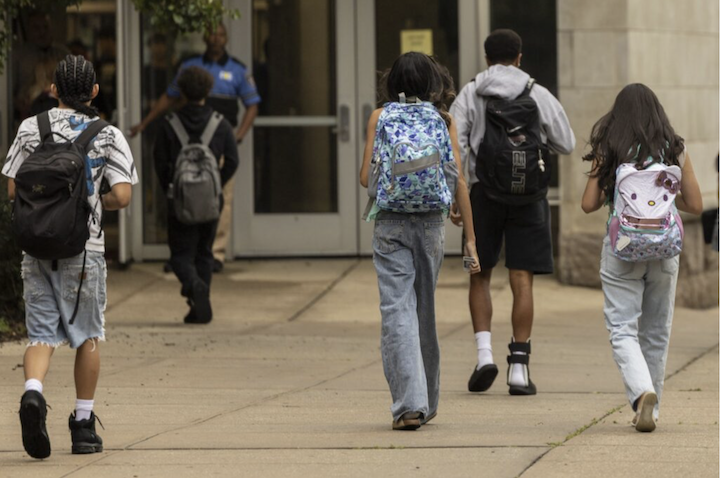
Rhode Island’s middle and high school students reported they’re drinking, smoking, getting bullied and considering suicide less often than they did two years ago, according to the latest edition of a statewide student survey released Wednesday.
The 2026 Rhode Island Student Survey was taken by 16,555 students in 24 school districts. The biennial survey is managed by the Rhode Island Department of Behavioral Healthcare, Developmental Disabilities and Hospitals, which collaborates with other state health and education officials, as well as the University of Rhode Island, to ask students about their substance use, mental health, bullying and other behaviors.
Compared to the 2024 edition of the survey, this year’s survey found declines in several risky behaviors and improvements in students’ reports of mental health and wellbeing.
High schoolers who reported having ever consumed alcohol, for instance, dropped from 25 percent in 2024 to 20 percent this year.
A similar drop was seen in high school students’ reports of having ever smoked or vaped marijuana, which fell from 18 percent to 14 percent, while lifetime use of marijuana edibles fell from 11 percent to 8 percent.
Reported lifetime vaping was also down, from 15 percent to 13 percent.
The 2024 increase in past-month reported use of marijuana among middle school students also reversed this year, with 6.4 percent reporting smoking or vaping cannabis in the previous 30 days. That’s down from 7.8 percent in 2024, but still above the 5.4 percent documented in 2022.
Cyberbullying saw some of the most significant improvements. Middle schoolers who reported having embarrassing or hurtful pictures or messages posted about them online within the previous three months dropped from 18 percent in 2024 to 12 percent this year. The figure fell from 14 percent to 10 percent among high school students.
Fewer students also reported cyberbullying others. Among both middle and high school students, 7 percent reported posting material online that could embarrass or hurt another student, down from 13 percent and 10 percent, respectively, in 2024.
Even students who admitted to making fun of people saw a decline among both middle and high schoolers, with the former dropping from 40% in 2024 to 29 percent this year — the lowest since at least 2018.
Fewer students reported feeling sad or hopeless, or having thoughts of suicide. Among middle school students, those who reported seriously considering suicide within the previous 12 months fell from 14 percent in 2024 to 11 percent this year. Among high school students, that figure dropped from 11 percent to 8 percent.
But roughly a third of students still deal with mental health challenges, with the survey finding that approximately 29 percent of middle school students and 34 percent of high school students reported struggling with their mental health over the previous year. Of those students who struggled, only about a third reported speaking or visiting with a school counselor.
“These are positive trends, precisely the kinds of trends we want to see — improved indicators of student wellbeing, fewer students engaging in risky and harmful behaviors, and greater student awareness of the dangers,” Richard Leclerc, BHDDH director, said in a statement Wednesday.
Leclerc credited prevention efforts with the improved numbers. The survey found that high school students generally perceived substances licit and illicit as less accessible than in 2024.
For instance, only 40 percent of students believed marijuana would be easy to obtain, compared with 48 percent in 2024. Still, students reported that the most common way they obtained marijuana was from peers.
The approximately 30-minute, online survey is offered in English and Spanish. Each grade at a school needs to have at least 60 percent of their students complete the survey for that school’s data to be included in the results.
The survey reached fewer students than the 2024 edition, in which more than 23,000 students across 29 districts participated. Five school districts did not participate in 2026: Block Island, Burrillville, Foster-Glocester, North Smithfield and Smithfield.