




Court finds resident’s opposition to project was constitutionally protected petitioning activity
“When a resident goes to her town, to state agencies, and finally to court to ask whether a public project complies with the law, the answer cannot be a lawsuit against her personally.”
– Marisa Desautel, principal at Desautel Browning Law
BURRILLVILLE – On Aug. 26, the Rhode Island Superior Court granted an Anti-SLAPP motion filed on behalf of Burrillville resident Roberta Lacey and dismissed the town of Burrillville’s counterclaim against her.
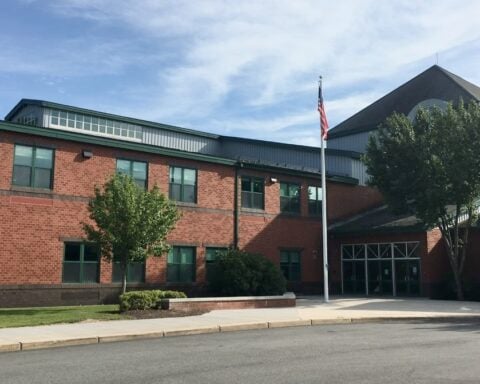
The counterclaim arose after Lacey and other concerned residents sought judicial review of the town’s synthetic turf field project at Burrillville High School. Lacey raised environmental, public-health, and land-use concerns, including concerns regarding forever chemicals, clean water protection, the aquifer overlay zone, and Planning Board oversight. In November 2024, the town filed a counterclaim alleging tortious interference and seeking to hold Lacey responsible for project delays and costs.
“This ruling is an important reminder that residents have the right to ask questions, contact public officials, seek agency review, organize with neighbors, and use the courts when they believe public-health, environmental, and land-use laws are not being followed,” said Lacey in a statement. “No resident should be sued by their own town for participating in government.”
Attorney Marisa Desautel stated the following:
“The court’s ruling confirms that protected petitioning activity cannot be repackaged as tortious interference simply because it creates pressure, delay, or public accountability. This ruling matters not only for Ms. Lacey, but for every resident who expects lawful process, clean water, transparent government, and the right to be heard.”
She added, “We are proud to stand with our client and grateful that the court recognized the importance of these protections. The work to ensure lawful process, clean water, and meaningful public participation continues.”
The Court granted the Plaintiff’s anti-SLAPP motion, dismissed the Town’s counterclaim, awarded reasonable attorneys’ fees and costs, and reserved the determination of compensatory and punitive damages for further proceedings.
Lacey raised concerns about the Town’s plan to install an artificial turf field at Burrillville High School, specifically the potential for per- and polyfluoroalkyl substances (PFAS), or so-called “forever chemicals,” to reach groundwater in the town’s aquifer overlay districts.
She brought those concerns to the government: state environmental and public health agencies, the Burrillville School Committee, the Harrisville Fire District, and the Pascoag Utility District, and to town officials. She submitted a public petition bearing 727 signatures opposing the field’s installation. When the town proceeded, she filed two civil actions seeking judicial review of the town’s compliance with land use and environmental requirements.
On Aug. 15, 2024, the Rhode Island Department of Environmental Management and the Rhode Island Department of Health issued a joint letter to the Burrillville Town Council stating that the agencies were “most concerned about the potential for PFAS from the turf field to contaminate groundwater in the area,” and citing sampling data from a comparable field in North Smithfield where a downgradient drinking water well exceeded Rhode Island’s PFAS drinking water standard.
In April 2025, the Superior Court found that Lacey had “more than established a prima facie case” that the project was required to go through Planning Board review before development began – a review the town had not sought.
Rather than answer her claims alone, the town filed a counterclaim against Lacey personally, asserting tortious interference with a contractual relationship and civil conspiracy, and seeking to hold her liable for alleged delay and added cost associated with her opposition.
Why the ruling matters
Rhode Island’s Anti-SLAPP statute – SLAPP stands for “Strategic Lawsuit Against Public Participation” – was enacted in response to what the General Assembly called a “disturbing increase in lawsuits brought primarily to chill the valid exercise of the constitutional rights of freedom of speech and petition for the redress of grievances.” It confers conditional immunity on citizens who petition their government on matters of public concern, and it makes an award of attorneys’ fees and costs mandatory when that immunity applies.
The town’s counterclaim identified no communication between Lacey and the town’s turf contractor and no act directed at the contract itself. What it described was her petitioning: her communications with government agencies, her participation in public proceedings, and her filing of litigation. Under the statute, delay and cost that follow from lawful petitioning are protected consequences, not a basis for liability.
“When a resident goes to her town, to state agencies, and finally to court to ask whether a public project complies with the law, the answer cannot be a lawsuit against her personally,” said Desautel. “That is precisely the kind of claim the General Assembly wrote the Anti-SLAPP statute to stop. The court’s decision restores the rule that participating in government is not a tort.”