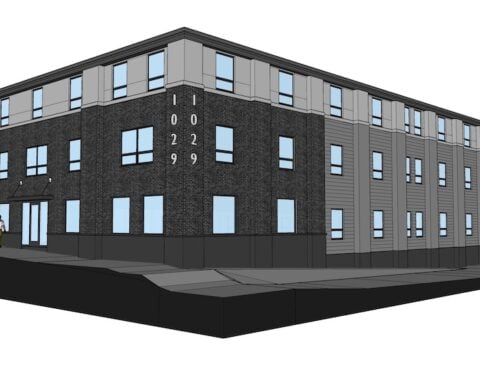





Thank you so much for your informative article regarding Armand Cortellesso’s proposed apartment development on Baird Avenue in North Providence. In the article, the planning director appears to state that Mr. Cortellesso’s current building project is permitted under a town ordinance that applies to nonconforming uses. There is a considerable amount of law, however, that indicates that there is no valid nonconforming use here.
A nonconforming use is a use that was already in place when the zoning of the land it’s located on changed. Mr. Cortellesso and perhaps the town planning director refer to these as being “grandfather” rights. However, “grandfather rights” from nonconforming uses have strict limitations. They only apply to continual and consistent nonconforming uses.
In this case, the previous nonconforming use was abandoned under town ordinance 408H. The cinderblock factory previously located on the lot ceased operations decades ago, with obviously no intention to ever resume use as the building was left to decay and disintegrate. Per legal precedent, when a nonconforming use is abandoned, then the zoning reverts back to the proper zoning for the neighborhood: RL-10. This lot should have been treated by the town as residential zoning from the very beginning of this project, not a nonconforming use that had any grandfather rights.
Even if the cinderblock factory’s nonconforming use had not been abandoned, thus reverting the lot back to RL-10 zoning, Mr. Cortellesso’s actions in seeking to build residences on the lot constitute abandonment of the nonconforming use according to Rhode Island Supreme Court precedent. Once a landowner seeks to use land for something else, this indicates intent to abandon the lot’s protected nonconforming use, thereby reverting the land back to residential. Again, even if it wasn’t abandoned by the previous owners, Mr. Cortellesso’s own actions abandoned the nonconforming use and ceded any grandfather rights he might have had. Again, per town ordinance, once a nonconforming use is abandoned, it cannot be reestablished.
In addition, multiple Rhode Island cases reiterate again and again that nonconforming use rights are extremely narrow, because nonconforming uses are considered harmful to residential neighborhoods and so should be reverted back to the proper zoning as soon as possible. It is this policy that underlies the fact that abandonment works to terminate nonconforming use rights. However, even if the nonconforming use was never abandoned, it is limited, per the law, to substantially similar uses. This is, again, read very narrowly. It is not the case that any nonconforming use is acceptable. To be legal, the nonconforming use must remain substantially the same. New owners of nonconforming uses receive only grandfather rights to those particular, specific, exact nonconforming uses.
The nonconforming use in question here was a cinderblock factory. Therefore, if the nonconforming use is still valid and has not been abandoned, then any activity on this lot needs to be limited to something substantially similar to a cinderblock factory. Again, this is read very narrowly. For instance, in one case, a hotel could not be converted to an “entertainment complex.” In another case, a restaurant was not allowed to switch from selling only beer to selling all kinds of liquor. In both of those cases, the new use was not deemed substantially similar enough to the previous nonconforming use.
For this reason, the exact use of the building being erected on the lot in question is extremely important. The building is only valid if its use is substantially similar to a cinderblock factory. I have only ever seen the use be referred to vaguely as “industrial” and possibly “storage” – neither of which is substantially similar to cinderblock production. I admit to skepticism that there was ever any real use in mind for this building (other than the apartment complex in question). It has certainly never been used for anything whatsoever. This is highly relevant to its legality, since nonconforming use is such a narrow exception to zoning.
Because of how narrowly nonconforming uses should be interpreted, the town’s apparent reliance on Ordinance 408B seems questionable. Under 408B, owners are permitted to “maintain, repair, or renovate” nonconforming uses. For all of the reasons I’ve already stated, this lot reverted back to residential zoning and this is not a valid nonconforming use. However, even if it were a valid nonconforming use, no maintenance, repair, or renovation occurred on this site. An entirely new building was erected. This is an extremely broad reading of the ordinance out of line with the legal precedent that nonconforming uses should be closely regulated because of their deleterious effect on neighborhood zoning plans.
The zoning commission vetoed the initial adaptive reuse plan for, among other things, the fact that it was not actually a reuse of the commercial building. The fact that the commercial building was almost immediately torn down to build a new building supports the zoning commission’s conclusion. However, the building’s classification as a nonconforming use further supports the zoning commission’s position. The adaptive reuse statute is to permit commercial buildings to be converted to residential where zoning would otherwise block such a conversion. That is not the case here. This lot is already zoned residential. It has been residential since its nonconforming use was abandoned in the last century. There is no valid nonconforming use in effect. The town’s comprehensive community plan and zoning map as displayed in Map 24-A should be complied with and the lot should be used for residential single-family houses from this point on.
Stacey Lantagne, North Providence