




ATTLEBORO – Adam Bailey says multiple dreams inspired him to start Crane-Berry Commons, a business designed to help stem the tide of New England cranberry farmers shutting down their operations for good.
Bailey says he wants to make a wider impact beyond his primary professional passion of being principal at Grace Baptist Christian Academy in Attleboro. He sees an opportunity, he told The Local Insider, to use his skill sets to better provide for his family and potentially invest in a school that doesn’t have the big-ticket donors many other private schools have, all while helping a New England industry he really cares about.
He drew motivation from friends years ago who lived on a cranberry bog and told him how it worked and the challenges they were facing, he said, adding that he’s learned more and more as he’s continued to speak with cranberry farmers.
The name Crane-Berry Commons comes from craneberry being the original name for cranberry. Sassamanash is the Wampanoag word, but the Pilgrims felt it was too difficult to say, so they renamed it because the plant’s flower looked like the head of the bird that frequented the area, Bailey explained. The “e” in the name was dropped over time.
Commons is the early New England term for a marketplace and grazing area for livestock, he added.
Crane-Berry Commons is a curated cranberry artisan marketplace. Bailey said he got the idea from Cherry Republic in Michigan, a company created by Bob Sutherland in 1989 to celebrate Michigan’s cherry industry. By creating a market for every type of cherry product imaginable, including baked goods, candy, snacks, soda, salsa, and BBQ sauce, it gave farmers new options for their crops.
Harnessing that same type of energy he saw in Michigan a couple of years ago, Bailey said, he wants to diversify the local cranberry economy while reinvigorating the livelihoods of area cranberry farmers.
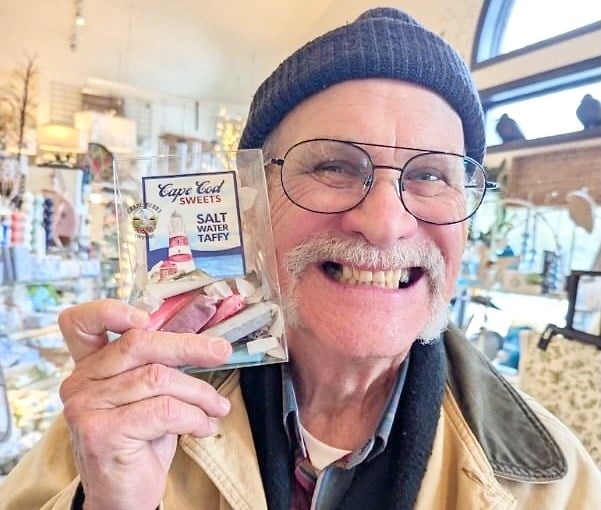
Reading up on Cherry Republic, he said he learned how the cherry industry relies heavily on government subsidies and grants, but by creating a cherry market with cherries in every type of non-traditional form, Cherry Republic helped lessen that need for government help.
When people are visiting another state, Bailey said, they often aren’t looking to bring back just any old knick-knack, but instead some type of special item they can enjoy and use to remember what they experienced. What better way than with special foods?
Taking the same approach but with cranberries is filling a gap, he said, as he’s looked and hasn’t seen any type of expansive selection of cranberry products anywhere.
Some 30 percent of cranberry bogs in Massachusetts have closed since 2001 due to a variety of factors, and big producers of cranberry juice have switched over to hybrid cranberries and started growing them in large open places in Wisconsin or Canada. The companies don’t have to pay big money to convert New England bogs to something new, and they can essentially start from scratch.
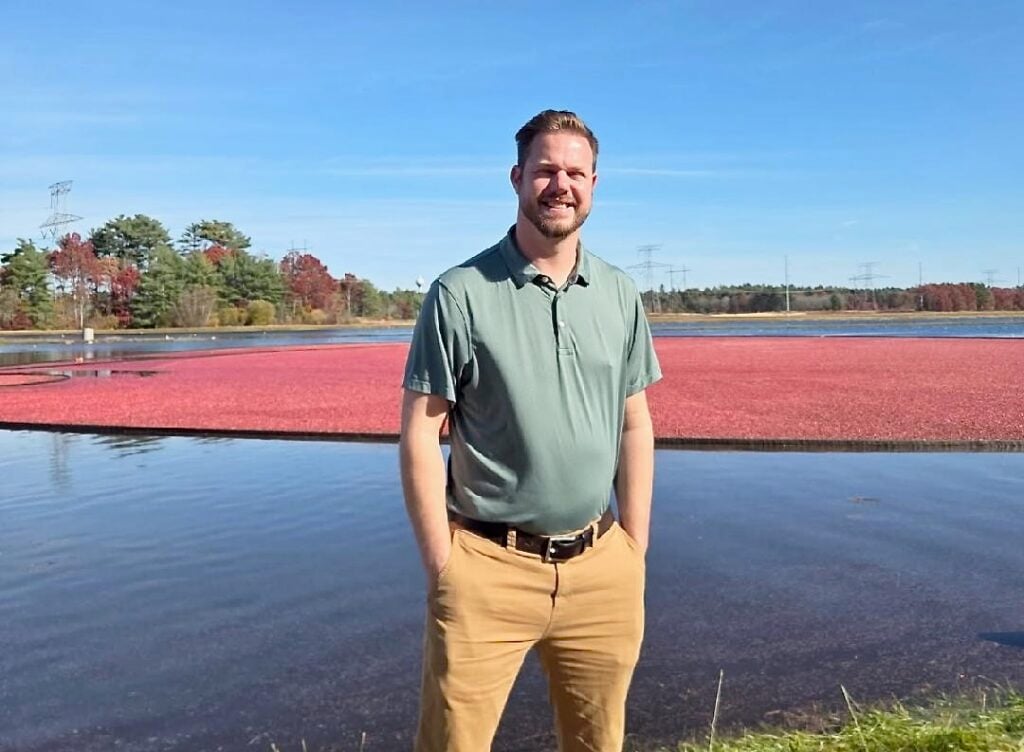
In New England, many bogs are of irregular size and shape, said Bailey, and it costs a lot of money to change them over and switch to hybrid cranberries, which are hardy, ripen consistently, and are plentiful. Switching over to hybrid berries can mean losing access to a bog for three years.
Bailey’s idea that he’s promoting with farmers is to rely less on juice production and branch out into new products such as cookies, chips, or chocolates. He envisions a re-energized environment around local cranberries where farmers are thriving again and visitors to tourist towns such as Hyannis, Plymouth, Boston, or Provincetown are smiling as they experience the best the state has to offer, and in an industry that’s no longer just about the juice.
Cranberry products should be on the same list for tourists to remember as lobster, Plymouth Rock, and the Freedom Trail, he stated.
Bailey said hybrid cranberries don’t work well as ingredients in various products, but Massachusetts cranberries have a perfect tartness, are super healthy, and have just the right water content to be used in so many different ways. Once people can get a taste of what is being offered, he said, they become interested in buying.
Prior to launch, Bailey tested out products with family and friends, and also participated in local markets to see what the larger community wants.
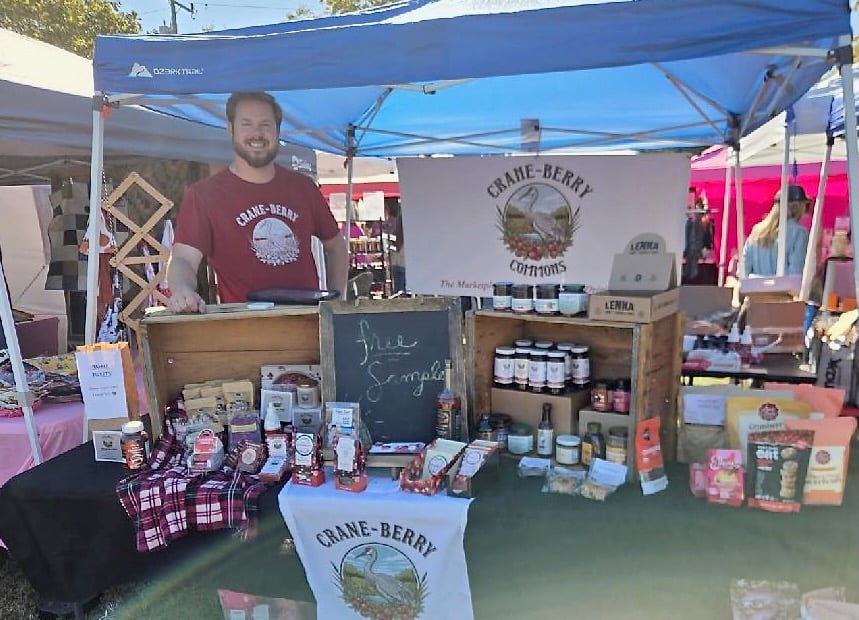
Bailey not only sells his products at farmers’ markets and ships orders placed through his website, Crane-Berry.com, but also works to connect the entire industry. Some producers get cranberries from local farms, and some farmers make products themselves. Bailey does sales and coordination, he said, asking all parties what their needs are and then connecting them with the right partners. If he can connect a bog owner to a producer who is willing to purchase a product at wholesale to be sold at retail, that’s a win.
“My passion is to help people,” Bailey said, and he believes he can continue doing that by making an impact on the 200 students and their parents at the school even while expanding his reach to a new field. He said he feels God is leading him in this direction to expand his vision for the impact he can make.
Starting next year, Bailey said he’s hoping to be able to take one day off per week and hire people to replace the workload on that day. In the long term, he said, he dreams of multiple retail locations all selling cranberry products, with leftover funds going back to the school.
GBCA could use a new gym, soccer field, science lab, and entrance, among other improvements, he said. Talking to people from other Christian schools, he said, most that are home to very nice athletic facilities have them because of very generous single donors. A school in Boston, for instance, gets $2 million per year from someone with a stake in a sneaker company, and a school in Worcester has two gyms and two soccer fields in part because someone with a stake in the snack industry donates $1 million per year.
“Maybe I can be that person (for GBCA),” he said of his thought process, rather than “hitting my head trying to find that person.”
All he wants for his family is to just be able to pay their bills, he emphasized, and beyond that he wants to provide students with an amazing educational opportunity, including his own who are at the school, and help farmers find a brighter future.
Adam and his wife, Cheryl, are now expecting twins, and that means the room he was using for his products will be converted into space for them. He now has a large trailer to house items, and is hoping to open a roadside stand at their Taunton home.
Bailey currently offers more than 100 products for sale, and is looking to add more. For the holidays, Crane-Berry is also offering gift baskets.
Visit Crane-Berry‘s Facebook page. Find Crane-Berry on YouTube and Instagram as well.