




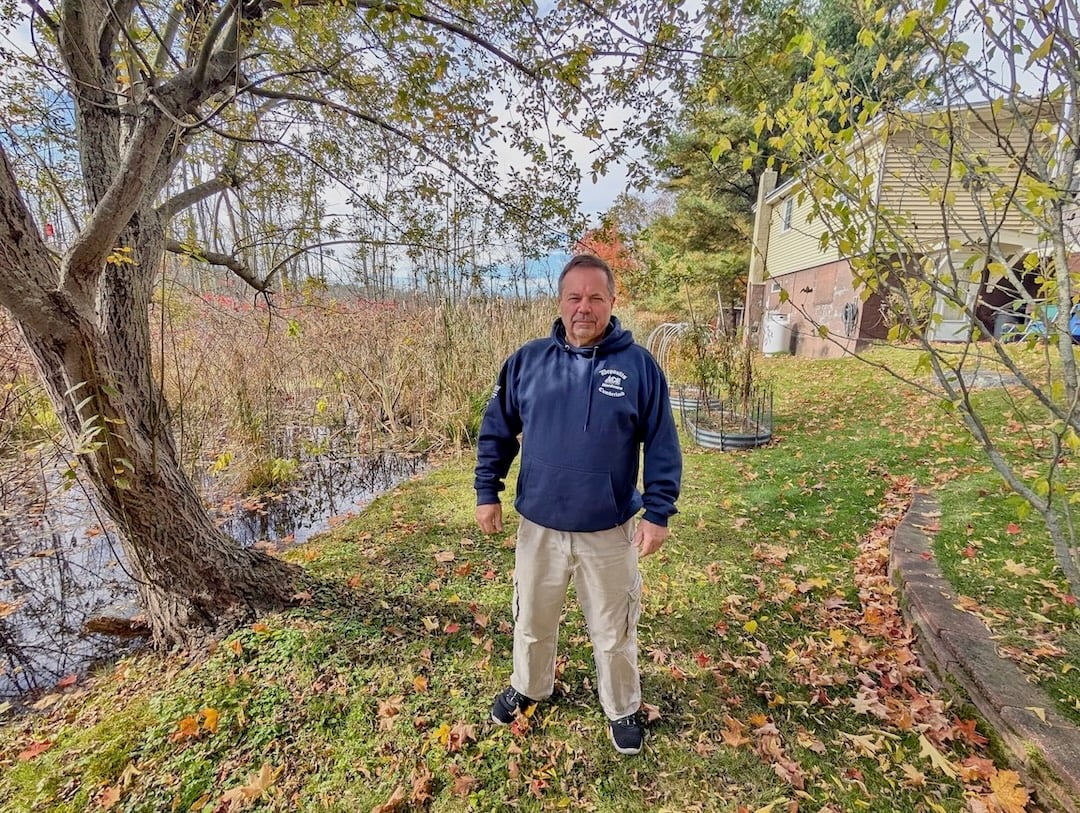
CUMBERLAND – Thirteen years ago, says Steve Bacon, the beavers moved in behind his Nate Whipple Highway home, and they’ve been battling each other ever since.
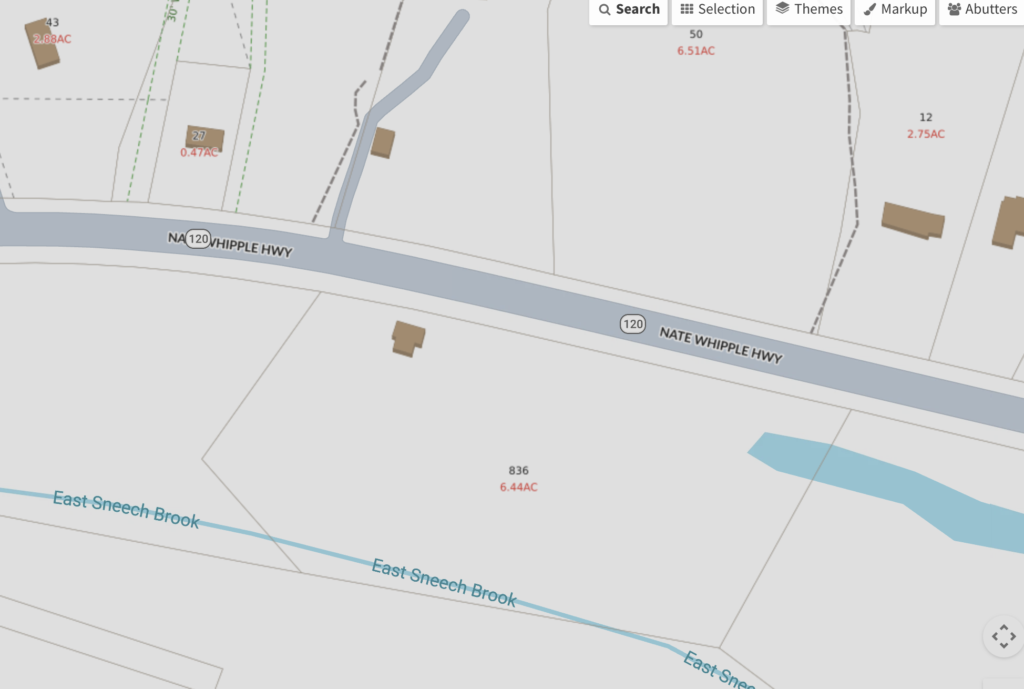
Bacon said he’d co-existed with the expansive wildlife habitat along East Sneech Brook since he’d purchased the home and its six acres of property, most of which is wetlands, in 1987. The beavers, however, are an opponent he stands no chance against.
Due to the location of Bacon’s home immediately next to town and Cumberland Land Trust properties, with no others nearby, he is the only property owner he knows of who has been impacted by this situation.
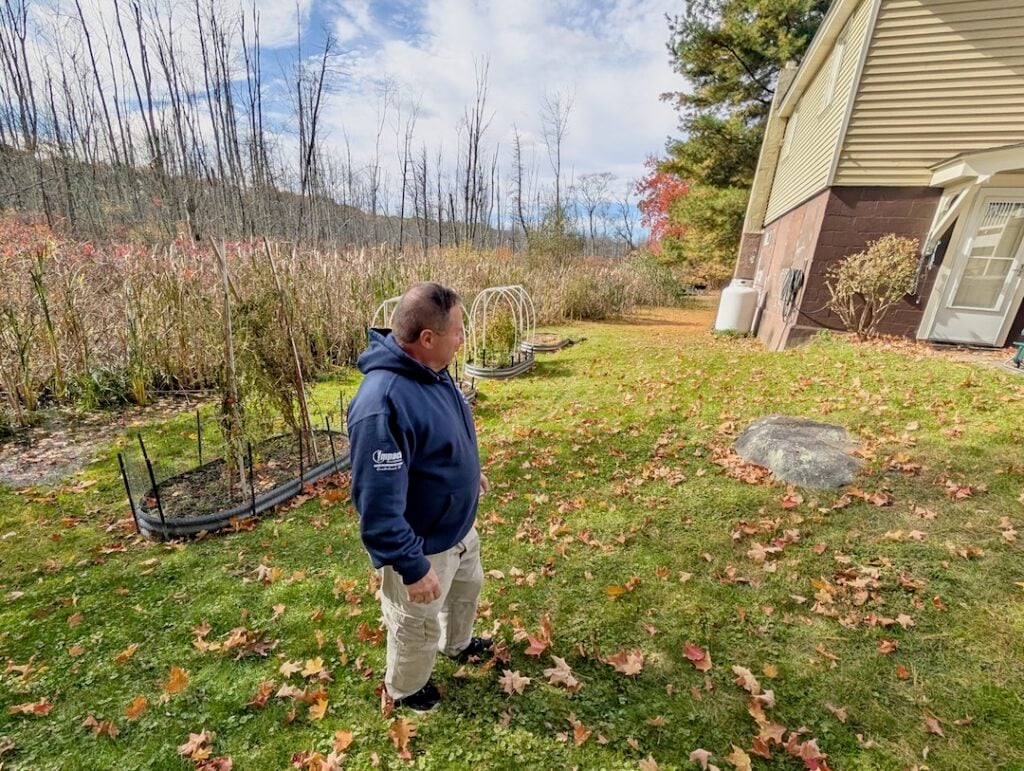
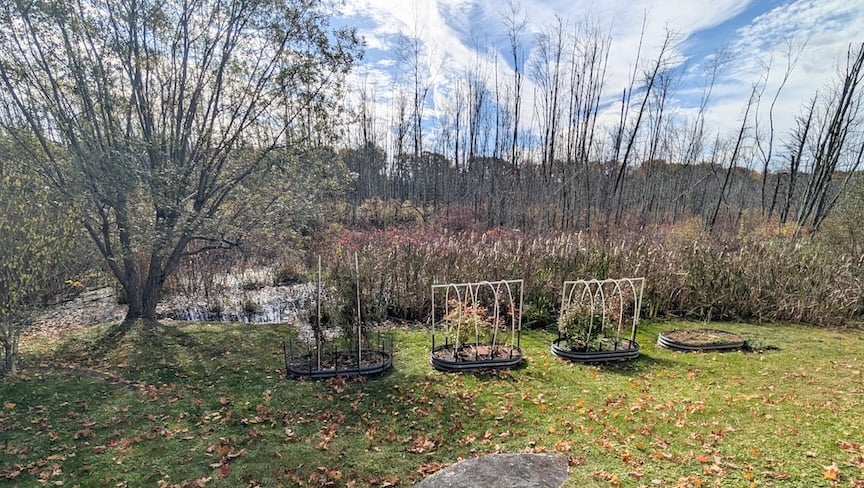
He said his garden beds are saturated and the plants are dying, and more and more trees are falling into the water, making the problem even worse.
Bacon shared with the Town Council on Oct. 7 that for 27 years, he experienced little more than some puddling during the annual spring thaw. But when the beavers arrived, they created a dam that started pushing the water higher.
He and members of the Land Trust worked together to install beaver deceivers, a contraption making beavers believe they’ve done their job while still allowing water through, and then they participated in repeated cleaning of the caged structure, but beavers are constant workers, he said, and that routine maintenance eventually went by the wayside.
“They’re quite relentless,” he said.
Bacon maintains that the Land Trust has an obligation to address the situation on its property. He said he wants a plan from the organization and the town on how to restore the free flow of water to prevent the water’s continuous rise where it will eventually threaten the foundation of his home. He said the Land Trust should be required to maintain the deceivers, rather than shift the blame for the flooding.
Randy Tuomisto, of the Land Trust, said this has been an ongoing problem created by the beavers, creatures, he said, who are here to stay. Under the law, he told the council, the owner is not liable for interference of water flow created by wildlife, as long as they’re taking no action to contribute to the problem.
Tuomisto said they’ve been unable to manage the unruly beavers here and across town, and the creatures have impressed him with their engineering capability. He said it appears to be an insurmountable issue, with town crews stationed to address it every other day. He said it’s only affecting Bacon’s land, not his home.
This is a spring-fed reservoir, said Tuomisto, and he remembers at one time being told that up to 1 million gallons per day were being released for drinking water to residents of Cumberland. After Sneech Pond was shut down when the new wells came online at Franklin Farm, he said the water is being released and contributing “a huge amount of water to what we’re seeing today.”
The town could work with Bacon on mitigation, perhaps applying for hazard funds, he said. Some federal money is available to buy Bacon out and tear down the home, he said, but it’s a long and onerous process.
“The wetlands are going to stay as long as the beavers stay, and there’s no alternative to do that,” he said.
One could hire a trapper on Bacon’s property, said Tuomisto, but those beavers would need to be euthanized. Bacon said he got permission to trap on Land Trust land, but the group denied it.
Councilor Jodi Harrington-Sweet asked Water Supt. Bobby Ray whether the town’s switch away from Sneech Pond as a water source is causing the water to rise. Ray said the Water Department drew between 750,000 and 1 million gallons per day, but by the time the beavers showed up, it was only contributing 650,000-700,000 gallons. He said the outfalls from the pond go through regular drought cycles, and those outfalls aren’t constantly flowing. It’s reasonable to say that the outfalls were in the same state when the water was being drawn, he said.
Ray said the town could undertake a study to determine what kind of impact the plant shutdown had on local water courses, but there is no concrete evidence of what the outfall (discharge point) was before, during, or after the town drew water from the pond.
Harrington-Sweet said perhaps the town could work with partners at the state to potentially allow water to flow over the dam at certain wetter times of the year, such as the spring. She said thankfully there’s some time before next spring to try to come up with some answers, but she hates to see the parties in this situation.
Shaw said he appreciates the anxiety Bacon and his family must feel as they see water creeping closer and closer to the foundation, saying it reminds him of people living near the ocean and watching their homes threatened as nature takes over.
“There’s got to be an answer,” he said, adding that he doesn’t think they should have to wait until disaster happens.
Shaw asked if Bacon believes the lack of maintenance of the beaver deceivers is contributing to the problem, and Bacon said yes. Removing obstructions is a “monumental task,” he said, agreeing with Tuomisto.
Shaw said he doesn’t think the Land Trust would be interfering with nature if they targeted the man-made deceivers for cleaning, and it seems black and white to him that they would be responsible. Bacon responded that a complicating factor is the additional dams now built downstream, and those are more difficult to get to.
Bacon told The Local Insider during a visit to his home this week that there is no evidence that the water issue is due to the ending of its use as a water source. He said it’s all about the beaver activity, including multiple dams now created downstream.
“The water has got to keep moving,” he said.
Bacon laughs at the suggestion that the only option might be tearing down his family home, saying he has no interest in the option. It also wouldn’t be fair to taxpayers for the town to buy the house, he said.
The homeowner says the beavers are doing what’s natural to them, and that the Land Trust is blaming them for what’s happening as members throw up their hands, but he feels they have a responsibility to stay engaged for the sake of their neighbor.
“I would never do that to someone,” he said. “That’s not being a good neighbor.”