



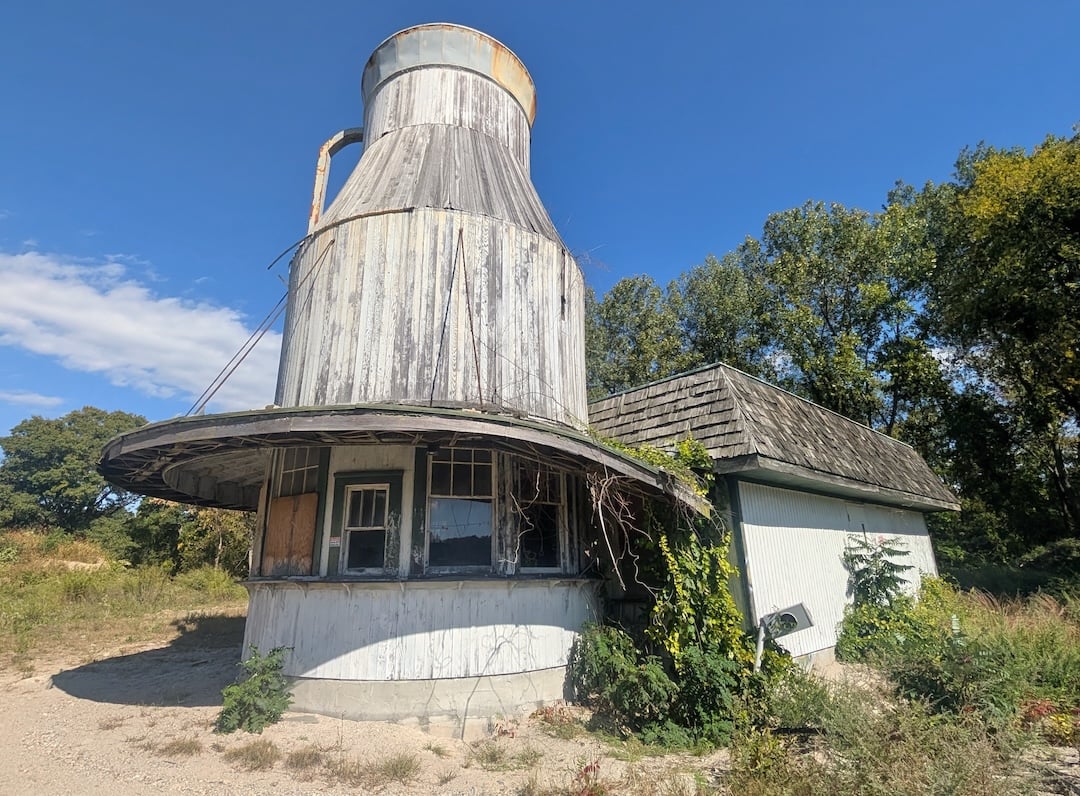
NORTH SMITHFIELD – The 5-plus acre property containing the landmark Milk Can has been taken off the market and is no longer for sale, according to its listing from Berkshire Hathaway.
The changed status for the property, which went up for sale five months ago at a price of $7.5 million, went into effect on Sept. 28.
The property generated significant buzz, according to those trying to sell it, but that apparently didn’t translate into the right offer for a property that never moved off of its initial asking price.
Representatives for the seller did not respond to a question Monday on whether it will be listed again.
The town’s property tax database shows no sales.
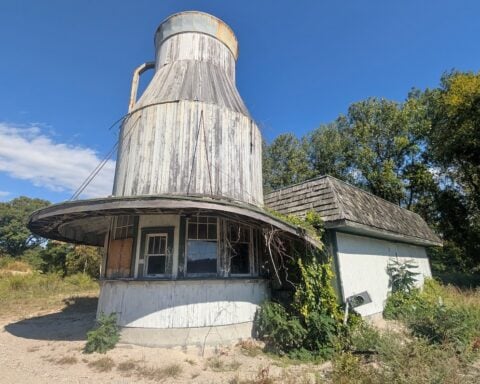
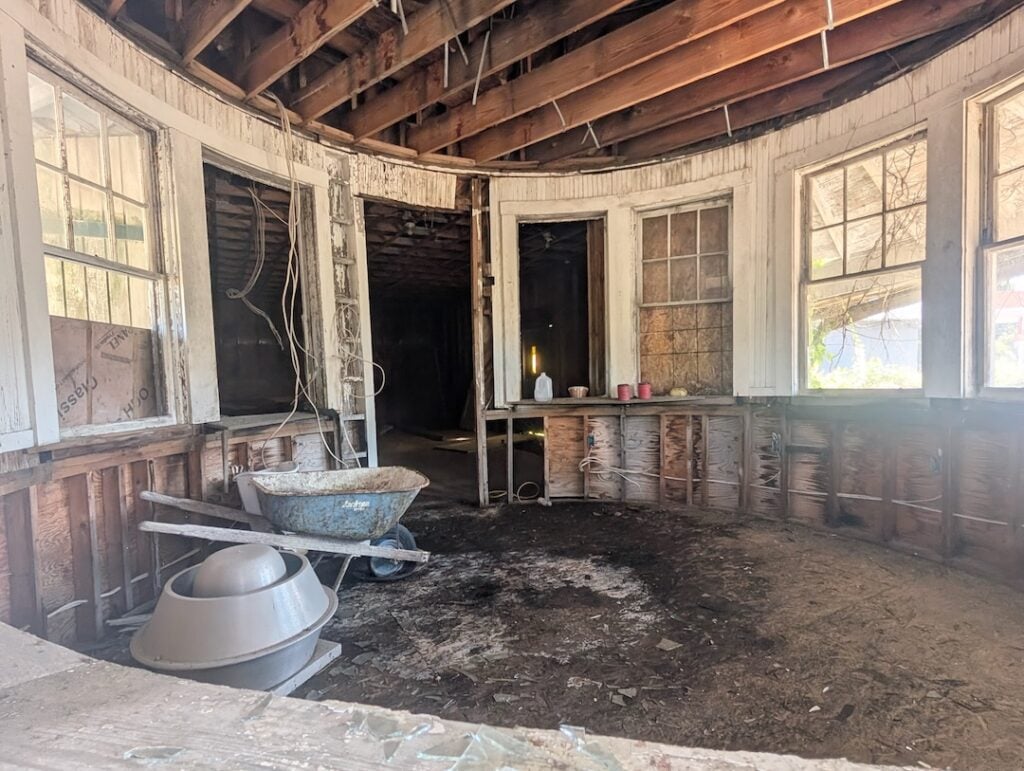
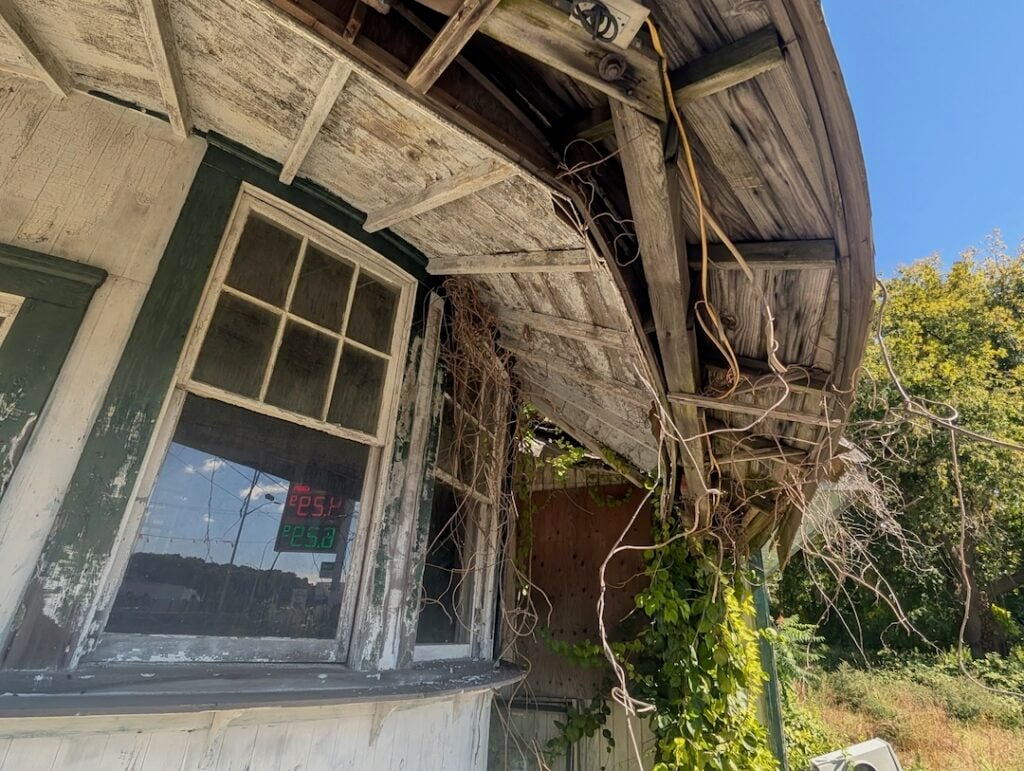
A visit to the dilapidated landmark revealed additional deterioration of the Milk Can structure, including heavy interior water damage and strong moldy/musty smell through a broken window.
Town Administrator Scott Gibbs said Monday that he hasn’t heard anything on the property, but the town is proceeding with planning for the area.
Gibbs told The Local Insider back in May that any buyer would need to make sure cleanup efforts are completed to the town’s satisfaction.
He said then that the town was in the second phase of a feasibility student for the Route 146 corridor the property sits on, from the former Fogarty Hospital to the Lincoln town line, an effort eventually intended to lead to the arrival of utility infrastructure, including water and sewers.
Without those utilities, optimum development will never happen in this area, according to officials.
The state recently completed an extensive renovation of Route 146 in the area of the property, creating a flyover bridge and side corridor for the commercial district.
The town’s effort is covering a market study, the land use regulation approach in the area, and financial aspects. A tax incremental financing (TIF), which uses new tax revenues generated in an area to cover costs, would be used to fund future utility work.
Gibbs said Monday that they’re still working on finalizing the second stage, completing 30 percent design of sewer and water infrastructure. They’ve also done a market study, he said, and are currently working on draft zoning regulations for the area, which will be a different standalone zone from the rest of the area if approved by the Town Council.
Once done, the final plan will be submitted to the council for approval of the plan (not execution of it), and Gibbs said he expects that to happen late in the first quarter of 2027.
Here’s our story from May:
North Smithfield’s Milk Can property churns up strong market interest
What was once a whimsical roadside ice cream destination is now one of the region’s most talked-about commercial real estate opportunities.
The Milk Can property is generating interest from both out-of-state and international developers from as far away as Switzerland, with online activity and views continuing to grow across commercial platforms, states a news release.
“I’ve never had a listing take off quite like this. It’s created a media stir,” states Realtor Tracy Sisson, listing agent with Berkshire Hathaway HomeServices.
Recognized by generations of passersby on the Route 146 corridor, the beloved landmark is drawing heightened developer interest as part of a four-parcel, 5+ acre commercial offering now on the market for $7.5 million. In addition to the parcels of land, there are two structures – the Milk Can and a brick building – included in the sale.
Following recent media coverage, market activity has accelerated. “Properties with this kind of identity are rare,” notes Sisson. “It’s got enormous branding potential, presenting opportunities for retail, hospitality, mixed-use, or adaptive reuse concepts. People are drawn to the high visibility and nostalgia factor. The sellers are hoping that whoever buys the property will restore or repurpose the Milk Can.”
Standing as both a visual landmark and a piece of roadside Americana, the oversized Milk Can building has long captured the imagination of the community, adds the release. Originally operating as an ice cream parlor in the 1930s, the 32-foot structure became known not just for frozen treats, but for the memories created there: summer evenings, family outings, and the unmistakable silhouette that turned heads from the roadway.
Closed since 1968, the can was moved to its current location at 920 Eddie Dowling Highway in 1991 by the D’Andrea family (owners), who had dreams of opening an ice cream business.
“We put in a septic system and a new well, but discovered the water had some groundwater contamination,” Frank D’Andrea recalls, noting that the septic system has never been used. “The property previously underwent successful environmental remediation in accordance with applicable EPA standards, and documented reports indicate the site is safe for intended commercial use, including drinking well water. Per state regulations and to reaffirm, we will do some additional testing before the property transfer.”
There seems to be some confusion amongst people commenting on social media, who think that just the Milk Can structure is being sold for $7.5 million, or that the well water is an issue, Sisson explained.
“That’s simply not the case. The property actually consists of four parcels of land which can be sold all together or separately, including the can structure and brick building. There’s a lot of flexibility and possibilities for a buyer who can reimagine what this landmark could become next.”
For additional information about the property or sale details, contact Listing Agent Sisson, Realtor and luxury collection specialist with Berkshire Hathaway HomeServices/The Sisson Group, at 401-447-8838 or .